
For centuries, the sudden loss of the sun filled communities with dread — and drove people to capture it.
With a total solar eclipse due on August 12, we look back at the photographers who first aimed their lenses at the blackened sun.
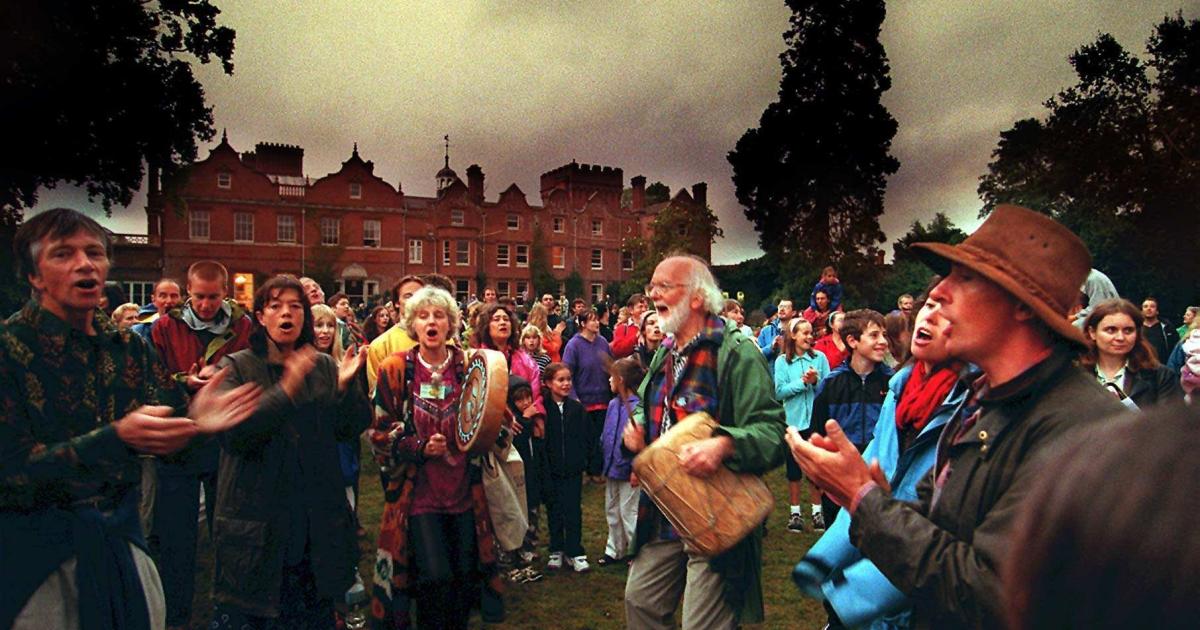
Eclipse viewing from Gaunts House at Holt near Wimborne…. (Image: Echo)
Before digital sensors and smartphones, photographing totality was difficult and often dangerous.
For decades, photographers and astronomers hauled heavy kit to remote fields and rooftops, often producing overexposed shots with no solar corona.
Early photographic plates could not cope with the contrast between the blazing sun and black moon.
Eclipse viewing from Gaunts House at Holt near Wimborne….chanting during the event…. (Image: Echo)
On July 28, 1851, Prussian daguerreotypist Johann Julius Friedrich Berkowski succeeded where others had failed.
At the Royal Observatory in Königsberg, Berkowski attached a small refracting telescope to his camera.
During totality, he exposed a chemically treated silver-plated copper sheet for 84 seconds.
The daguerreotype was the first successful photograph of a total solar eclipse and revealed the sun’s delicate, super-hot outer atmosphere.
Jean and Dick Rands and their grandchildren ben and nathan try out their eclipse viewers (Image: Echo)
That single daguerreotype changed science and public understanding.
Total eclipses no longer vanished from memory as quickly as they disappeared from the sky.
Photographs let scientists study the sun in new detail and allowed others to see eclipses they might never witness.
By the turn of the 20th century, eclipse-chasing had become a popular public event, not just a niche scientific pursuit.
Young students hoping for a glimpse of the Solar Eclipse on Bournemouth beach (Image: Echo)
While pioneers made history worldwide, these photographs show how people in Southampton and nearby experienced eclipses.
These archive images show crowds in local parks and residents using homemade viewers in their gardens, sharing a wonder felt around the world.