
The sighting, reported by a driver near the M5/M4 junction in south Gloucestershire just over a year ago, was investigated by big cat expert Rick Minter and revealed by this news site, sparking a debate about whether big cats are regularly prowling near our motorways.
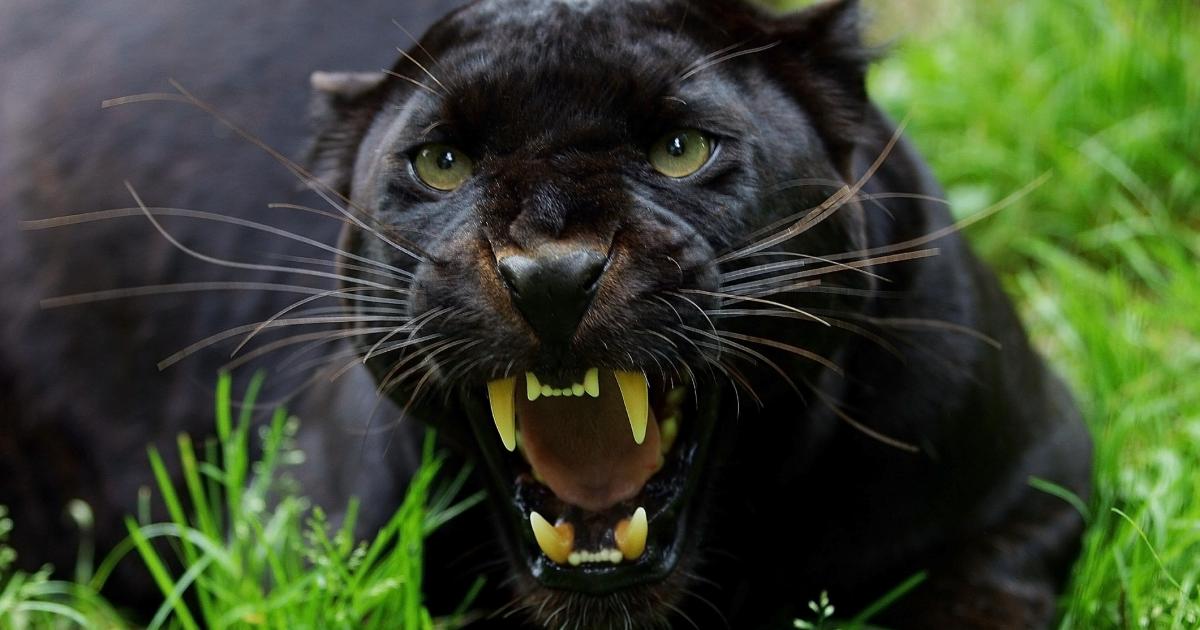
A driver claimed to have seen a black panther by the M5 in south Gloucestershire. Library image (Image: NQ)
It forms part of a growing body of reports and evidence suggesting that large predatory cats may be roaming the UK.
A driver spotted the ‘panther’ on the western side of the M5/M4 junction.
Speaking last year, Mr Minter, host of the Big Cat Conversations podcast and author of Big Cats: Facing Britain’s Wild Predators, said: “A driver claimed to have seen a black panther lurking in the scrub by the M5 motorway verge in south Gloucestershire.
“In following it up I found that the neighbouring farm at that spot reported that its cattle had been on edge and were behaving nervously for a few days around the time of the slighting.”
He said this is not the first such report.
A driver claimed to have seen a black panther by the M5 in south Gloucestershire. Library image (Image: NQ)
Mr Minter said: “In recent years there have been two other ‘credible’ sightings by motorists who have seen beasts resting on the verge of the M5 between Gloucester and Thornbury.”
Despite the noise and disruption, he believes motorway verges could provide a surprisingly suitable environment for large, elusive predators.
The M5 panther remains unconfirmed, but the question of whether big cats are living wild in Britain continues to attract attention.
Mr Minter said: “A motorway verge may be noisy but for a large predator it could be an undisturbed zone with sun traps for resting.
A driver claimed to have seen a black panther by the M5 in south Gloucestershire. Library image (Image: NQ)
“The scrubby vegetation acts as a wildlife corridor with rabbits and deer available as a ready food source.
“So big cats may use motorway edges as routes and refuges at times like other mammals do.”
The sightings remain difficult to verify due to the cats’ highly elusive nature.
Mr Minter said: “People often put trail cameras on land where such incidents occur but with territories of 20 square miles or more, and being active more in the dark, these stealth predators are a challenge to film.”
He thinks the consistency and credibility of repeated reports point to a real, if rarely seen, presence.
Mr Minter said: “Sightings and DNA evidence suggest that leopards, panthers, pumas, and lynx are breeding in Britain.”
Recently, tests from a sheep carcass found in Gloucestershire showed evidence of leopard DNA, giving weight to claims that such animals are living in the wild.
Experts believe that predators kept as ‘trophy pets’ were released from stately homes following the 1976 Dangerous Wild Animals Act and have bred in the countryside.
Occasional sightings of what appear to be pumas, leopards or other large cats have been reported across the UK for decades, now supported by physical evidence such as tooth impressions on bones.
Email reporter Kate Jones at kate.jones@newsquest.co.uk