
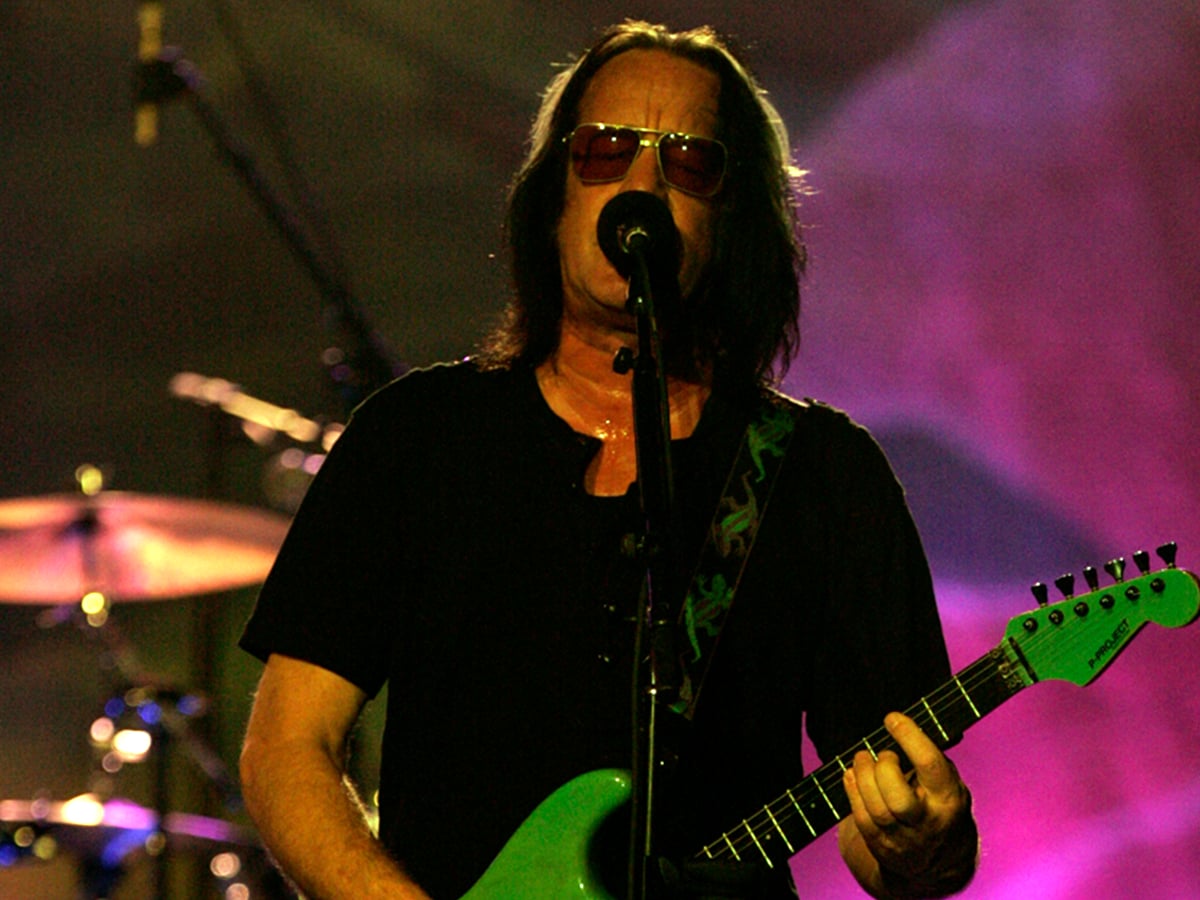
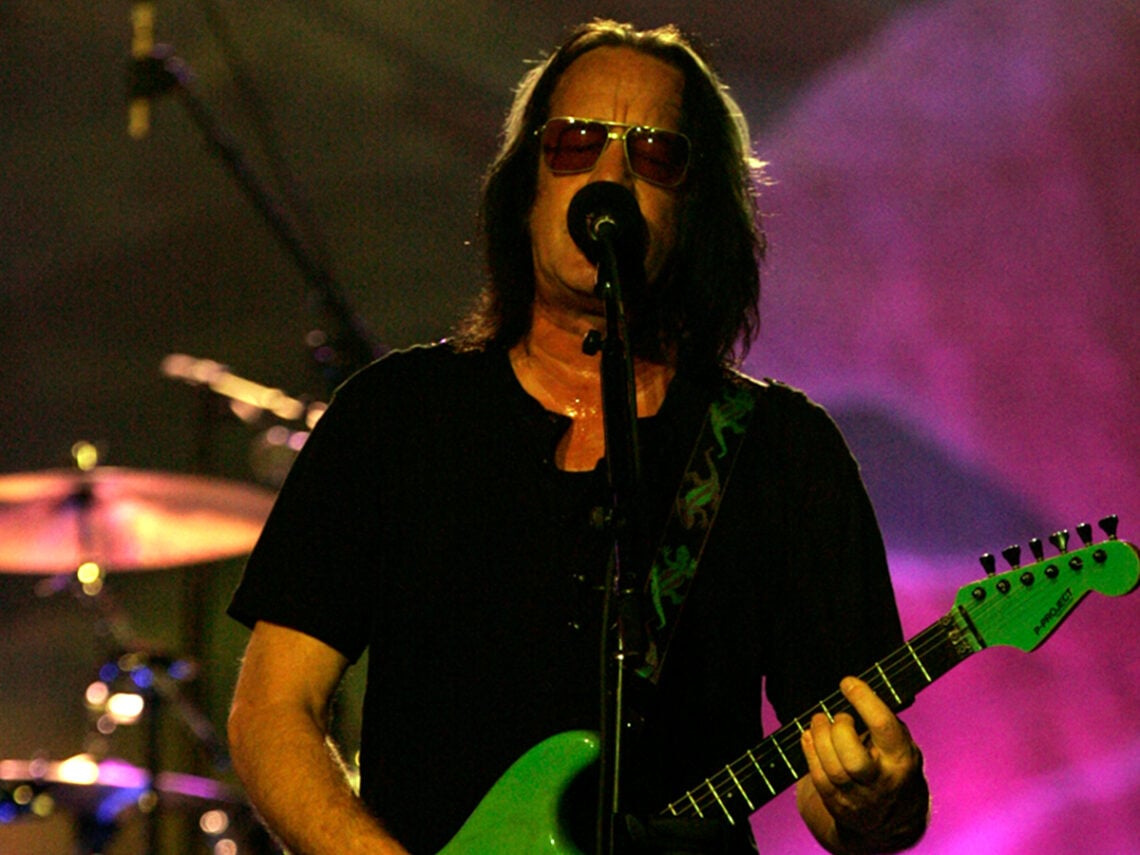
Credit: Eva Rinaldi
Sun 2 August 2026 20:00, UK
It must have been an interesting time growing up in the 1960s. People loved music, sure, but the scope of what popular music sounded like was also constantly getting bigger.
Todd Rundgren was one of those music lovers who came of age at a time when popular music was constantly reinventing itself. He was 18 when Sgt Pepper’s Lonely Hearts Club Band arrived, marking a watershed moment that showed bands they could push boundaries, embrace ambition and still find huge commercial success.
Graham Nash once spoke about how much he loved the song ‘A Day In The Life’ from the Sgt Pepper’s album, and thought that it represented The Beatles at their most ambitious. He almost couldn’t believe that a song which sounded like it had so many layers was made up of the same chords that he was using with his songwriting.
“Their incredible simplicity and their incredible melodic structure is stunning to this day,” he said. “With all due respect, within this western scale of music, there’s what? Twelve notes? Are you kidding me? The Beatles were unbelievable, and I think we all knew it.”
Rundgren was a huge fan of the experimentation that came out following the release of such innovative music. Not only was there a great deal of variety out there, but the radio stations he used to listen to were also willing to play into this range. It was before the time when radio stations seemed to read from the same hymn sheet, and instead, local stations would happily play whatever they felt like. As a budding musician, it was easy for Rundgren to experience the amazing range that was out there in the world at the time.
“I remember listening to the radio in Philadelphia and you’d hear anything at all; it would be Judy Collins and then Bill Evans and a symphony orchestra and then the new Beatles single, then a blues record or something like that,” he recalled, “There was a sort of freedom — and a lot of it was due to the Beatles, because they would constantly genre-hop and invent a new thing.”
What’s interesting is that while there was so much crazy music being made at the time, the kinds of musicians that were out there were still relatively simple. In fact, when it comes to the different guitar players who were making a name for themselves, Rundgren believes that there were only two kinds of players out there. One liked to be precise with how they played guitar; meanwhile, the other was a lot more free-flowing.
Further reading: From The Vault
“In those days there were kind of two camps. I came out of the Yardbirds camp – the Eric Clapton, Jeff Beck kind of things – and you played a Gibson guitar. I played a Les Paul, which had no wangle bar on it, no tremolo tailpiece on it,” he said. “Jimi played a Stratocaster and made full use of the wangle bar. I personally didn’t have the sense of freedom that Jimi Hendrix had in the sense that he might not play the same thing every time.”
Regardless of what camp you were in, Rundgren was a huge fan of both styles of playing and showed as much with his 1976 record Faithful. Here, he plays a range of different covers from the ‘60s and the ‘70s, each of which was a moving representation of what was a great period within music.
ADD AS A PREFERRED SOURCE ON GOOGLE  The Far Out Beatles Newsletter
All the latest stories about The Beatles from the independent voice of culture.
Straight to your inbox.