
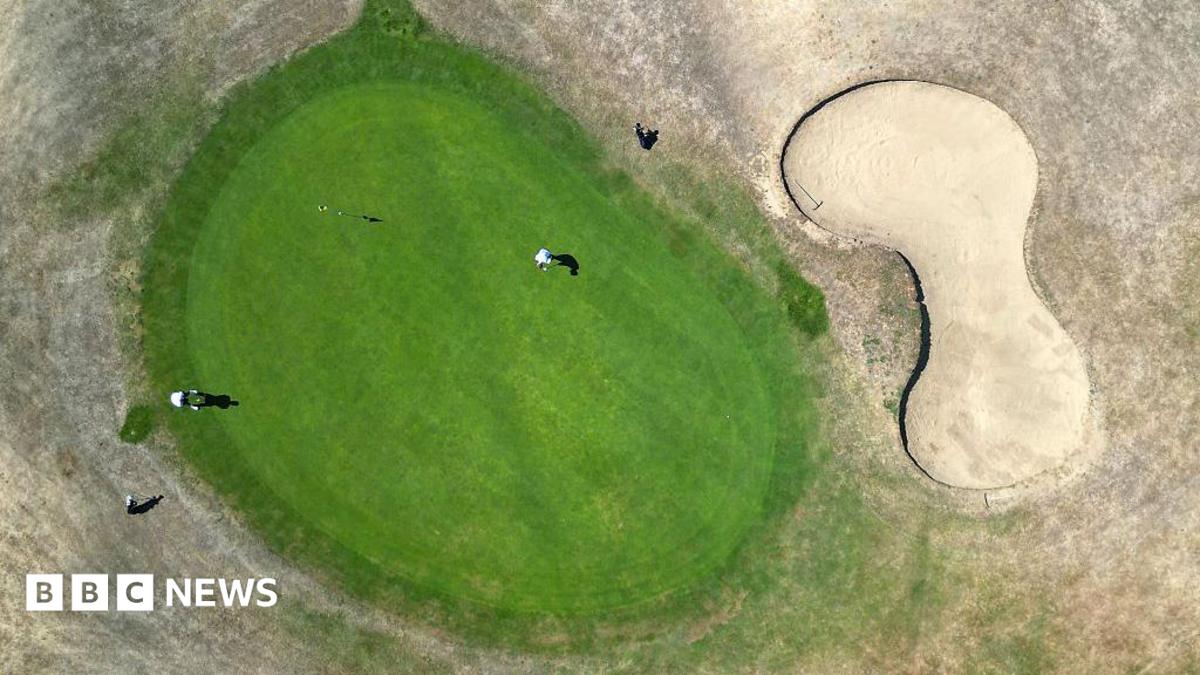
Dulwich College said it followed the rules set down by Thames Water.
A spokesperson said: “The limited irrigation we undertake is solely to maintain safe playing surfaces during an extended period of exceptionally dry weather, not to keep the grounds green for aesthetic reasons.
“Without limited regular watering, pitches quickly become unusable and can take several weeks to recover.
“Maintaining them now uses less water overall than allowing them to dry out completely and then attempting to restore them before they are next used.”
St Paul’s School said it was watering “just the pitches we will be using in three weeks when pupils return to minimise injury risk, not the rest of the grounds or flower beds”.
A spokesperson added the rules on watering the sporting grounds are the same for “all the local sites including Barnes Elms and Barnes Cricket Club that are council-run”.
Dr Jonathan Paul, associate professor in Earth Science at Royal Holloway University of London, told BBC London that despite the numerous exemptions and caveats set out by Thames Water, hosepipe bans do make a difference.
He said: “The places that have exemptions, the total volume of water which is used on them is relatively small compared to the water which is saved when millions of households in the drought-stressed area switch off their hosepipes.”
Even so, Paul added that “the exemptions were last codified 16 years ago” at a time when “the climate was very different”.
“So I think it’s very opportune. It’s a really good time to address them from a legislatory point of view again, while also thinking more about ways to prevent the drought.
“We had multiple heat waves starting in May, going through June and July and very little was put in place.”