
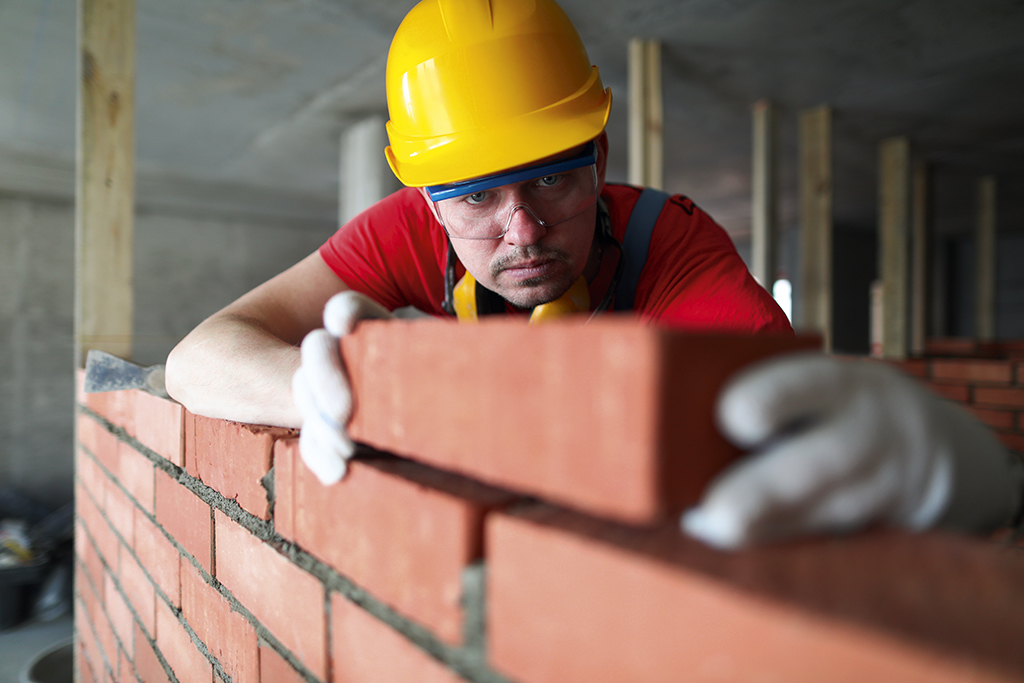
Brick deliveries fell by 16 per cent in June compared with a year before amid a continued slowdown in construction work.
Newly released figures from the Department for Business, Innovation, Science and Trade (DBIST) show 126 million bricks were delivered in the month, compared with 142 million in June 2025.
The level was the same as in May and up slightly from the 125 million bricks delivered in Great Britain during April 2026.
Deliveries of concrete blocks decreased by 12 per cent in June 2026, compared with June 2025.
Meanwhile, price inflation rose, with the department’s material price index rising by 6 per cent in the month from June 2025 levels.
The data was released after brickmakers Forterra and Ibstock each reported falling turnover and profit in their interim results, citing weak demand and high energy costs.
Building Cost Information Service chief economist David Crosthwaite said the industry slowdown was due to reduced client and investor confidence due to the Middle East war – which has led to the price increases – as well as persistent economic uncertainty.
“Month after month, official data tell the same story. These challenges will not disappear overnight, but the government can take further action to incentivise development and stimulate wider construction activity, boosting sales and deliveries of key materials,” he said.
“It is vital that the government considers every available avenue, as there is only so much pressure domestic manufacturers can absorb. The bottom line is that we need these manufacturers if we are to maintain the strength of the construction sector and the wider economy in the years ahead.”
Construction Products Association economics director Noble Francis said the price rises were unsurprising and oil-based and energy-intensive products were hit particularly hard.
He added: “UK brick deliveries falling sharply compared with a year ago is also, unfortunately, unsurprising, and many other products that feed into the early stages of housebuilding are finding similar declines, as it is a challenging time for many housebuilders.
“Affordability is still the key constraint in areas of high house prices such as London, the South East and East, while site viability remains the biggest problem in areas where house prices are lower, due to a combination of high product costs, wage costs, energy and fuel costs, plus the long list of the government’s additional costs on housebuilding.”
Francis said UK manufacturing has been “disproportionately” affected by the rise in energy prices since the Middle East conflict erupted in February.
“The rise in energy costs for energy-intensive UK product manufacturers takes time to feed through, though, as many firms purchase energy in advance on futures contracts to manage the volatility,” he added.
This means that manufacturing costs and prices for energy-intensive products “may well increase further in Q3… This certainly won’t help construction, especially on larger developments and projects”.
DBIST data shows fabricated structural steel was the material with the biggest increase in price in the year to June 2026, with a 17.7 per cent rise.
Imports of steel, which has an energy-intensive production process, were subject to a new tariff and quota system from the beginning of July.
Last month, Mace Consult warned that panic-buying pushed up its price before the new regime came into effect.