
Credit: Far Out / Alamy
Thu 6 August 2026 21:00, UK
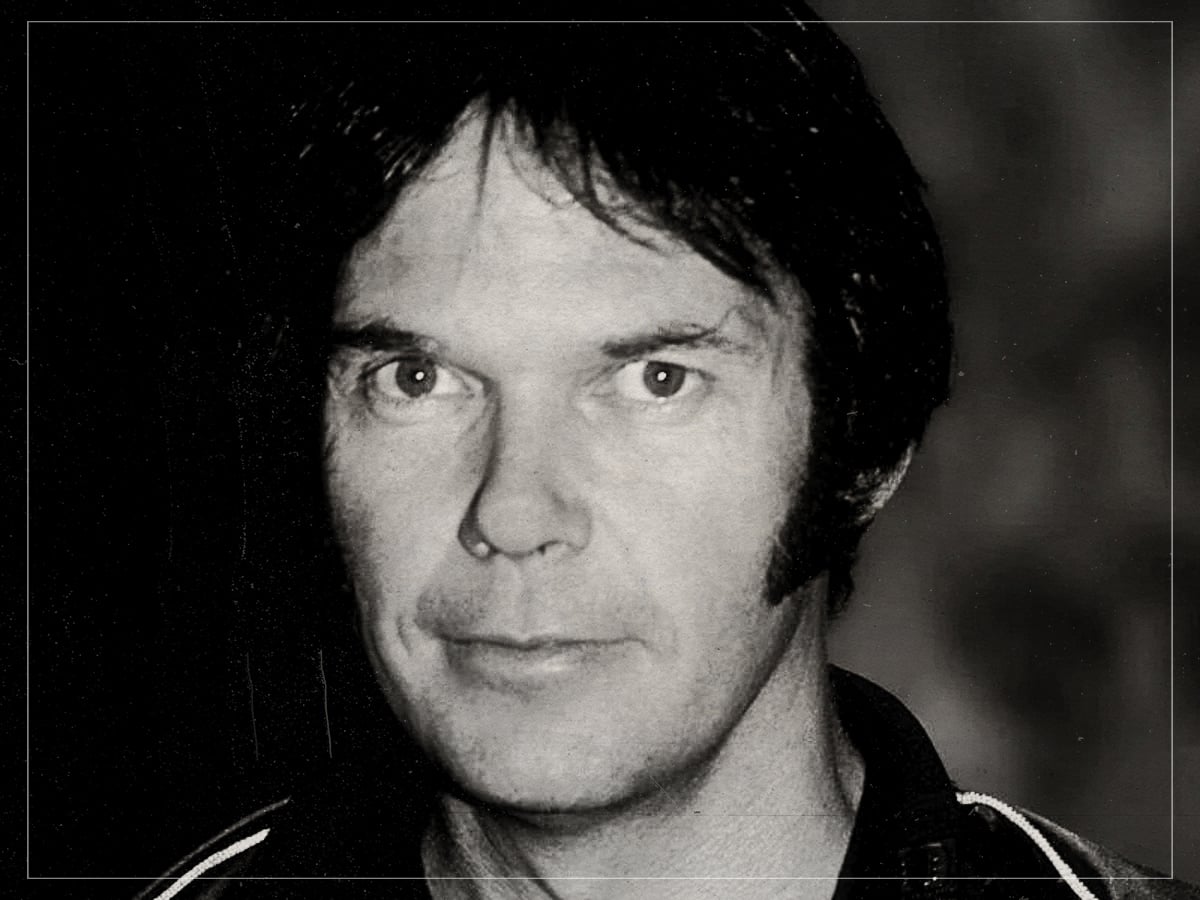
Neil Young always held a fickle and mercurial creative antenna.
Such unpredictable intuitions would steer the Canadian singer-songwriter through his 60-odd-year recording output. Through tested friendships and strained band politics, Young would doggedly pursue whatever direction his instincts pointed to, resulting in erratic departures from Buffalo Springfield before major events, to the perennial half-orbits of the Crosby, Stills, & Nash supergroup.
He was never one to get stuck in ruts. Such a restless curiosity for what awaited around culture’s corner meant that, of all the Woodstock generation, the late 1970s new wave didn’t spook the ‘After the Gold Rush’ crooner one bit. In fact, such a belligerent rejection of the peace and love idyll positively rejuvenated him, pouring all kinds of narked gas in the creative tank for 1979’s Rust Never Sleeps. While his country rock peers were struck with a crisis of irrelevance, Young entered the next decade in one of the most confoundingly intriguing chapters of his career.
Punk opened the doors for later synthpop and electronic music, a new wave permutation Young would take to like a duck to water when later cutting his own vocoder-laden Trans LP in 1982.
Speaking to French TV show Houba Houba that same year, Young reeled off several bands wielding keyboards with just as much affection as the day’s rockers, celebrating the likes of A Flock of Seagulls and The Human League with the same stature as The Pretenders and The Clash, revealing his thoughts on one direction his 1960s peers had travelled alongside punk’s insurrectionist bulldozer.
“I don’t think it’s a new wave, I think it’s a continuation of something that’s always been there…” Young posited, later adding, “I don’t like to listen to California soft rock music, only my own California soft rock music, that’s all I can handle now. I’ve heard too much of it. I don’t do that much of it in my set, and I put it at the first part, and then we just pass by that and leave it behind…”
Young had certainly lent a hand in paving the way for the later West Coast soft rock, he and his CS&N ensemble helping establish the breezy tempos, acoustic stroll and vocal harmonies that would be picked up by the later Californian superstars.
Further reading: From The Vault
But such gentle plod would smack a new generation who owed nothing to the hippies as deathly irrelevant by the end of the 1970s. Despite their commercial clout, the Eagles, Fleetwood Mac, Jackson Browne, The Doobie Brothers, and Linda Ronstadt would all lapse into prosaic pop rock beloved by the wealthy on their luxurious yacht escapes, hence the later namesake derivative genre tag. ‘Hotel California’ meant zero to the young, angry, and economically depressed, the streets’ new wave explosion as far removed from the Eagles’ songbook as can be imagined.
Young knew what was up. Soaking up the punk seethe and synthpop anti-rock iconoclasm, he’d dismantle not just his generation’s complacency but even his own recording legacy, signing to Geffen to kick off his series of album provocations, bottling the same irreverent spirit as the new wavers around him.
