
For several years, the CCA had been severely troubled, experiencing instability of leadership, financial problems despite a £3.4 million grant from Creative Scotland, a dispute over staffing in the venue’s bar, temporary closures and protests over the failure of the institution to commit to a cultural boycott of Israel.
Its vicinity was blighted by two successive fires at the Glasgow School of Art. Latterly, the venue had a rather empty feel, its formerly vibrant and cosmopolitan bar sparsely attended, while the downstairs bar was never restored to operation.
While the venue has lain unused, Creative Scotland, as owners of the building, which they formerly leased to the CCA Company, are seeking expressions of interest, with suggestions so far including a tacky proposal for a “Rock and Roll Hall of Fame”.
Unsurprisingly, then, the proposed sale of the site has been roundly criticised.
READ MORE: Independence by 2032? YesCymru are giving its movement a countdown
The unhappy saga has dragged on, with questions asked in Parliament and protests outside the building. In recent weeks, attention has focused upon the fate of the CCA’s archive.
Archives, being places of secure storage and quiet study, housing collections of material – usually, but not exclusively – documents and publications, are not usually the cause of outraged commentary and public dispute.
Yet the question of the CCA archive is one that has generated outrage and indignation in the city and further afield.
But before delving into that, what exactly is it? According to archivist Susannah Waters, the CCA archive is a catalogued collection of records, including those related to governance, staffing, finances, publicity, production of events and exhibitions, with much of the contents providing a mixture of information about the running of an arts venue.
The CCA collection is actually a case of two in one, the first from the 30-odd years of the CCA and the second, older material with its origins in the early 1970s.
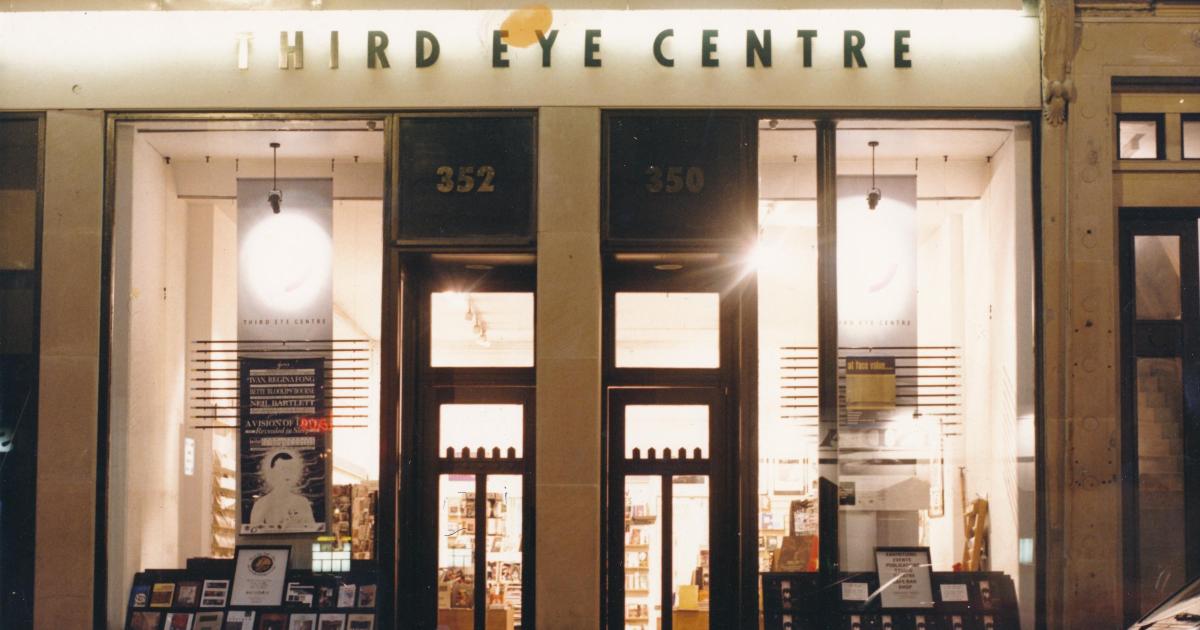
The older collection originated with the venue’s predecessor, the Third Eye Centre, which was founded by playwright, jazz musician and countercultural figure, Tom McGrath, in 1974.
Inside the CCA Archive room.
The Third Eye Centre endured until 1991, when funding problems forced closure, and its archive collection was then deposited in the City Archives at the Mitchell Library.
The venue was then revived and expanded as the CCA, and during the 1990s and 2000s contributed to an artistic revival in Glasgow.
By the early 2010s, the CCA was in a position to organise and consolidate its archive, and the Third Eye collection returned to the building.
The reason for this repatriation was that the proper CCA archive was established by the Glasgow Miracle Project, a research, archiving and digitising initiative publicly funded by the Arts and Humanities Research Council, and headed by the CCA’s then director, Francis McKee.
READ MORE: Anger as far-right ‘spoiler party’ spent £25 on ‘campaign’ that cost Greens seat
At this time, an archive room was set up on the premises to properly house the collection and provide access to researchers. The project re-catalogued the Third Eye Centre collection and catalogued the CCA’s material from 1992 onwards.
This, McKee explains to me, “created the beginning of an archive that has expanded massively through dedicated work and a constant stream of historical material donated by our audiences who felt confident that their artefacts would be secure in a publicly held space”.
With the demise of the CCA as a venue, its website has gone down, and with it public access to a detailed catalogue.
However, according to Archives Hub, the combined Third Eye and CCA collection comprises 56 boxes of documents, correspondence, reports, ephemera of events, press cuttings, photographs, slides and transparencies, as well as audio, film and video.
Social historian Charlie Lynch
“It doesn’t only hold material by great Scottish artists like Alasdair Gray, Edwin Morgan, Douglas Gordon, Christine Borland, and Joan Eardley,” says McKee.
“It has rare footage of Glasgow’s urban transformation in the 1970s,” he continues. “Documentation of the Barlinnie Special Unit, records of the fight against fascism and racism in the 1970s, and of the independence referendum in 2014. It is a record of life and culture in Scotland across decades.”
Historian Angela Bartie adds: “This archive is of irreplaceable significance to the cultural history of Glasgow and Scotland more broadly. It belongs to us, the people of Scotland, and must be safeguarded for future generations.”
On July 27, Glaswegians were perturbed to hear, via an article in The Herald, that the CCA’s archive was advertised for sale by Middleton Barton Valuation, a company charged with selling the CCA’s assets on behalf of its liquidators.
Selling the archive is ethically dubious at best, given that its contents were created and organised with the assistance of public funds. To sell the collection risks its dispersal, destroying its unique value, while if it left the city, it would become difficult or impossible to access.
The prospect of the archive being sold led to palpable outrage from creatives, academics and politicians alike.
READ MORE: Billy Connolly exhibition to open at Kelvingrove Art Gallery and Museum
Paul Sweeney MSP commented: “The fire sale of the CCA archive is an act of unscrupulous cultural vandalism that demands state intervention.”
Campaign group Save Our CCA described the archive as a “vital cultural asset” and that “to flog it off alongside catering equipment is beyond belief – it shows a complete disregard for, and shameless neglect of Scotland’s cultural history.”
Following this, Màiri McAllan MSP, Cabinet Secretary for Education, Culture and Gaelic, issued a statement which announced that she had been given “concrete assurances” by Creative Scotland “that the archive was not being sold as part of the auction process” and that she was “crystal clear that the Third Eye and CCA archive should be retained in whole and available to the public.”
Creative Scotland was, said the Cabinet Secretary, “working with local partners and the liquidators to ensure a secure future for the archive in Glasgow.”
On July 29, a representative of Middleton Barton Valuation told reporters from the Glasgow Bell that the archive collection was not being auctioned off with the rest of the CCA’s assets. The situation appeared, at least to outsiders, to have been temporarily stabilised.
Yet, within days, the contrary was happening: a listing for the sale of the collection appeared on Middleton Barton Valuation’s website, and the sale was promoted online through a paid partnership with the Herald.
Creative Scotland, in a statement to The National, claimed that confusion had arisen due to the progress of two separate auctions, and that Creative Scotland was “working with Glasgow Life and The Ballast Trust, Scotland’s business archive rescue and cataloguing service, to ensure the Third Eye Centre and CCA Archive remain in the city, and is complete, protected and available to researchers and the wider public.”
At the time of writing, the fate of the CCA archive remains uncertain.
McKee is unimpressed. “The promotion of the sale seems in complete contradiction with Màiri McAllan’s position of wanting to protect the archive”, he tells me.
“The inactivity of the Government and Creative Scotland doesn’t just reflect their helplessness; it seems positively vindictive to the arts community.
“The CCA archive holds a communal memory of the cultural life of Glasgow and Scotland – the continued sale reveals just how little that means to the government.”
Middleton Barton Valuation was approached for comment.