
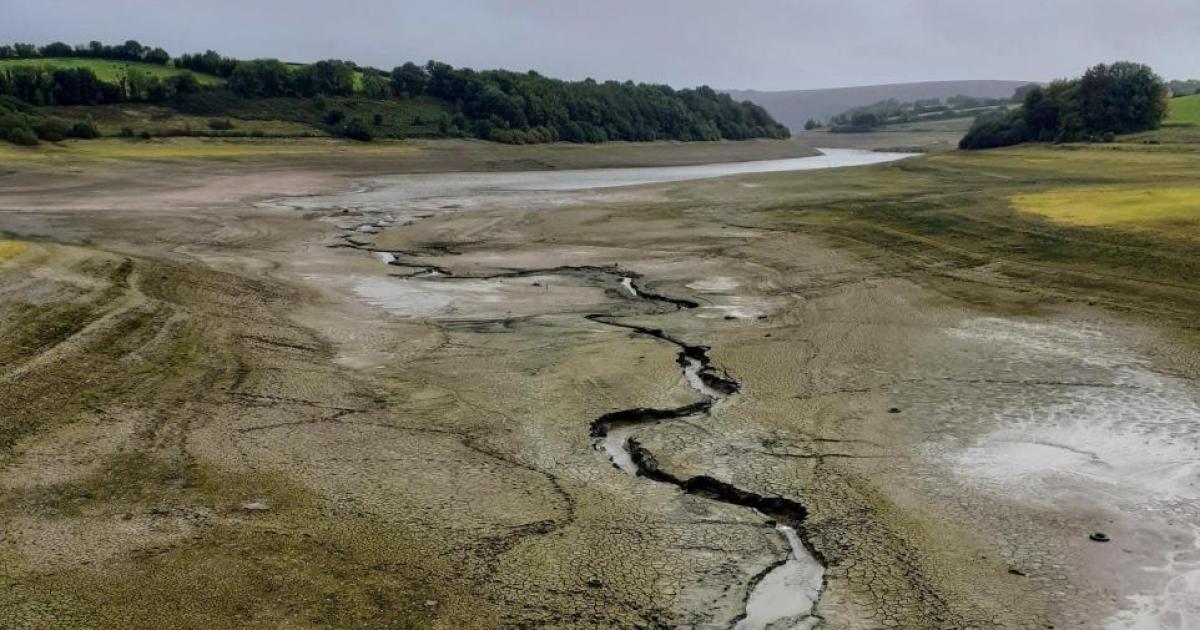
Hours after South West Water introduced a ban in some areas of Somerset, the regional water company is warning that households need to cut back on non-essential use to protect resources.
The company said its water supply remains stable for now, with surface water reservoirs across its region 58 per cent full at the end of July.
Demand has remained above 400 million litres a day for 35 consecutive days — more than 30 per cent higher than normal for this time of year, according to Wessex Water.
Wessex Water has appealed to customers across most of Somerset, Bath, Dorset, and Wiltshire to reduce non-essential use after months of exceptionally dry and hot weather.
The pressure comes after a summer which the company says has matched — and in some ways surpassed — conditions experienced during the drought of 1976, when the region last faced a hosepipe ban.
So far this year, the Wessex Water area has recorded 16 days above 30C, exceeding the previous annual record of 14 days set in 1976.
It also said 2026 is the first year on record in the UK to see temperatures exceed 35C in May, June, and July.
The highest daily demand was recorded on July 11, when customers used 449 million litres of water.
Wessex Water said the key challenge has been moving enough water through its network to meet demand, which also affects underground reservoirs that would normally replenish quickly.
Will Willoughby, director of water supply at Wessex Water, said: “We know that a hosepipe ban would not be welcome news for our customers, especially during the summer holidays.
“A ban is a last resort for us, and we don’t want to introduce one, but we do need customers to help.
“If all customers can make small changes to their daily water use habits, this will make a big impact and help keep water flowing for each other, businesses and the environment.”
He added: “Throughout the summer our teams have been working around the clock to find and fix more leaks on our network, prioritising those that are wasting the most water and increasing the number of repairs we complete.
“We’re also contacting larger business customers who are high water users to encourage them to avoid non-essential water use, but we need everyone to work together.
The company is asking residents to let lawns turn brown, use watering cans rather than hoses or sprinklers, move plant pots into the shade, and reuse washing-up or paddling-pool water where possible.
It says using a watering can instead of a hose or sprinkler could save up to 1,000 litres an hour — roughly the amount used by a family of four over two days.
Customers are also being encouraged to take shorter showers, avoid leaving taps running, and postpone car washing.
Mr Willoughby said: “If demand doesn’t reduce, we will need to introduce more formal restrictions to protect water supplies, which is why we’re asking customers to work with us now to help avoid this.”
According to Environment Agency data, two Somerset water reservoirs are now classed as “exceptionally low” due to the prolonged hot and dry temperatures.
Wimbleball Lake in Exmoor now only has only 50 per cent of reservoir storage, while Blagdon reservoir is 54 per cent full.