
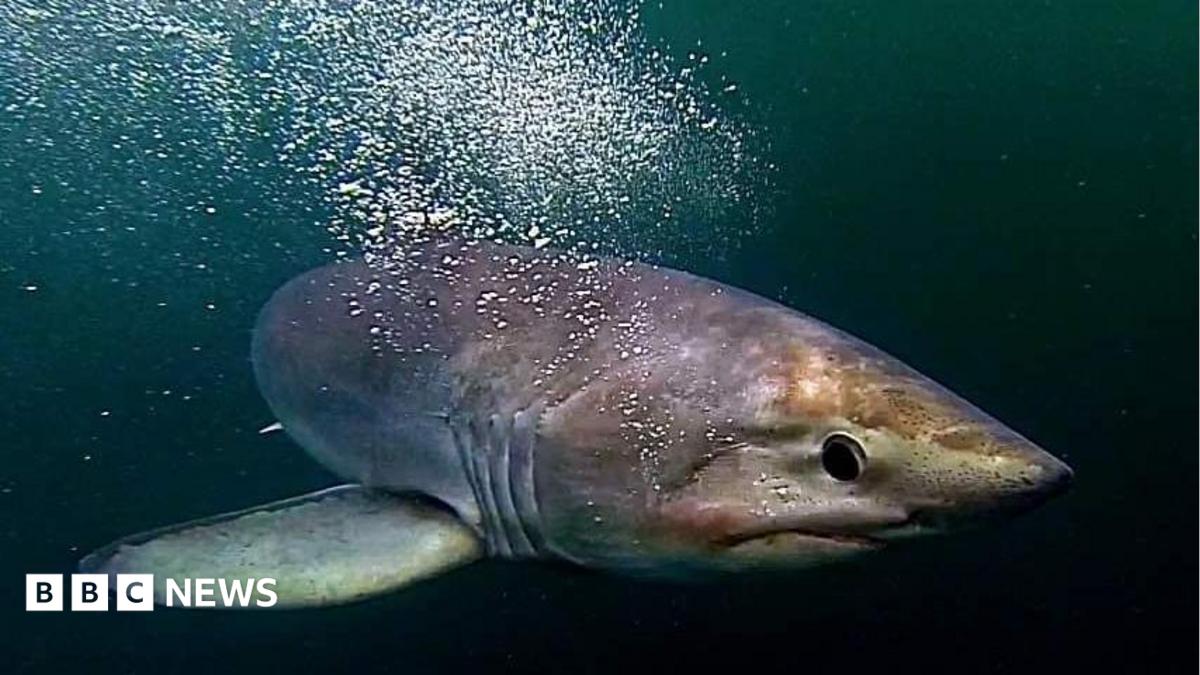
He said the warmer sea temperatures in winter were having a “huge effect” on marine life.
“More recently, we’ve been seeing new species in greater abundances, it might be things like gill-head breams, stingrays and some have put bluefin tuna down as a species that’s reacting to warming waters around the world and changing predator-prey relations,” he added.
Stewart said warmer waters and changes to the availability of prey had lead to both the increase in bluefin tuna in the region and shark species.
“Here off the south west coast we’ve seen this increase and that really is only explained by shift in their migration patterns,” he added.
He said a three-year project with the University of Exeter was studying sharks to learn more about them.
He said: “One of the things we think is happening, and we have quite good evidence for this, is the blue sharks are actually pregnant when they’re here and they give birth somewhere off the south west coast of the UK.
“So almost all of the sharks that are seen off the south coast are female.
“So the theory is they are moving to these marginal waters, while they’re pregnant, so they can avoid the males.
“During the matings the males are quite violent to the females and the males eat the pups when they hatch.
So, this is just a theory at the moment, but this could be a safe zone for them, it’s like a maternity ward, basically.”
Follow BBC Guernsey on X, external and Facebook, external. Follow BBC Jersey on X, external and Facebook, external. Send your story ideas to channel.islands@bbc.co.uk, external. Follow BBC Cornwall on X, external, Facebook, external and Instagram, external. Follow BBC Devon on X, external, Facebook, external and Instagram, external. Send your story ideas to spotlight@bbc.co.uk, external.