
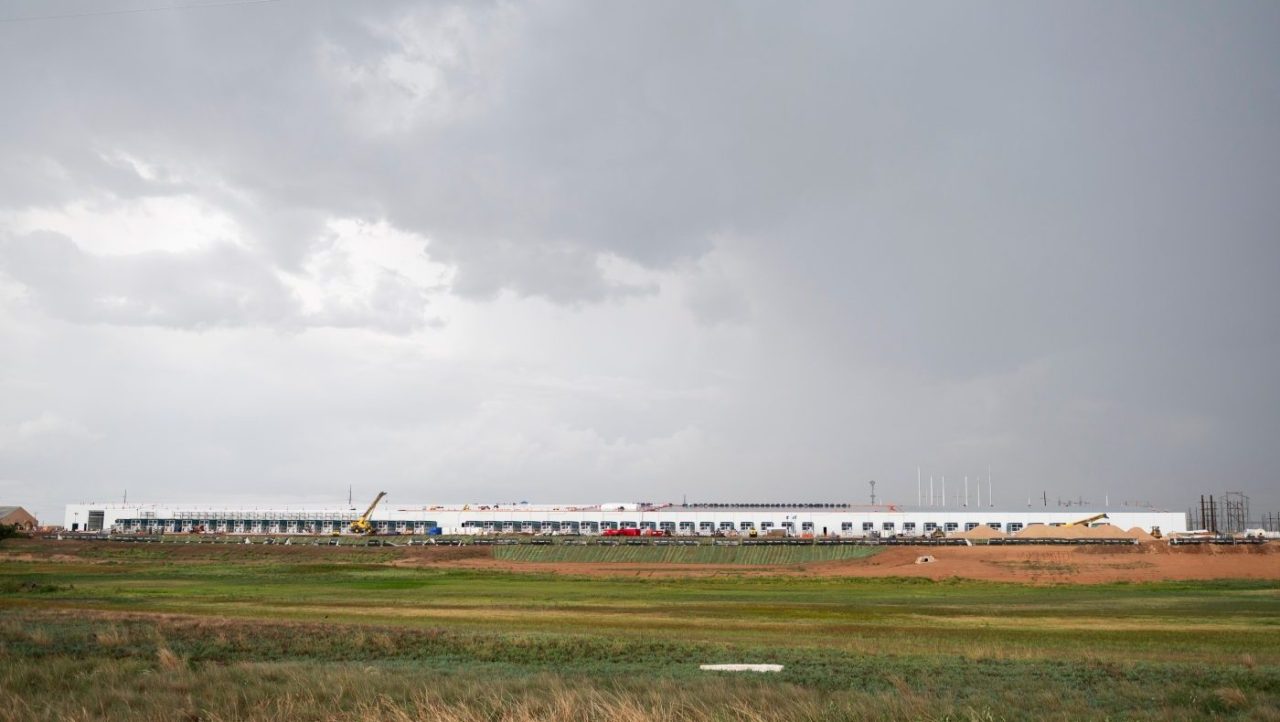
President Trump is touting the benefits of AI data centers after Texas moved to more strictly regulate the industry, which has rapidly become a political lightning rod across the political spectrum.
Trump waded into the debate during an interview last week, saying it would be a mistake to push back on data centers following Texas Gov. Greg Abbott (R) placing a moratorium on them, pending audits from regulatory agencies.
“I’m not taking positions,” the president told Punchbowl News. “I just think it’s a mistake because there are other communities that want it. When a community wants it, it means a lot of money is going to come into that community.”
Trump said if he were a governor, he “would want data centers so badly,” adding, “Taxes are going to go way down because this is a tremendous source of income.”
Trump’s comments come as data centers have emerged as a hot-button issue going into the midterms, with Democrats looking at the issue as an opportunity to go on the offensive against Republicans.
Polls show widespread disapproval among Americans regarding data centers. A Gallup poll released in May found that 71 percent of Americans said they oppose constructing data centers in their local area, including 48 percent who said they were strongly opposed.
On the left, much of the opposition is driven by concerns about the environmental impact of the industry, which uses huge amounts of electricity and water. Republicans are more divided on the centers, but opposition on the right is growing as more communities face potential construction in their backyard.
“The concerns on the right are mostly local control [and] community benefits,” said Chris Johnson, a Republican strategist, noting “the conservative instinct to protect your community.”
Sarah Wagoner, an environmental and energy policy analyst at the conservative Heritage Foundation, argued the differing opinions on data centers among conservatives come down to the varying local realities surrounding constructing data centers.
“Data centers in a state like Texas versus a state like New York versus up in the Midwest, they’re going to have different realities, different environmental and energy impacts that come with them,” Wagoner said.
“The biggest concern that people are facing around whether or not building a data center is going to increase power bills or increase costs for those communities,” she said.
Abbott’s pause on the approval of data centers came amid growing backlash in the state to the data center boom.
In a statement responding to Trump’s comments on criticizing the state’s handling of data centers, Abbott’s spokesman Andrew Maheleris argued the audit was needed because less than 10 percent of data centers complied with the state in reporting their power and water use.
“Governor Abbott’s top priority is to protect Texans’ safety and quality of life and ensure the integrity of our power grid and water supply,” Maheleris said.
“Many are unaware that ERCOT [Electric Reliability Council of Texas] is tracking a more than 500% increase in peak electricity demand. This unprecedented growth could endanger the reliability and stability of the Texas electric grid,” he said.
The governor set a number of standards for data centers that include requiring them to pay for their own electrical infrastructure, reuse their own water, reduce the cost of electricity for Texans, not to disrupt residential neighborhoods and quality of life, as well as eliminating their reliance on taxpayer-funded incentives.
Abbott’s office announced on Thursday and Friday that four data center companies said they will go along with the standards and guidelines set by the governor.
Last month, Trump announced he will expand his Ratepayer Protection Pledge to have data centers “pay their own way” for the electricity they use, an acknowledgement that data centers’ massive use of electricity has the potential to raise costs for consumers. At the same time, the president noted the “tremendous numbers of jobs” data centers could bring to communities.
“He is threading the needle perfectly here to bring both sides of this argument within the conservative movement where each side has legitimate arguments and concerns, and moving forward in a way that focuses on his main goal which is strategic competition with China, but provides economic and local benefits, and prepares our workforce force and our economy broadly for the latter half of the 21st century,” Johnson said.
However, critics note Trump’s family’s close relationship with big tech, having invested in data centers. Trump has denied having any involvement in his family’s business.
Many Democrats argue data centers are steamrolling communities and making their taxpayers foot the bill.
Last month, New York Gov. Kathy Hochul (D) issued the first statewide moratorium on data center development.
“If a business comes into a community, usually it works really hard to foster a good relationship with that community. Instead, this is simply a gold rush and a land grab meant to turn a quick profit,” Rep. Suhas Subramanyam (D-Va.) told The Hill.
Subramanyam’s district includes Loudoun County, which is home to over 200 data centers and has been dubbed “Data Center Alley.”
The congressman said he has witnessed a growing number of Republicans voicing concerns over data centers, but not nearly enough to work together on legislation to address the matter.
“I’m at a point where I don’t feel like I can pass them in this Congress with a Republican majority,” the congressman said. “I’ll have to count on a Democratic majority in the next Congress to find a path to getting them on the floor and passing them.”
Data centers have emerged as a major front in the battle for the House majority.
“I’m pleasantly surprised that it’s becoming a campaign issue,” Subrmanyam, who has highlighted the issue in his own reelection campaign, said. “I’ve been shouting from the rooftops for most of my political career about how we need to hold the data center industry more accountable.”
Johnson said Republicans are missing an opportunity if they are playing defense on data centers ahead of the midterms.
“When we’re on the defensive about stuff like data centers, we end up contradicting ourselves quite a bit,” he said. “It’s like what do you mean you’re supporting innovation, economic growth, and job creation, but you’re against the main driver of all of those things in our current moment.”
Subscribe to The Hill Insider to continue reading.
Monthly
Yearly
Members-only newsletters
Exclusive deep-dive reporting
Live editor calls + Q&A
No display or video ads on TheHill.com*
SUBSCRIBE
Sign Up
Members-only newsletters
Exclusive deep-dive reporting
Live editor calls + Q&A
SUBSCRIBE
Sign Up
*Advertising restrictions will not apply to The Hill apps, free newsletters, podcasts, or sponsored content.
By signing up for a subscription, you confirm that you have read and agree to our Terms of Use, which includes a jury trial waiver and class action waiver, and that you have read our Privacy Policy detailing our collection, use and sharing of your personal information.
Copyright 2026 Nexstar Media Inc. All rights reserved. This material may not be published, broadcast, rewritten, or redistributed.