
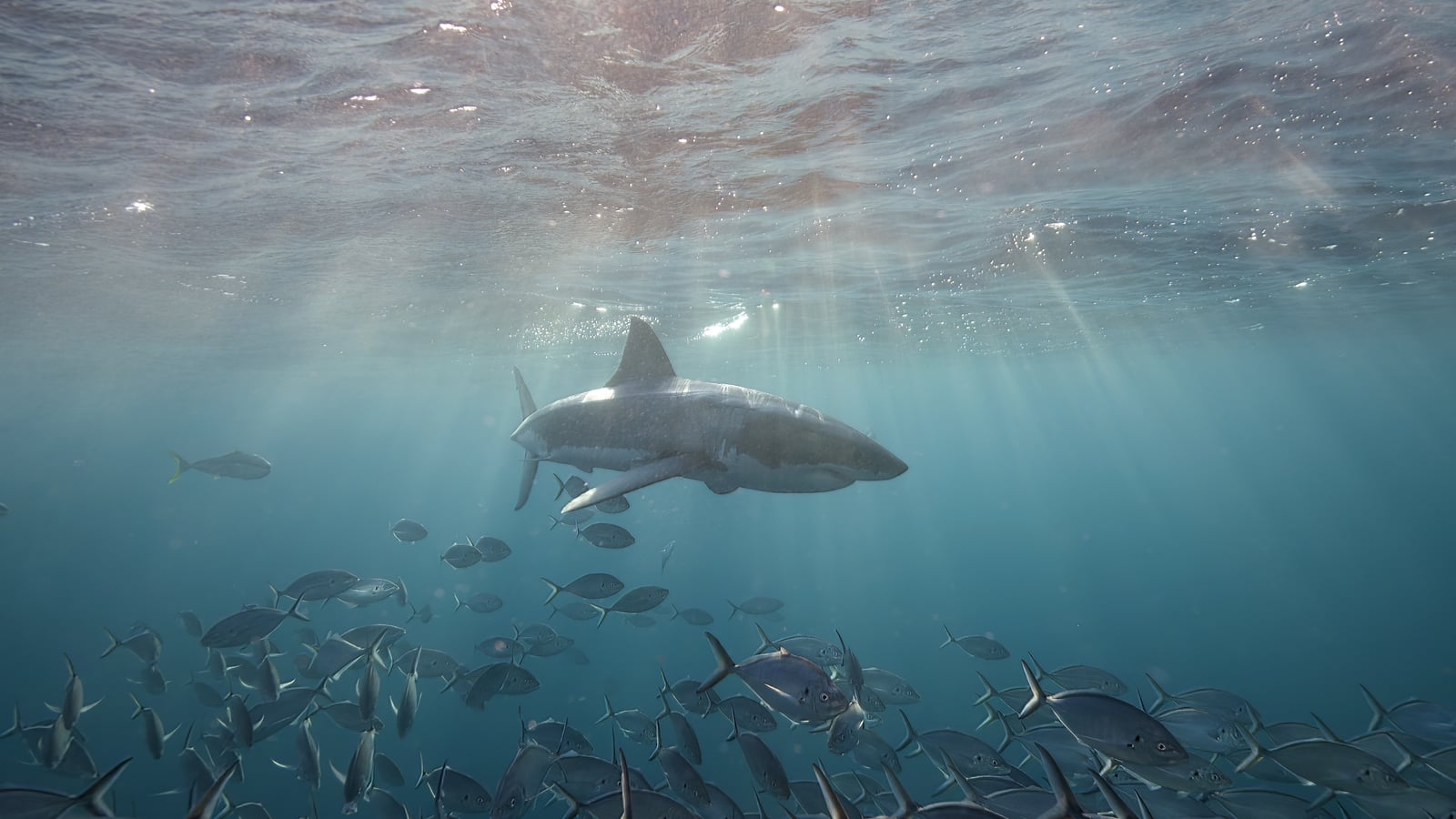
US scientists are hoping that sharks will help them to understand the potential intensity of a hurricane before it makes landfall.
University of Delaware researchers are testing whether sharks can serve as mobile near-real-time ocean-data observers, carrying sensors that measure conditions to inform oceanographic, atmospheric and climate models.
These tags are small electronic devices that measure ocean electrical conductivity – a metric closely related to salinity – as well as temperature and depth, as marine creatures to which they are attached swim and dive.
“Animal-borne sensors have been used successfully by oceanographers for years, particularly on elephant seals in polar regions where scientific observations are scarce,” said principal investigator Aaron Carlisle, who is a professor in the university’s School of Marine Science and Policy.
Sharks offer a new opportunity in such research because they are abundant, widely distributed and easier to access than many protected marine mammals, Mr Carlisle said.
Until now, shark tagging has typically tracked only where they travel and the habitats they use.
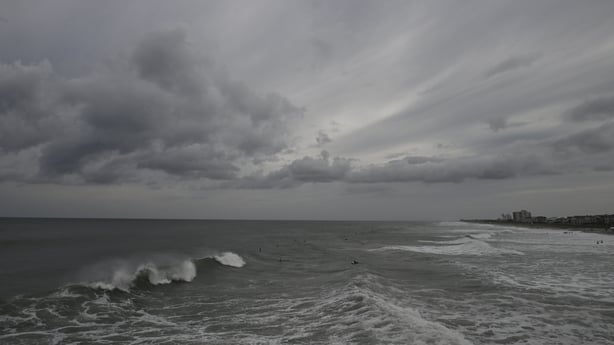
Hurricane Erin approaching Wrightsville Beach in North Carolina in August 2025
The University of Delaware researchers select sharks that can collect the measurements most useful for hurricane research, favouring species that surface often enough for their tags to transmit the information to satellites.
Previous analyses identified shortfin mako sharks, blue sharks, smooth hammerheads and juvenile great whites as strong candidates for such research in the North Atlantic Ocean.
“We are really most interested in the heat content of the top layer of the ocean, which is known as the mixed layer,” Mr Carlisle said.
“This is the part of the water column that really drives hurricane intensity – warmer mixed layer equals stronger hurricane – as it holds the heat that feeds hurricanes,” he added.
The tagging process begins in early May, when highly migratory species move closer to the coast from their winter habitats further out in the Atlantic, according to University of Delaware doctoral candidate in marine science Caroline Wiernicki.
Researchers head 50-65km offshore aboard a research vessel, deploy baited lines and wait, typically two to three hours, for a shark to take the bait, she said.
“The tags are attached to the dorsal fin. Then every time the shark swims at the surface, the tag can communicate and transmit data to the orbiting network of satellite receivers,” Mr Carlisle said.
‘Pit crew’ approach to tagging process
The tagging process itself is operated “like a pit crew” in an auto race, she said, and usually takes less than five minutes.
It is carried out under institutional animal care oversight to minimise impact on the sharks.
The tags are attached using materials designed to corrode and fall off over time.
Each animal also undergoes a health check before release, as a stressed or harmed shark may not behave naturally, potentially biasing the data, Mr Carlisle said.
Ms Wiernicki contrasted the “absurdly dramatic” portrayals of sharks in popular culture to the tamer reality – far less dramatic than the giant great white shark that terrorised fictional Amity Island in the 1975 film ‘Jaws’.
If the project succeeds, the data collected could help improve forecasts of how strong hurricanes will be as they approach the US East Coast.
The information could give communities from North Carolina to Massachusetts more reliable information to increase coastal resilience to ever-strengthening storms, Ms Wiernicki said.
Most people will never encounter a shark in the wild, Mr Carlisle said, but many know them through frightening stereotypes.
In reality, “they are amazing animals perfectly adapted to the ocean, and we can learn a huge amount from them,” he said.
“If we can show that sharks can help people, it’s a win-win situation.”