
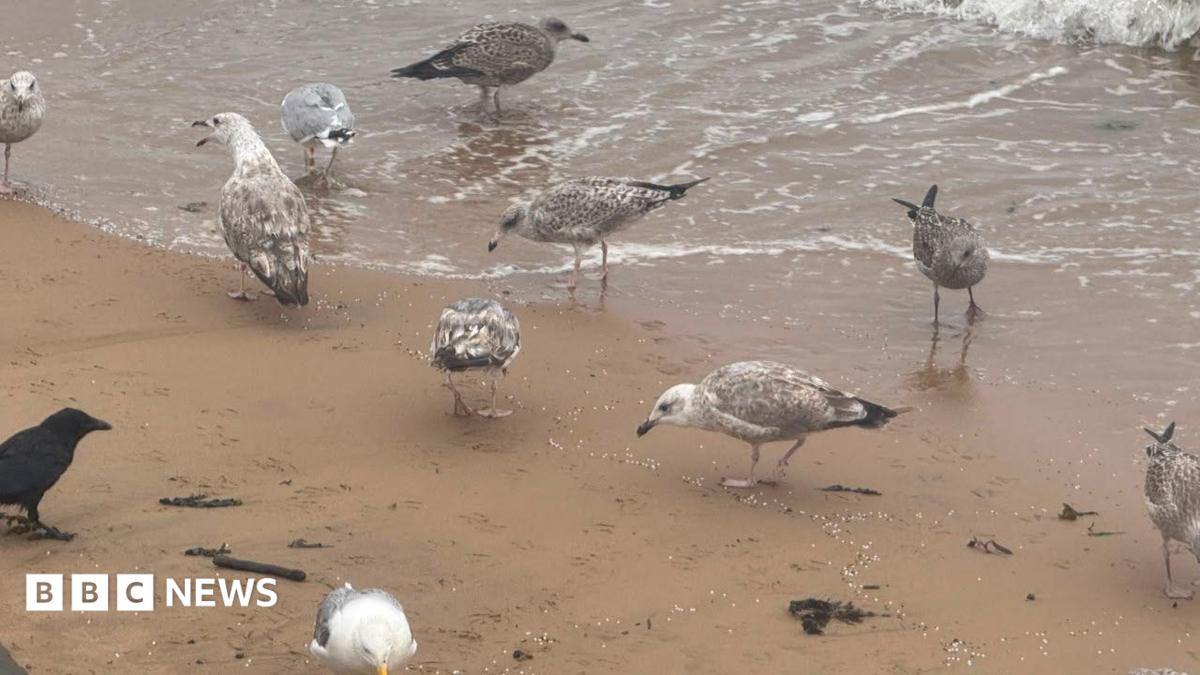
Birds eating small plastic pellets spilled into the North Sea could have “devastating consequences”, a charity has warned.
Tonnes of the pieces of plastic, known as nurdles, washed up on beaches in north-east England after a crash between two vessels at the Port of Tyne damaged two shipping containers.
The Royal Society for the Protection of Birds (RSPB) said at this time of year, birds were feeding both themselves and their chicks and the pellets could cause choking or starvation as they filled their stomachs.
It also warned the pellets could enter the wider food chain, affecting fish, seals and dolphins. An investigation by the Environment Agency (EA) is under way.
Footage shown to the BBC appears to show seabirds eating them on Low Lights beach in Tynemouth earlier this week.
RSPB marine policy officer Zia Fikardos explained predators – including birds – could eat prey, such as fish, which already had the plastic inside them.
The Tyne Rivers Trust said fish had already been found with nurdles in their innards, calling the situation an “environmental disaster”.
Fikardos said birds could also eat the nurdles directly from the sea and beaches.
“If they’ve been in the marine environment for a long time, they can start to smell like food,” she said.
“Plastics have been found in the stomachs of dead seabirds, and essentially, a stomach filled with plastic can’t be filled with food.”