
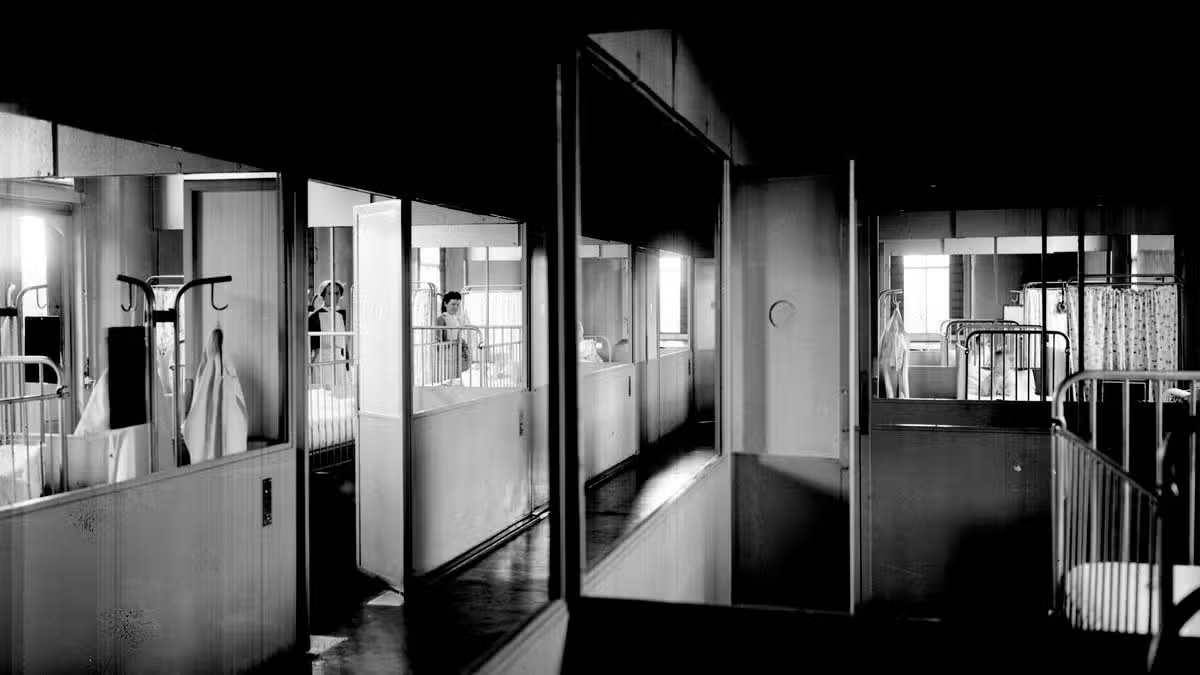
There’s almost nothing left of the hospital now. Turn off Oldham Road, past the industrial units and under the railway line, and you’ll drive past what looks like open fields behind metal railings, lined with trees.
With the exception of one surviving square red-brick building, you could be forgiven for thinking there was nothing ever there at all.
But roots run deep, and although the buildings are gone, memories – and pain – endure.
Click here to get the biggest stories straight to your inbox in our Daily Newsletter
Monsall Hospital is thought to be the only place in Britain where a person living with HIV was detained against their will.
Roger Youd was born in Flintshire in North Wales in 1956. He moved to Manchester in the early 1980s and was by all accounts a beloved figure of the city’s gay scene, a music fan and avid vinyl collector who worked as a clerk at a furrier by day and a DJ by night, including a stint at Napoleons on Bloom Street.
He was diagnosed with HIV in late August 1985 and is thought to have admitted himself to Monsall Hospital, which would go on to become something of a pioneer of early treatments before its closure in 1993.
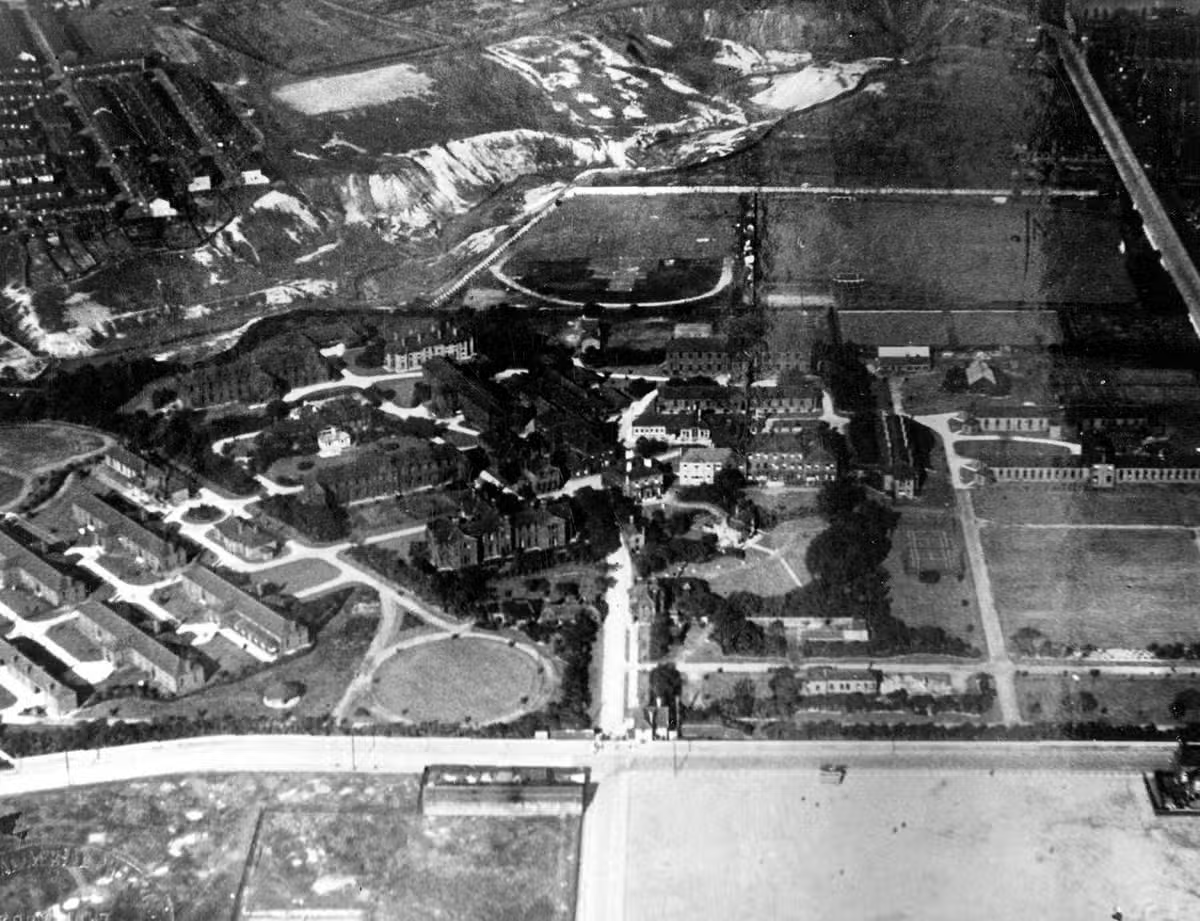
Monsall Hospital from the air in 1925(Image: Image courtesy of Manchester Libraries )
Such was the furore about the disease at the time that the city’s first patients made the front page of the M.E.N in January 1985.
The article quoted consultant Dr Bhat Mandal stressing that there was ‘no risk whatsoever’ to the wider community – but it also dubbed AIDS a ‘killer disease’ ‘known as the ‘gay plague’.
It was at Monsall Hospital that Roger was held against his will after a court order, the first of its kind, prevented him from going home.
Manchester City Council, whose medical officer applied for the order, have said they ‘profoundly regret’ Roger’s ‘unacceptable’ treatment, but have stopped short of apologising for the order.
Roger’s story was dramatised in Russell T Davies’ 2021 drama It’s a Sin, but his real story has been painstakingly documented by activist Will Hampson for his podcast AIDS: The Lost Boys of Soho.
Archive editions of the M.E.N state that, at the initial hearing, the council’s chief medical officer Dr Anna Jones applied for the order under the Public Health Control of Disease Act 1984.
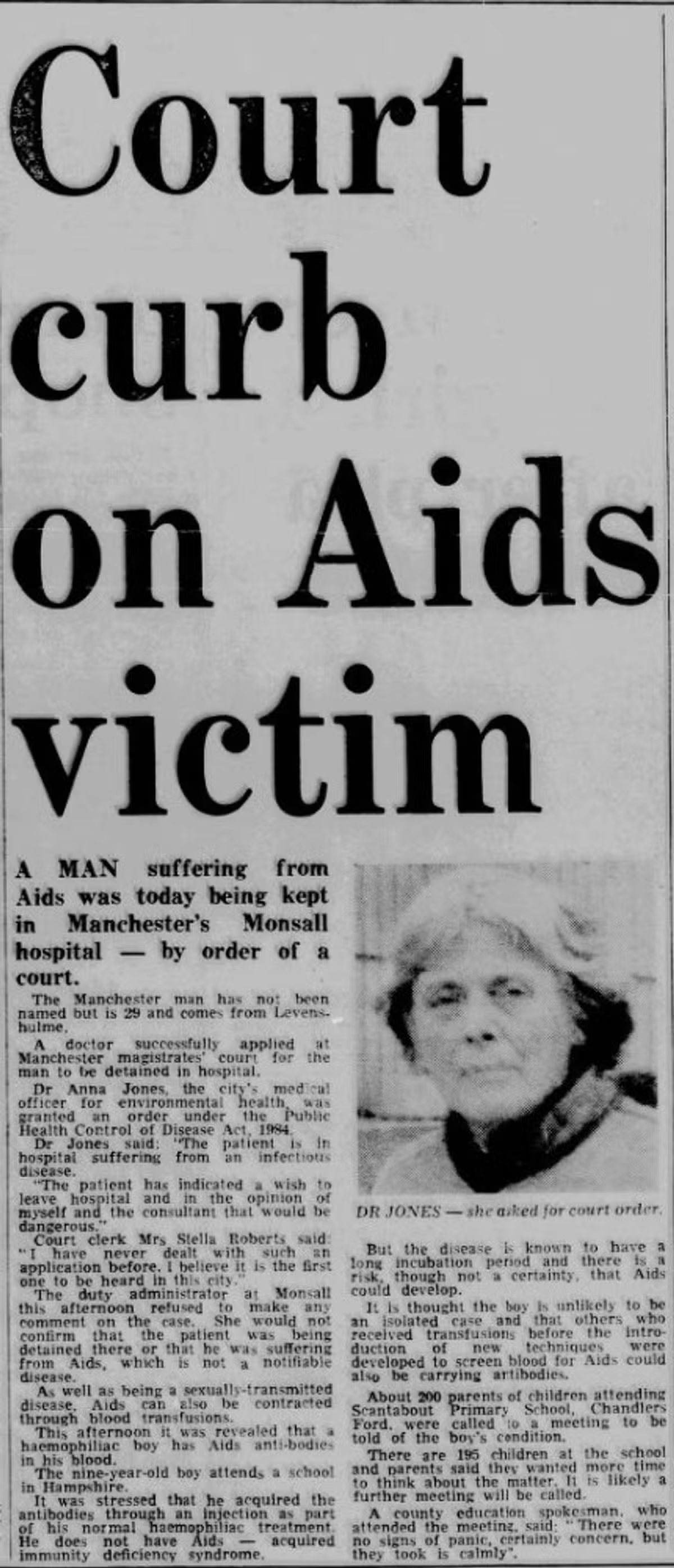
MEN clipping on the detainment order being imposed on Roger Youd on September 14 1985 (Image: MEN/British Newspaper Archive)
“The patient has indicated a wish to leave hospital,” Ms Jones told Manchester Magistrates’ Court on Saturday September 14, 1985. “In the opinion of myself and the consultant, that would be dangerous.”
Later speaking in a Thames TV documentary, which aired in November 1985, Roger’s consultant Dr Edward Dunbar’s main concern was said to be that Roger ‘did not live alone but in a crowded lodging house’ in Levenshulme.
“He was bleeding profusely from many orifices, and was likely to rapidly get worse,” the doctor claimed in the documentary.
“He was in danger of dying from a loss of a very large quantity of blood lost in a projectile manner. Anybody in the near vicinity was likely to be sprayed with a large quantity of infected blood.”
Roger’s family, who were visiting him in hospital at the time and staying on hospital grounds, say that the order was sought without their knowledge. Speaking in a statement shared with the M.E.N., his older brother Carlton said the family had been blindsided by the decision.
“I was only told about it on the Saturday morning after we returned from town to buy essentials for his stay,” Carlton said. “I was completely stunned.
“They pursued the order without sharing their intentions with us, despite our constant presence in the hospital and endless dialogue with the consultant. It has been a betrayal we have had to live with for more than forty years.”
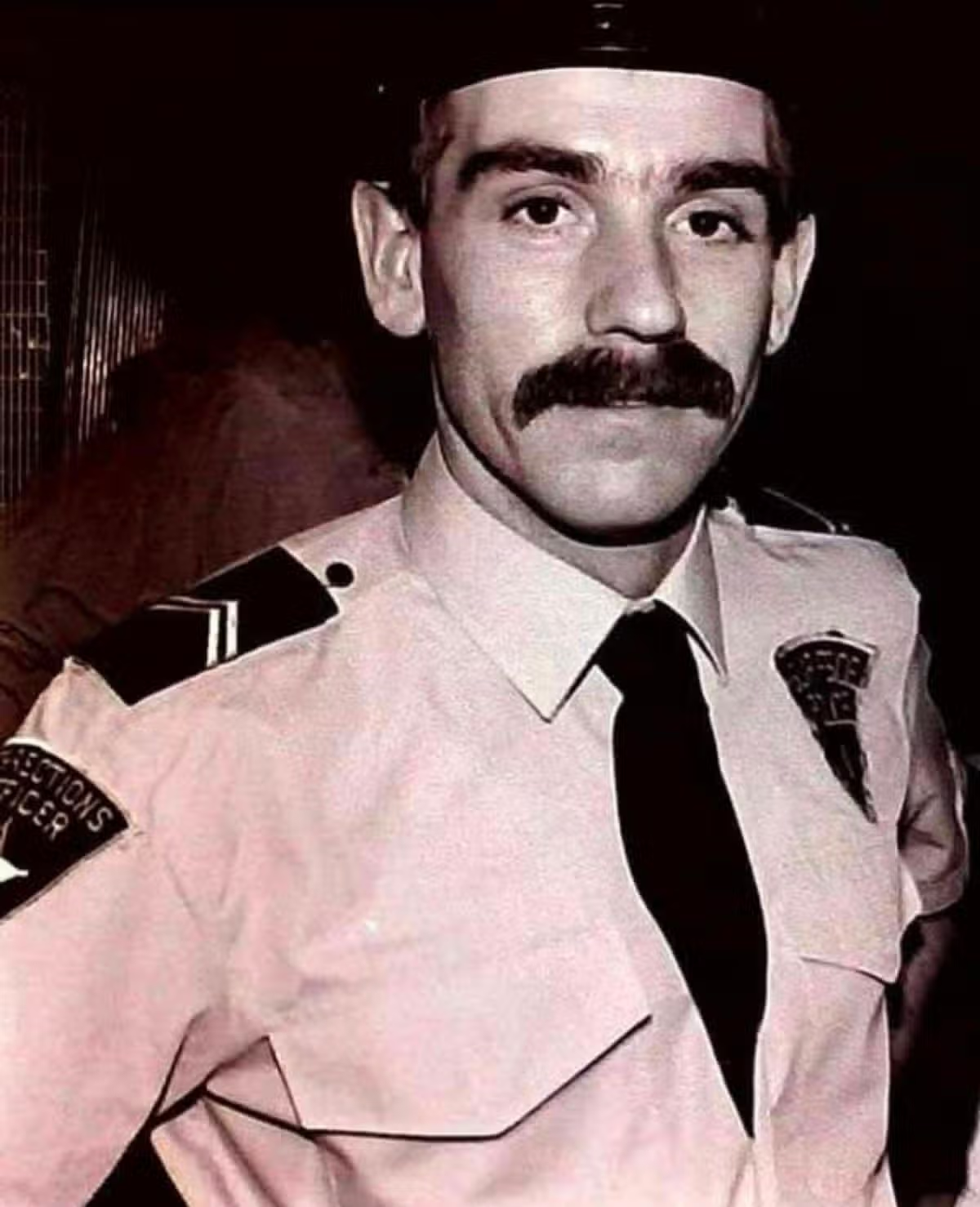
Roger in fancy dress as a corrections officer High Society on Princess Street where he worked as a DJ circa 1983. (Image: Courtesy of the Youd family )
The city’s gay community immediately rallied, holding public and vocal protests outside the town hall.
The Terrence Higgins Trust, Britain’s first HIV charity, arranged legal counsel for Roger, who successfully fought for the order to be lifted at the Court of Appeal on Tuesday, September 24, 1985.
The city council’s barrister told the judge that they did not oppose the application, as Roger’s condition had ‘substantially improved’ and ‘no longer justified detention’.
Roger’s barrister said he ‘did not accept’ the validity of the original order, but Judge Patrick Russell told the court that the evidence ‘plainly indicated that it was a proper order’.
Dr Edward Dunbar told the Thames TV documentary that he would ‘not act any differently’ despite the ‘furore’: “I would be failing the public of this city if I did.”
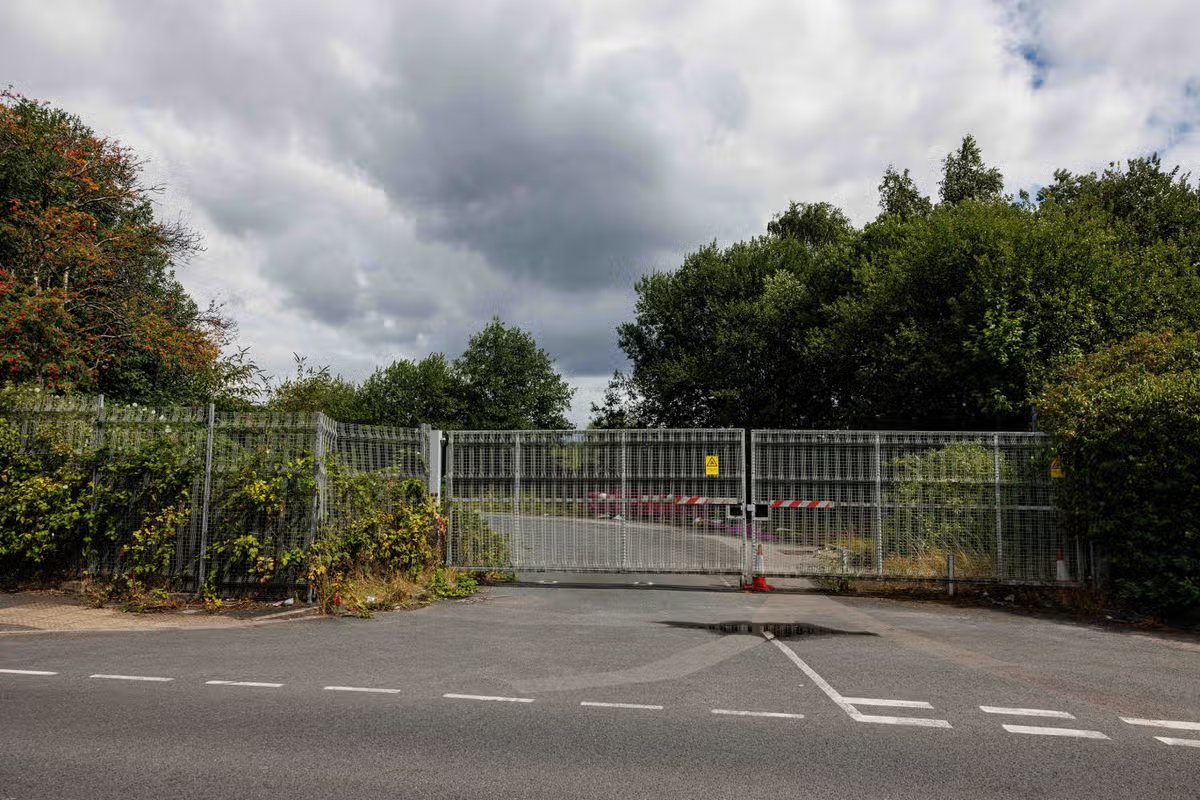
Almost nothing remains of Monsall Hospital now (Image: Manchester Evening News)
There were further protests outside the town hall on October 8. In an M.E.N. article on October 16 the council pledged to ‘review its procedures’ to ensure ‘that the situation does not arise again’.
A spokesperson speaking in the same Thames TV documentary agreed it would ‘not be necessary’ to use the legislation again in future.
“It causes fear amongst the community most at risk and they may not seek treatment,” then-Cheetham councillor Nick Harris said in the documentary. “They may have fears of being incarcerated in hospital.
“It may lead to members of the public believing that this is a contagious disease that needs isolation treatment, when most of the people can be treated in ordinary acute hospitals or even at home without any risk.”
At the time, relations between Manchester City Council and the LGBT community were arguably on the up. In 1984 the council appointed a Gay Men’s and Lesbian Officer to its equalities committee and provided a £1,700 grant to fund the first ever Manchester Pride the following year.
In 1986 the Council provided funds of £118,000 to build the city’s Gay Centre and, in the wake of Section 28 becoming law, produced thousands of leaflets setting out how they would prevent LGBT people receiving unequal treatment.
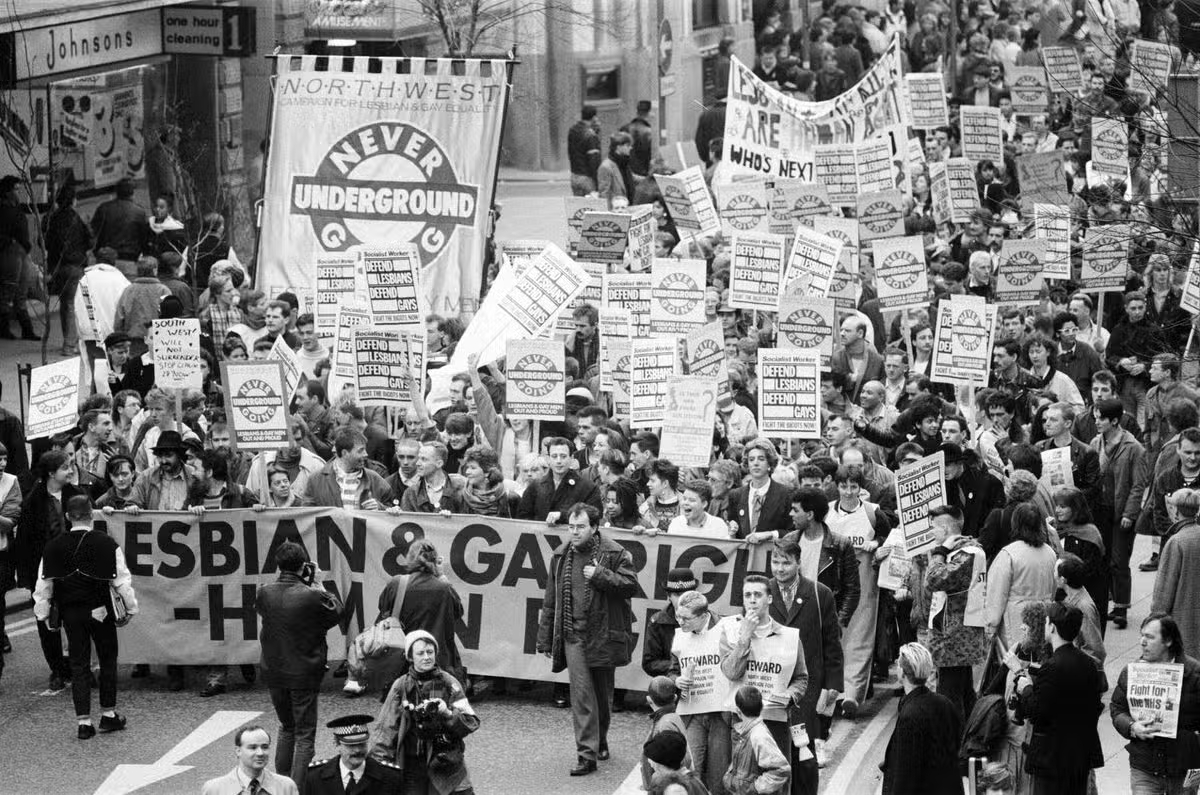
A rally against Section 28 in Manchester city centre in February 1988 (Image: Mirrorpix)
The 1984 legislation under which Roger was detained provided powers to isolate people suffering from notifiable diseases, which are required by law to be reported to government authorities, such as measles and tuberculosis.
But HIV and AIDS have never been notifiable diseases in Britain, as they pose no risk of transmission through everyday contact. But a 1985 regulation allowed for the same powers to be exercised in relation to AIDS patients.
It is this inconsistency that ‘fires up’ Will Hampson, the podcaster and activist who has chronicled Roger’s case and has handed out flyers at Pride events up and down the country to tell his story. He has also launched a petition urging the council to apologise.
Perhaps reflecting the rapidly evolving understanding of the disease, the 1985 regulation was repealed in 1988. Roger himself remained at Monsall Hospital voluntarily after the order was lifted, and ultimately died there in December 1985 aged 29.
Activist Will first came across the case when he was ‘snooping in the archives’ after receiving his own diagnosis of HIV. “I vaguely remember the AIDS pandemic, but I wanted to find out what really happened,” he told the M.E.N.
“People had an irrational fear, thinking that you could catch HIV through touch or from a toilet seat. It is a fear that people even younger than me still have.”
The 44-year-old from Bradford has researched and produced more than 60 episodes looking at the individual stories of the AIDS crisis, including several on Roger’s story – and it was through this that he came into contact with his brother Carlton.
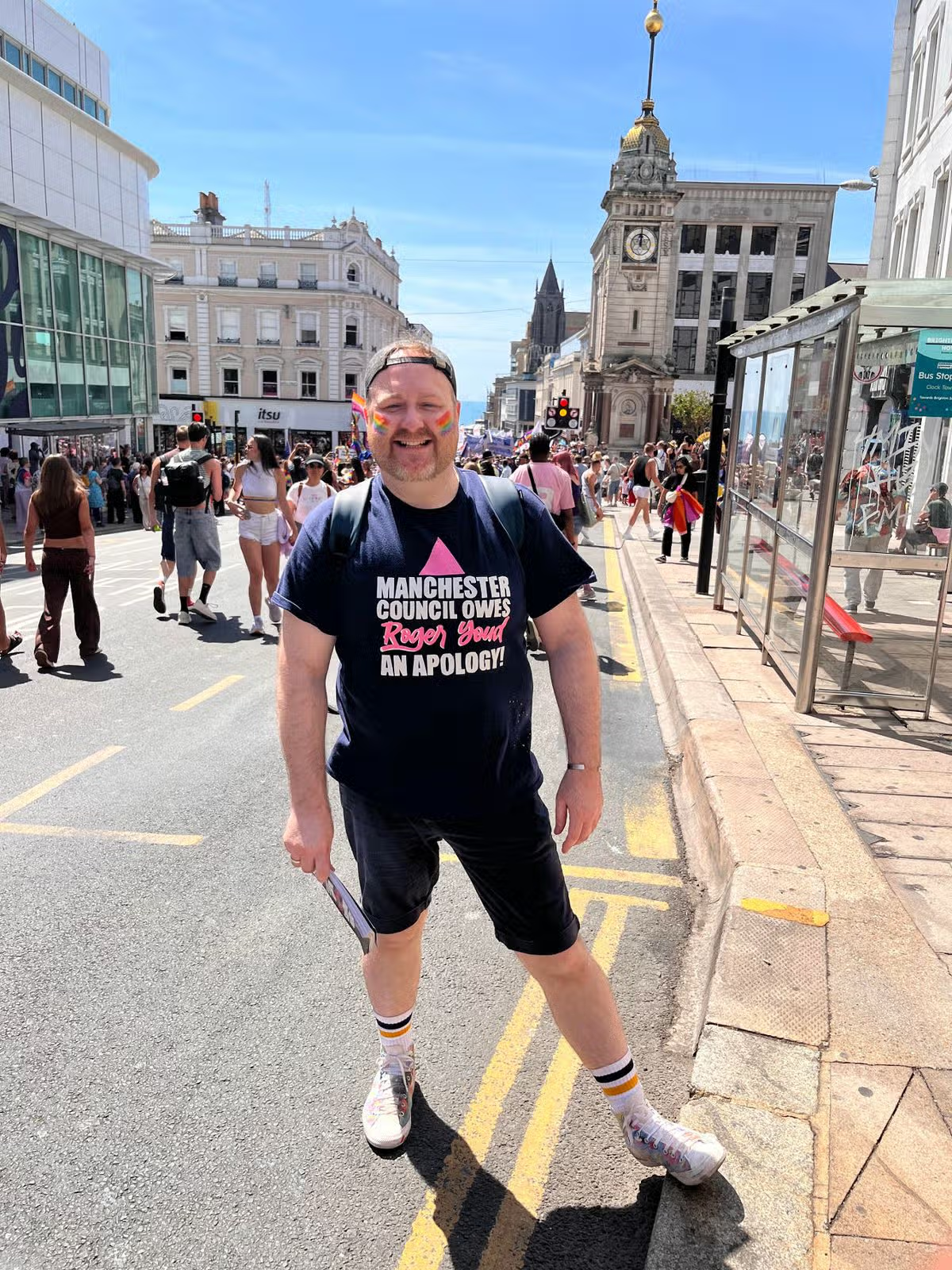
Will Hampson has called upon Manchester City Council to apologise and has distributed flyers at Pride events up and down the country(Image: Will Hampson )
“I asked Carlton if he should have been detained…no was the immediate answer,” Will said. “He was in no fit state to get out of bed.
“If he wanted to discharge himself he would have done. The fact that he didn’t shows that he could not.
“Nobody ever apologised, that is what is ringing in my ears. You get over the loss and the grief but it’s the lack of apology that doesn’t give closure.”
Roger’s brother Carlton did not wish to speak to the Manchester Evening News on record but consented to answer questions put to him in writing. He described Roger as ‘generous, warm-hearted and kind’, and said visiting him in hospital was ‘usually full of laughter and ordinary catch-ups’.
“Roger rarely dwelled on the detainment and appeal during our visits,” he recalled. “I do remember, with a clarity, the day I suggested he come and stay with Mum once he was feeling better.
“He said, “There’s no point, they will only ever know me as the AIDS man.” Such was the depth of stigma in 1985 that Roger was to be assigned a new identity because of the negative press attention.
“National and international newspapers, including gutter tabloids, splashed his situation across their pages, stripping him of any control to tell our mother about his diagnosis and exposing her and the entire family to needless distress, prejudice and stigma from voices in the local community.
“An apology for my brother is long overdue, his memory will forever be framed by the way he was treated, and that stain on his name and on our lives demands rectification and acknowledgement.”
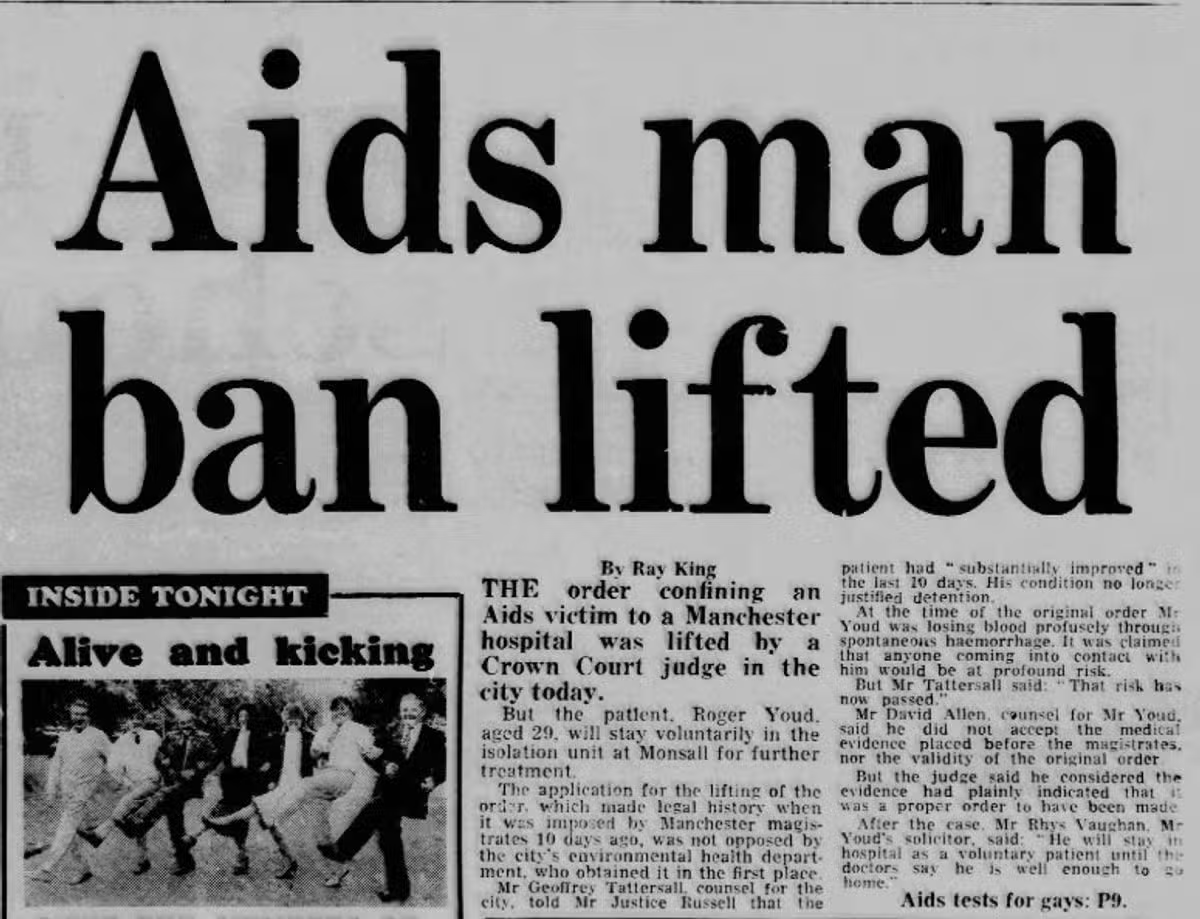
The MEN report on the detainment order being overturned, September 24 1985(Image: British Newspaper Archive/Will Hampson)
Will thinks that Roger’s detainment may have had a chilling effect and deterred other people getting tested for HIV/AIDS for fear of being detained. It’s an opinion shared by Paul Fairweather MBE, a veteran campaigner who organised the first public meeting on HIV and AIDS in Manchester in 1984, and was the city’s first Gay Men’s officer.
“Once you had a diagnosis, you couldn’t get insurance, couldn’t get a mortgage, and there were no treatments at the time,” he reflected. “I think people weren’t convinced of the value of a diagnosis.”
Paul and five others set up the Manchester AIDS helpline in 1985, which became the George House Trust and continues to provide support and advice to people living with HIV to this day.
“There was a lot of fear, paranoia and ignorance around it,” he recalled. “Roger was released very quickly, but it was symptomatic of the atmosphere and how unaware people were of the facts.”
He was one of those involved in the ‘very public’ demonstrations against Roger’s detainment. “I knew Roger, he was a really friendly, really lovely guy,” Paul remembered. “I think it was a very traumatic experience for him.”
Richard Angell, Chief Executive of Terrence Higgins Trust, said in a statement: “Our charity condemned the detainment of Roger Youd as outrageous 40 years ago and appointed legal counsel to successfully fight it.
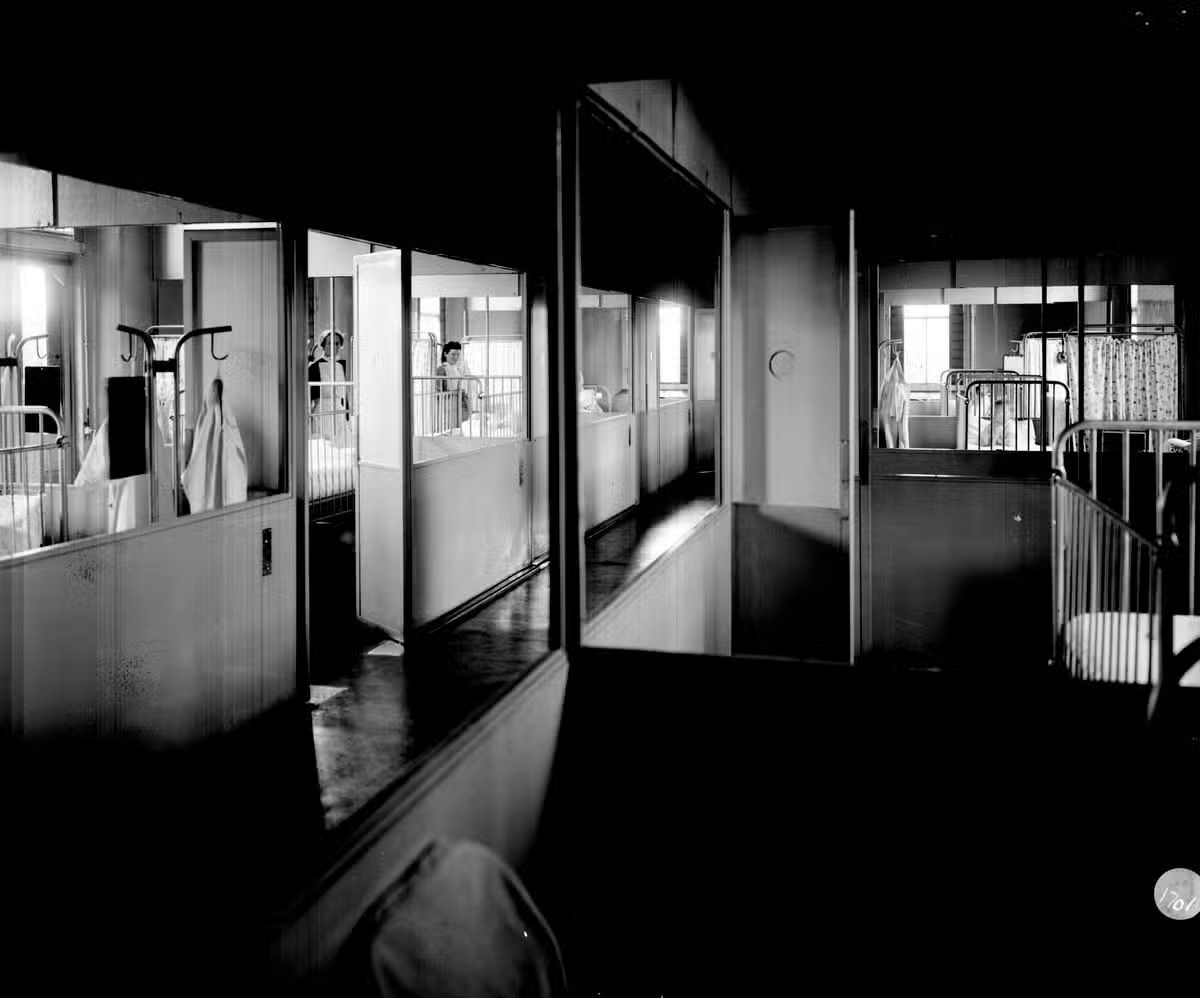
Monsall Hospital interiors pictured in 1942. (Image: Image courtesy of Manchester Libraries )
“Today we stand by this characterisation of the order and support calls for the Council to finally apologise to Roger’s loved ones for his forced detainment after a decades’ long wait.
“In addition to the very personal impact for Roger and his family, the wider impact of the huge national and local media coverage of the case cannot be overstated.
“It will have left people wanting to test for HIV too scared to come forward, while helping to deeply entrench inaccurate public perceptions about HIV and AIDS that we are still fighting against today.”
Sarah Lester, editor of the M.E.N, said: “The Manchester Evening News was also part of the story we are telling today. Our archive contains coverage of Roger’s detention that used language and framing that makes deeply uncomfortable reading now.
“We recognise that our reporting contributed to the stigma and distress experienced by Roger and his family and many others in the gay community. We are sorry for that.””Newsrooms have changed enormously in the four decades since Roger’s story appeared in our pages, and so has our understanding of HIV and AIDS. But progress does not erase the hurt caused then, nor should it.
“We will be reflecting more fully on our own coverage and what it says about journalism, and the responsibility we have to the people whose stories we tell, in a forthcoming piece.”
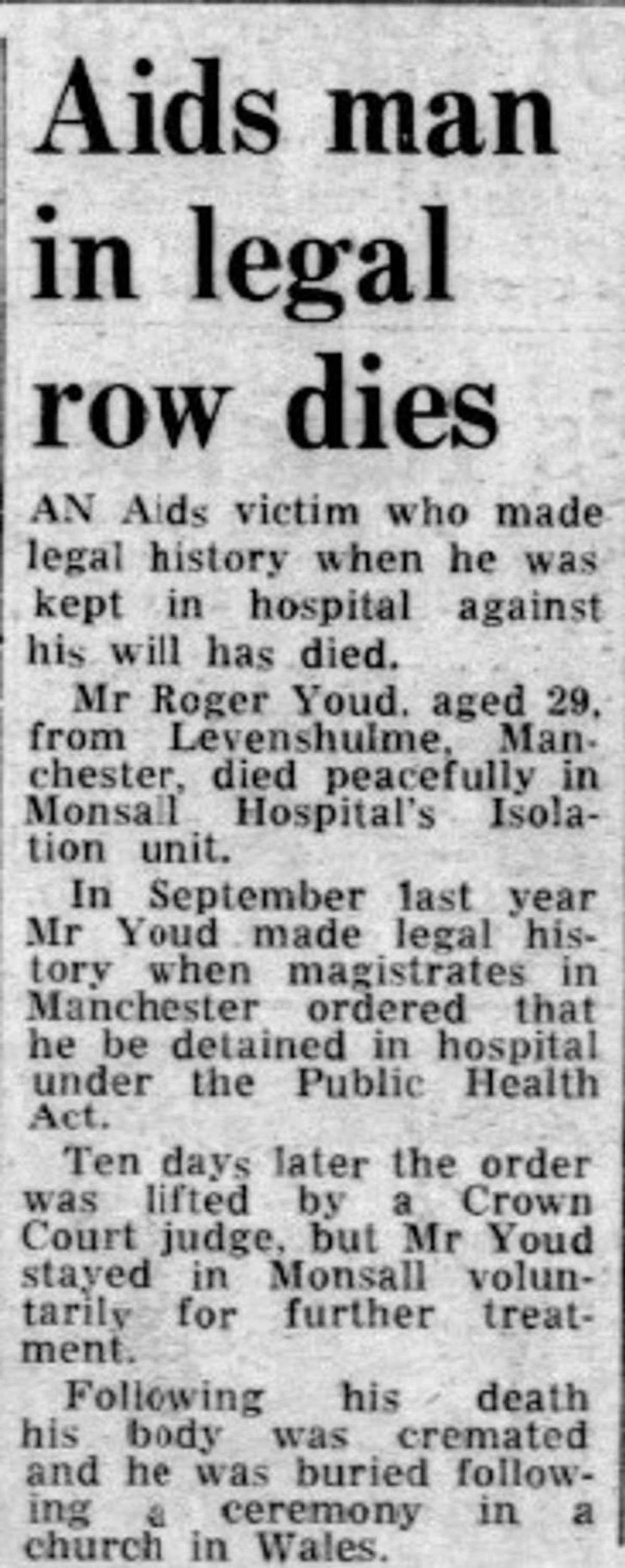
The M.E.N clipping reporting on Roger Youd’s death(Image: MEN/British Newspaper Archive)
Local councillor Pat Karney, who has stood in the Harpurhey ward since 1979, praised Will’s ‘incredible’ website. “I was around when the Council took this wrong decision on the advice of medical officials,” he said in a statement.
“It was a period of hysterical misinformation about AIDS and HIV. I am sorry Roger and his family had to endure this ordeal.
“On behalf of the Council I would ask the petitioners and Roger’s family if they wish to meet with us so we can honour his memory, I am happy to arrange this meeting.”
When contacted for a statement, a spokesperson for Manchester City Council said: “Mr Youd’s treatment was unacceptable and is something we profoundly regret.
“We acknowledge the distress he and his family went through and we would be happy to meet with family members should they wish to discuss the case.
“There is no doubt that when HIV/AIDS emerged in the early 1980s it was a devastating and much misunderstood infection, and that cities including our own went through a steep learning curve and got some things badly wrong.
“However, Manchester has always been committed to equality and diversity – even when that ran counter to national policy and it is clear that the response to HIV/AIDS from all agencies has improved radically in the last four decades.”
Campaigner Peter Tatchell told the MEN: “The expression of ‘regret’ by Manchester City Council is not enough. It should make a full apology, and so should the Manchester region of the NHS.
“They conspired together to detain a gay man with HIV against his will. Whatever the intention and motive, this was a medically unjustified deprivation of liberty.”