
Your support helps us to tell the story
From reproductive rights to climate change to Big Tech, The Independent is on the ground when the story is developing. Whether it’s investigating the financials of Elon Musk’s pro-Trump PAC or producing our latest documentary, ‘The A Word’, which shines a light on the American women fighting for reproductive rights, we know how important it is to parse out the facts from the messaging.
At such a critical moment in US history, we need reporters on the ground. Your donation allows us to keep sending journalists to speak to both sides of the story.
The Independent is trusted by Americans across the entire political spectrum. And unlike many other quality news outlets, we choose not to lock Americans out of our reporting and analysis with paywalls. We believe quality journalism should be available to everyone, paid for by those who can afford it.
Your support makes all the difference.Read more
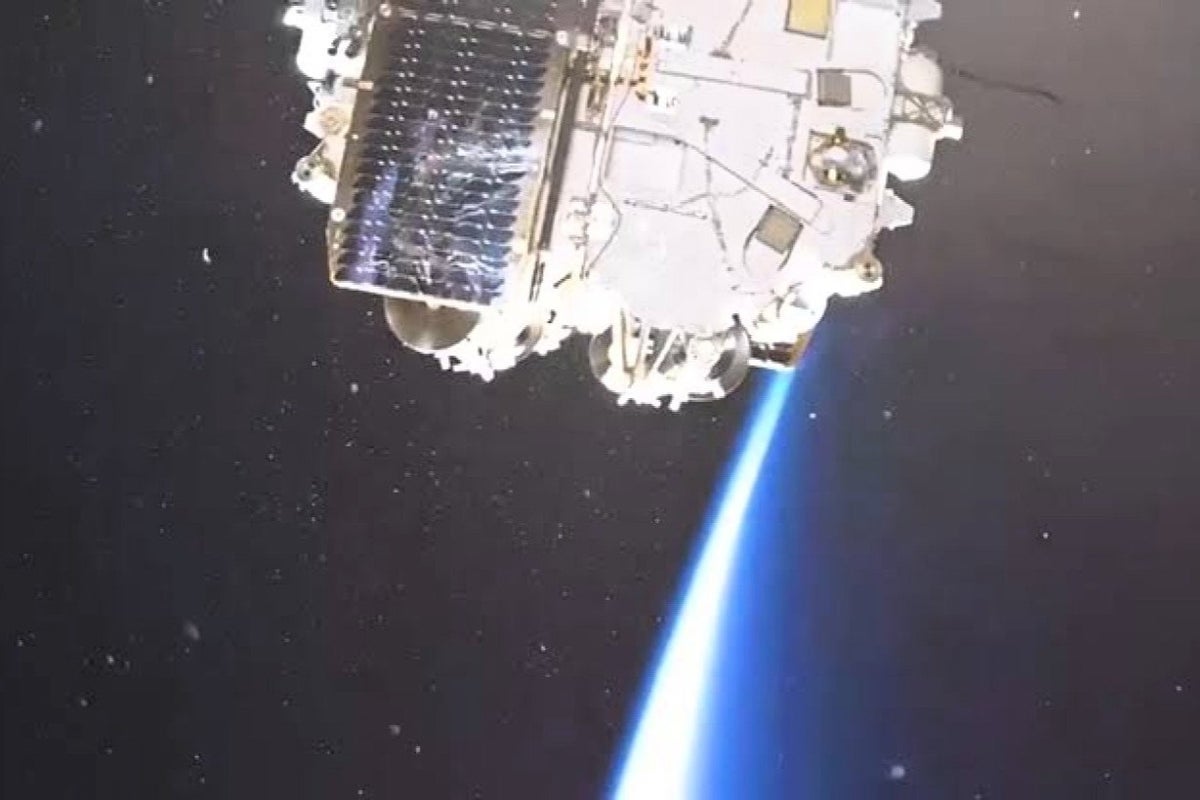
Russia is ramping up the deployment of a satellite internet system that rivals SpaceX’s Starlink network, according to Ukrainian officials.
The Rassvet network, which beams high-speed broadband to people on the ground, currently has 16 satellites in operation but is expected to grow to a constellation of nearly 300 satellites by next year.
Starlink is banned in Russia but is widely used in Ukraine, where it has given Kyiv a major advantage in drone operations and battlefield communications.
SpaceX boss Elon Musk has blocked efforts from Kyiv to use the Starlink service for drone strikes within Russia, claiming that it could lead to an escalation in the conflict.
Russian forces had been using grey-market Starlink terminals in Ukraine until Kyiv successfully lobbied SpaceX to disable them earlier this year, one of several factors that shifted battlefield momentum in Ukraine’s favour.
In an interview with Ukrainian media outlet RBC-Ukraine, Major General Vadym Skibitskyi, who is the deputy chief of Ukraine’s GUR military intelligence service, said Russia is building its Rassvet network much faster than previously thought.
“They have already `begun launching it much faster than originally planned,” said Major General Skibitskyi.
“It will continue launching more in order to create a constellation of 292 satellites in 2027 and expand it to 924 satellites by 2035.
“Once Russia deploys a full satellite constellation, the system will operate like Starlink. Discussions are already underway on how to counter it.”
Developed by Russian aerospace company Bureau 1440, the system can currently operate only intermittently when one of the satellites passes over Ukrainian territory, according to Ukrainian intelligence.
SpaceX’s Starlink network has more than 10,000 operational satellites in low-Earth orbit, with plans to expand it to quadruple its current size.
Other commercial space internet ventures include Eutelsat’s OneWeb and Amazon Leo, both of which have already launched several hundred satellites.
Additional reporting from agencies