
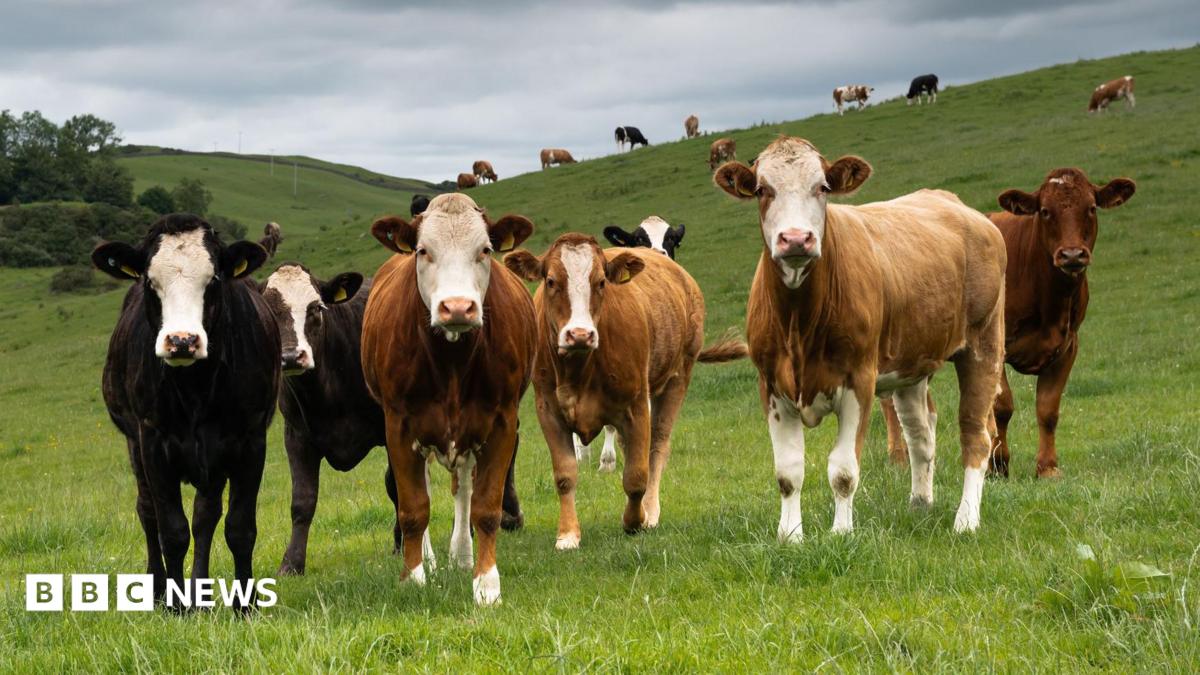
The animal was tested for the disease after displaying symptoms.
Signs of BTV3 include nasal discharge, redness and swelling of the lips, nose and muzzle, lameness or reluctance to stand, a decrease in milk production and diarrhoea in cattle.
It does not affect people or food safety but it causes a high rate of death in infected sheep and fertility problems in infected cattle.
The chief vet urged farmers to vaccinate their livestock against the disease.
She said: “At this stage it is not possible to know if bluetongue is circulating in Scotland, or whether this is an individual case.
“The farm is under restriction while investigations, including testing other susceptible animals, are ongoing.
“Vaccination remains the best way of preventing disease in animals and I encourage all farmers to discuss this with their vets.”
BTV3 is a notifiable disease that must be reported to the Animal and Plant Agency, external in Scotland.