
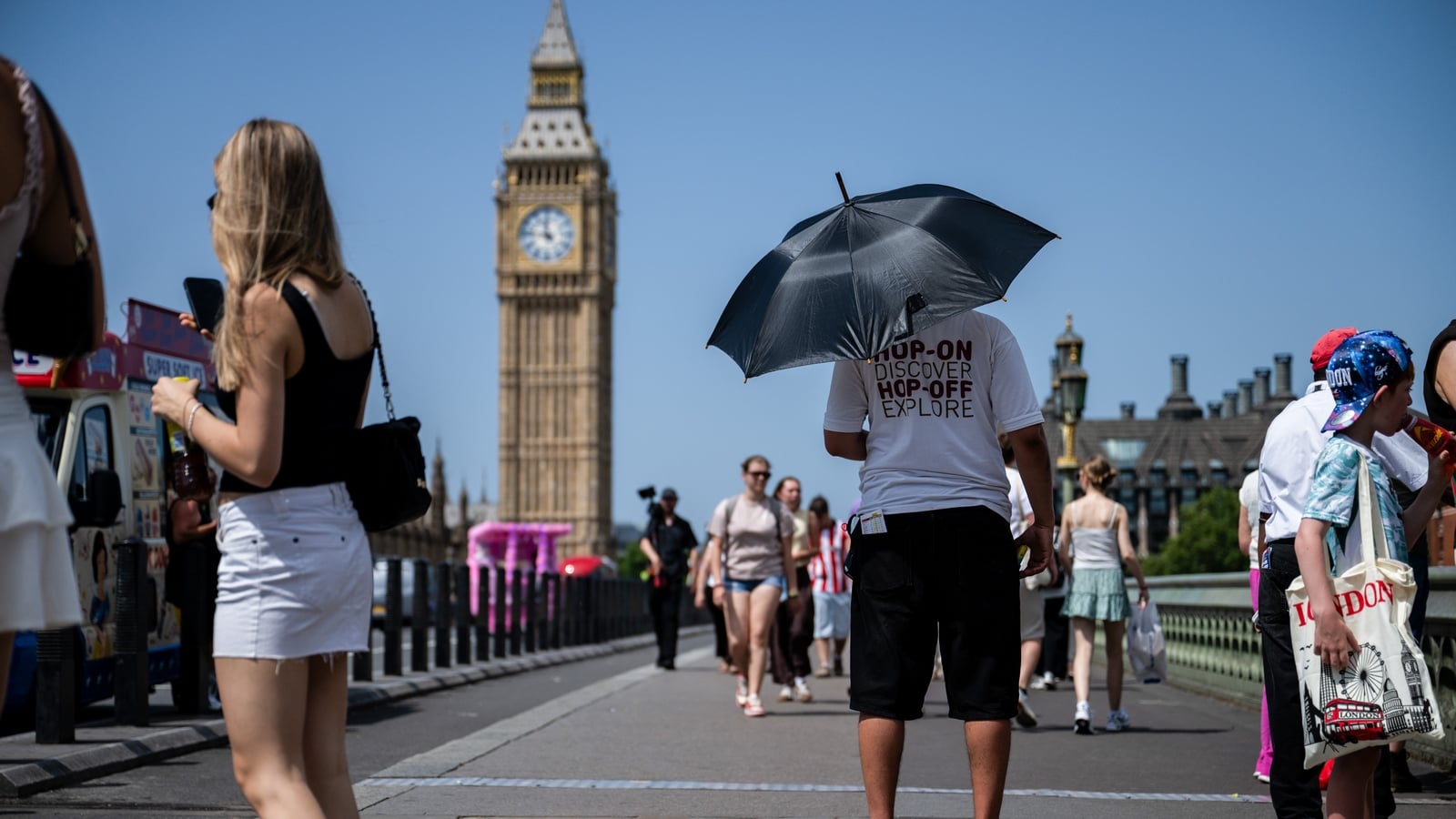
Heat health alerts have come into force as the UK braces for the fifth heatwave of the year, with almost three-quarters of England in drought.
Today, highs of 29C in Cardiff, 28C in Manchester and 25C in London are forecast before temperatures soar to the mid-30s in some areas on Thursday, according to the Met Office.
Heat health alerts issued by the UK Health Security Agency (UKHSA) are in place across England until Friday evening.
Amber heat health alerts have been issued for most of England including the midlands, southeast, northwest and southwest, while a yellow alert will be in force for the northeast.
Officials have urged people to take simple steps to stay safe, such as drinking plenty of water, checking on vulnerable friends and family, and avoiding the sun at the hottest part of the day.
The Environment Agency (EA) said 71.3% of England is experiencing “flash drought”, as a dry start to August followed the country’s driest July on record.
Flash drought is one which develops very quickly because of a combination of very low rainfall and high temperatures.
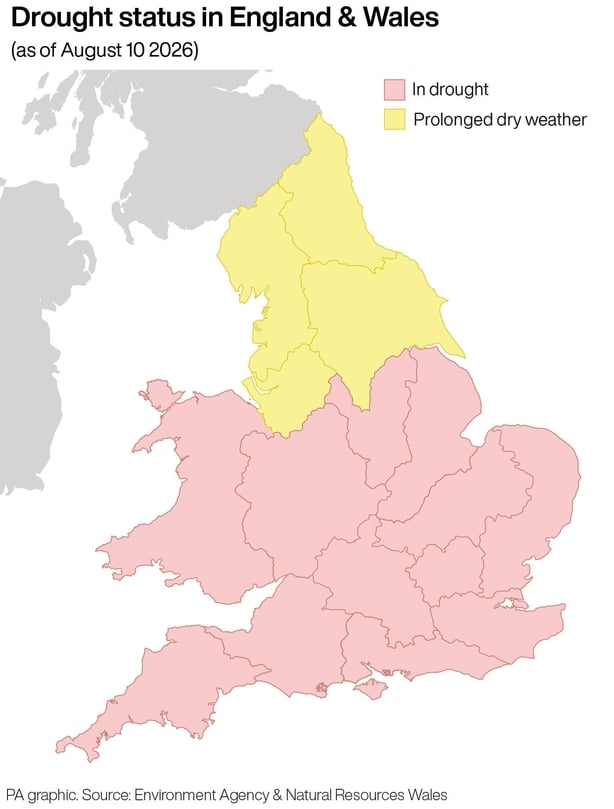
An infographic of the drought status in England and Wales on 10 August
In Monday’s announcement, the agency said the East Midlands, Lincolnshire and Northamptonshire, Kent and East Sussex, and Solent and the South Downs have become the latest areas to move into drought.
In Ireland, a Status Yellow high temperature warning for Leinster and Tipperary has been issued by Met Éireann, with a maximum temperature of over 27C forecast.
Firefighters battle blazes across UK
Firefighters have been battling a series of fires across the UK, including one in the New Forest National Park, Hampshire.
The area hit by the blaze, which started after a van caught fire on the nearby A31 near Ringwood on Sunday, is protected heathland and home to a number of rare species, according to the New Forest National Park Authority.
On Monday evening, Hampshire Fire and Rescue Service said crews were “set to work into the night again” as more than 120 firefighters attended the scene.
South Wales Fire and Rescue Service said on Monday night that crews were attending “multiple wildfire incidents”, including at Cwmavon Woods in Blaenavon, Wattsville in Sirhowy Valley and Abernant in Aberdare.
This summer has been one of extreme heat and dry conditions, with two record-breaking heatwaves in May and June that led to the deaths of more than 2,800 people, followed by further heatwaves in July.
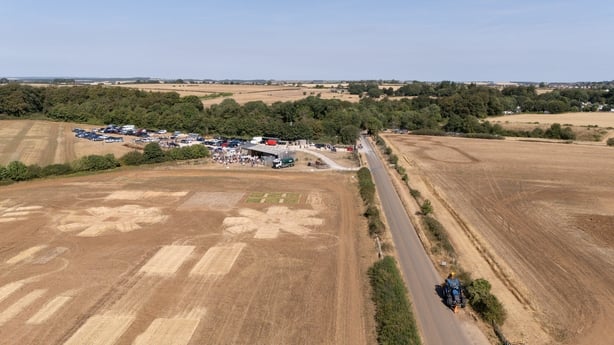
Dry fields in Oxfordshire as the drought continues in the UK
The UK is increasingly struggling with the impact of more extreme weather such as drought, heatwaves and wildfires fuelled by climate change, which is mostly caused by burning fossil fuels in power plants, in vehicles, to heat homes and for industry.
Some 45 million people are in drought-stricken areas, and 27 million customers are under hosepipe bans as rivers and reservoirs run low.
Farmers have warned of a “brutal harvest” for crops and a lack of feed for livestock, and there have been warnings of food price inflation shocks later in the year as a searing summer across Europe feeds through from fields to supermarket shelves.
The latest heatwave, which is expected to be widespread throughout England and Wales, is set to subside over the weekend and bring fresher air and rain, but this is not expected to make up for the shortfall in recent months, forecasters warn.
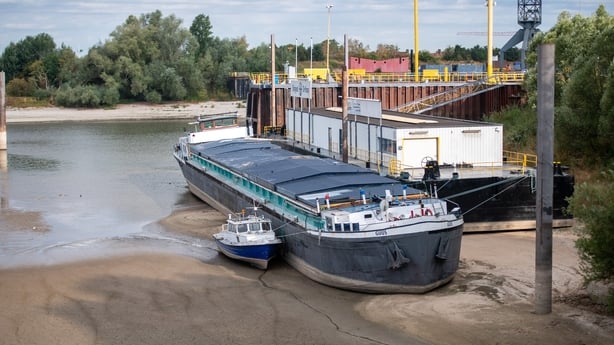
Cargo sailings have been stopped on some parts of the Rhine river as water levels continue to drop
Rhine water levels fall to new lows
In Germany, the river Rhine has fallen to new lows in a continued heatwave, the country’s inland navigation agency has said, with cargo vessel owners often stopping sailings on southern river sections.
The Inland navigation agency WSV said the navigable water depth at the chokepoint of Kaub near Koblenz was 15 cm today, below the previous lowest recorded level of 25 cm in 2018. The river is about 1 metre deeper than the navigable depth.
Shallow water after this summer’s heatwave and scarce rainfall means cargo vessels are only able to sail 20% loaded on the river, increasing costs for cargo owners. Loads must be spread among several vessels sailing part-loaded, also increasing costs.
River shippers warned on Monday that low water at Kaub threatened to stop commercial shipping this week. Large volumes of freight are being transferred to road transport and some German authorities have relaxed weekend bans on truck driving.
Germany, like much of Europe, has experienced successive heatwaves with little rainfall this summer, leading to low water levels on waterways like the Rhine, an important shipping route for grains, minerals, coal and refined oil products.