
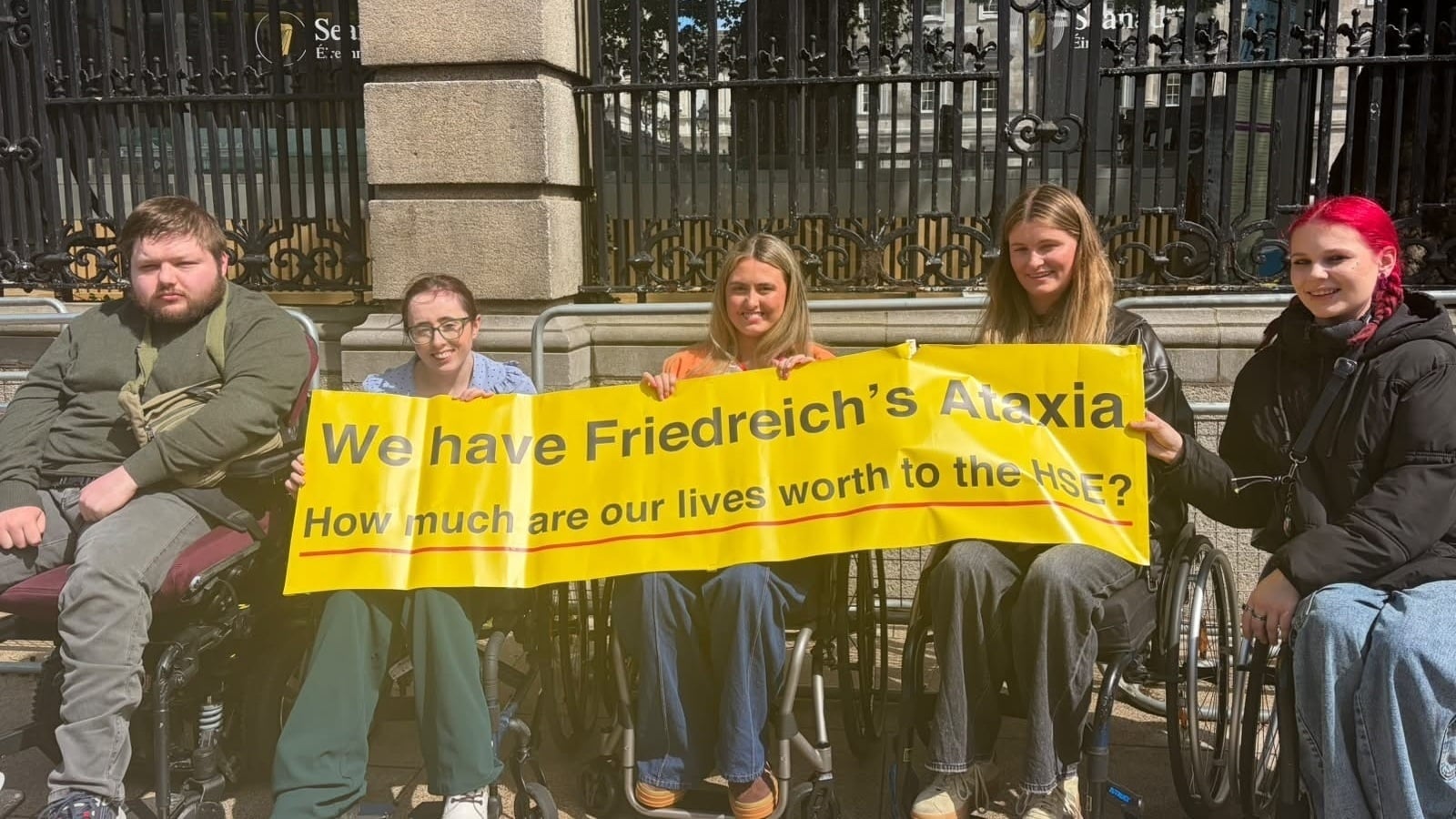
There would have to be “significant price reduction” in the cost of a drug to treat Friedreich’s Ataxia for it to be covered by the HSE according to the National Centre for Pharmacoeconomics (NCPE).
The Clinical Director of the NCPE, Professor Michael Barry, said that the HSE would need to consider how other services would be affected if the projected cost of €160 million for the Skyclarys drug were spent.
The HSE’s Drugs Group decided not to recommend covering the cost of Skyclarys in the treatment of the rare neurological disease, which damages the spinal cord, peripheral nerves and part of the brain.
The NCPE said the price being charged by the drug company Biogen is not cost effective.
Speaking on RTÉ’s Morning Ireland, Prof Barry said it was important to acknowledge the “severity” of Friedreich’s Ataxia.
He said the HSE Drugs Group met twice over the past few months, having considered “an awful lot” of information.
“They’ve not only considered our economic assessment, but they’ve also considered the input of the Rare Diseases Technology Review Committee and the input that was provided by patients, patient representatives and clinical experts,” he said.
Prof Barry said there are “huge demands” on the HSE around reimbursement for the likes of cancer therapies and other rare disease drugs.
“I think it’s balancing the effectiveness of the drug versus the cost and that’s the real challenge here,” he said.
“I know people might not want to hear about opportunity cost, but if you do spend a lot of money… the budget impact I would have thought would be about €160 million, where do you use this money?”, he said.
Prof Barry said if money is spent in an area such as Friedreich’s Ataxia, other areas would “lose out”.
Around 200 people are living with the rare neurological disease in Ireland and have been campaigning for the drug to be made available by the HSE. It is the first treatment for Friedreich’s Ataxia.
Campaigners said they were heartbroken with the news from the HSE Drugs Group and were absolutely devastated.
They have been seeking a meeting with the Minister for Health Jennifer Carroll MacNeill and have been lobbying politicians. The campaigners added that they will not give up fighting.
High cost per patient
Last December, the National Centre for Pharmaeconomics recommended against the HSE providing the drug as it was not seen as cost-effective.
At the current price, it would cost around €280,000 per patient per year, with a five-year budget impact of around €130m.
The drug is made by Biogen which has said it continues to engage with the HSE.
Skyclarys has been approved by the European Medicines Agency and the FDA in the US.
Earlier this month, the High Court gave Emily Felix, one woman with Friedreich’s Ataxia, permission to challenge what she said is the HSE delay on granting her access to the drug.
Difficult decisions
Prof Barry said nobody would be “delighted with this news”, even those having to make these “very difficult decisions”.
He said the NCPE’s recommendation is “not a decision” and said the final decision will be taken by the HSE leadership team on 25 August.
However, he said the reality is that in “many cases” the senior leadership team accept the recommendation of the drugs group.
The NCPE’s most recent meeting was to take account of the Rare Diseases Technology Review Group, which recommended using the drug, but Prof Barry said “it wasn’t the only evidence”.
“The Cochrane reviews concluded that pharmacological treatments probably make little or no difference compared with placebo after 12 months of treatment,” he said, adding “people’s views on the evidence will differ.”
Experience from other countries
Other European countries, including Portugal, have approved the drug despite its high cost, but Prof Barry said that when other countries come into the debate “there can be difficulties”.
“There’s no transparency; we do not know what prices were offered to these countries,” he said, adding that not all European countries have made the drug available.
“For example, Scotland in March of this year, agreed with a recommendation from ourselves and their own similar recommendation, that they would not make it available,” he said.
“The National Institute for Health and Care Excellence in the UK has not made a recommendation and the Health Technology Agency in the Netherlands also did not recommend it and suggested an 84% price reduction would be required,” he added.
He said that unlike Ireland, other countries also may not make a drug universally available.
“In other words, it may be restricted to hospitals or to those with insurance,” he said.
Prof Barry said there would need to be a “significant price reduction” to bring the drug the “anywhere near the cost effectiveness levels” they have for drugs that have been “reimbursed in the past” which have been over the threshold in Ireland.
“The HSE doesn’t set the price, Biogen set the price and the HSE doesn’t provide the evidence, Biogen provides the evidence,” he said.
“I think there is certainly scope, but I would have liked to have seen them approach this in a more proactive way,” he said.