
Inside a virtual reality headset, the body becomes negotiable. Look down and the torso may not resemble your own. Lift a hand and another hand rises in synchrony. Turn to a mirror and the stranger staring back moves when you move.
That coupling of sight and motion can create a limited but compelling sense that an avatar belongs to you. Researchers use the illusion to let people temporarily inhabit bodies associated with groups they ordinarily see as “them” rather than “us”, such as an older adult, a wheelchair user, a person of another race, or someone with obesity. The technique is called outgroup embodiment.
The attraction is clear: VR helps you to imagine another perspective, making that perspective feel self-relevant. While some studies have found reduced bias after participants inhabited a dark-skinned avatar, it is good to keep in mind that a virtual body also carries stereotypes and status. Rather than dissolving a social boundary, it may make that boundary harder.
A Friendly Game With an Unfriendly Result
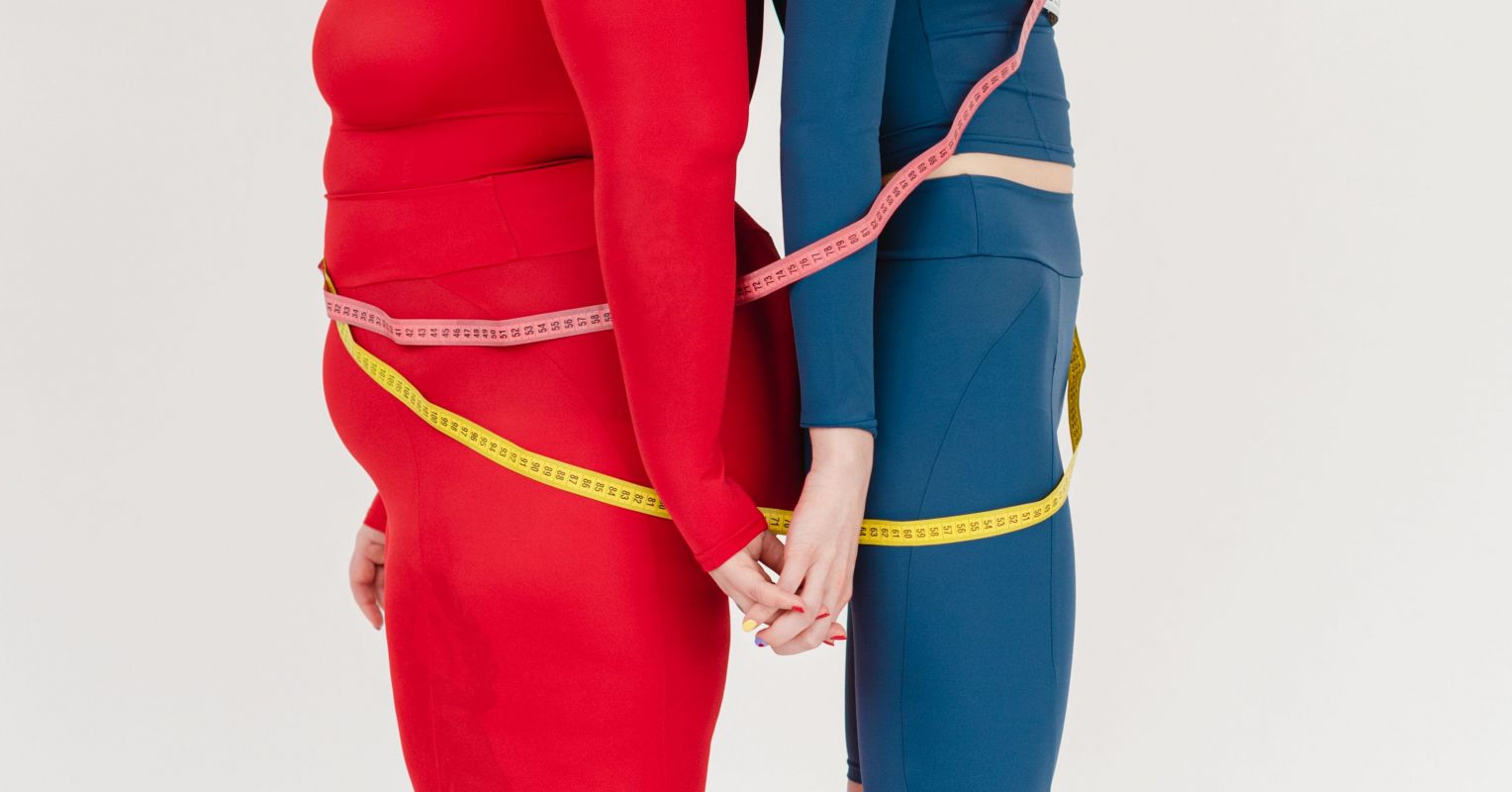
In an exploratory study, we placed 63 participants in Finland inside a virtual gym. Some inhabited a gender-matched avatar with average weight; others inhabited one representing a person with obesity. Participants first moved before a mirror, watching the avatar mirror their movements. Then they played a cooperative basketball game with another avatar, working together to score ten points.
The interaction was designed to feel positive, and participants generally reported little threat. Yet after leaving VR, those who had inhabited the avatar with obesity felt more coldly towards people with obesity than participants who had inhabited the avatar with average weight. The exercise intended to encourage perspective-taking was associated with worse, not better, attitudes.
Self-Esteem Inside the Headset
Self-esteem appeared to change the outcome. Among participants with relatively high self-esteem, inhabiting the avatar with obesity was associated with stronger implicit anti-fat bias. Among participants with lower self-esteem, the pattern leaned in the opposite direction, although that difference was not statistically clear.
Why did that happen? One possibility is that some participants experienced the avatar less as a bridge to another life than as a threat to their usual self-image. Instead of identifying with the body, they may have pushed it away psychologically. Prejudice then becomes a way to restore distance: This is not me; these people are not like me.
While that remains an interpretation, not a measured mechanism, it still exposes a weakness in the familiar promise of “walking in someone else’s shoes.” Putting on another’s shoes does not guarantee identification with their wearer, but it may make someone eager to remove them.
Perceived threat produced another counterintuitive pattern. When participants felt very little threat, inhabiting the avatar with obesity was linked to more bias. As threat rose, the gap narrowed and reversed, although the high-threat difference was not significant and threat was low throughout the sample.
This is not a reason to make simulations frightening, but it raises the possibility that an emotionally thin experience can highlight a stigmatized category without conveying its social meaning. The user sees the body as a surface change, not as a perspective, and a harmless costume may leave stereotypes untouched, or make them more salient.
Prejudice Can Spill Across Boundaries
The most unsettling result extended beyond weight stigma. Colder ratings of people with obesity statistically carried over to ratings of immigrants, Muslims, people with schizophrenia, people with intellectual disabilities, and people attracted to the same gender.
We called this a secondary transfer effect of outgroup embodiment: an attitude shift toward the embodied group spreads to groups never represented in the simulation. Here, the apparent spillover was negative.
The finding is provisional, with the study therefore not showing that virtual embodiment routinely triggers a general cascade of prejudice. Still, it does show why researchers should measure effects beyond the intended target: a simulation aimed at one stigma may reshape a broader mental category of “stigmatized people.”
Virtual reality is sometimes treated as though immersion automatically becomes understanding. This study, like others before, suggests a less comforting rule: a virtual body can change the meaning of an experience, but it cannot dictate that meaning.
For one person, the avatar may narrow the distance between self and other, but for another, it may sharpen the border. The outcome may depend on self-esteem, emotional engagement, the setting, and whether the body is experienced as a perspective to inhabit or an identity to reject.
Outgroup embodiment may still reduce prejudice, but it is not a moral shortcut. It is a sensitive intervention that must be tested for whom it helps, when it backfires, and where its effects travel. In VR, entering another body is only the beginning. What matters is what the mind does once it gets there.