
A gene inherited from Neanderthals tens of thousands of years ago is linked to greater muscle mass in some people today.
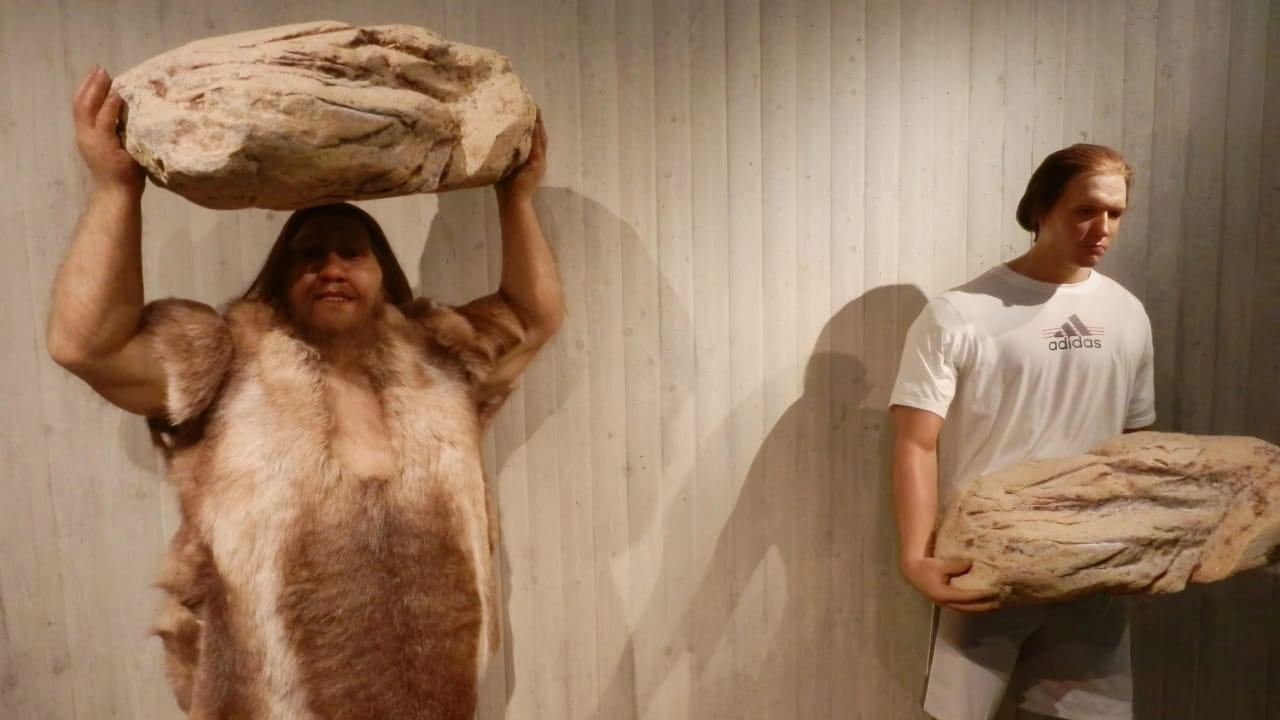 Neanderthal and modern human reconstructions at the Neanderthal Museum, Germany. The study links a Neanderthal gene to greater muscle mass in modern humans. Credit: suchosch via Flickr, CC BY-SA 2.0.
A new study found the gene affects how cells respond to growth hormone. The gene came from Neanderthals through mating with early modern humans, likely about 47,000 years ago.
The gene controls a receptor called GHR, which binds to growth hormone. Neanderthal GHR has two amino acid changes and a small DNA deletion compared with the usual modern human form.
Researchers studied ancient DNA from 10 Neanderthal samples and two Denisovan samples. They compared these results with data from more than 1.1 million modern human genomes.
Almost all Neanderthals carried the gene variant. Among people today, its frequency differs sharply between populations.
The variant is rare among people with European ancestry. In South and East Asia, the gene occurs much more often. Researchers found a frequency of about 24% in a Pakistani population.
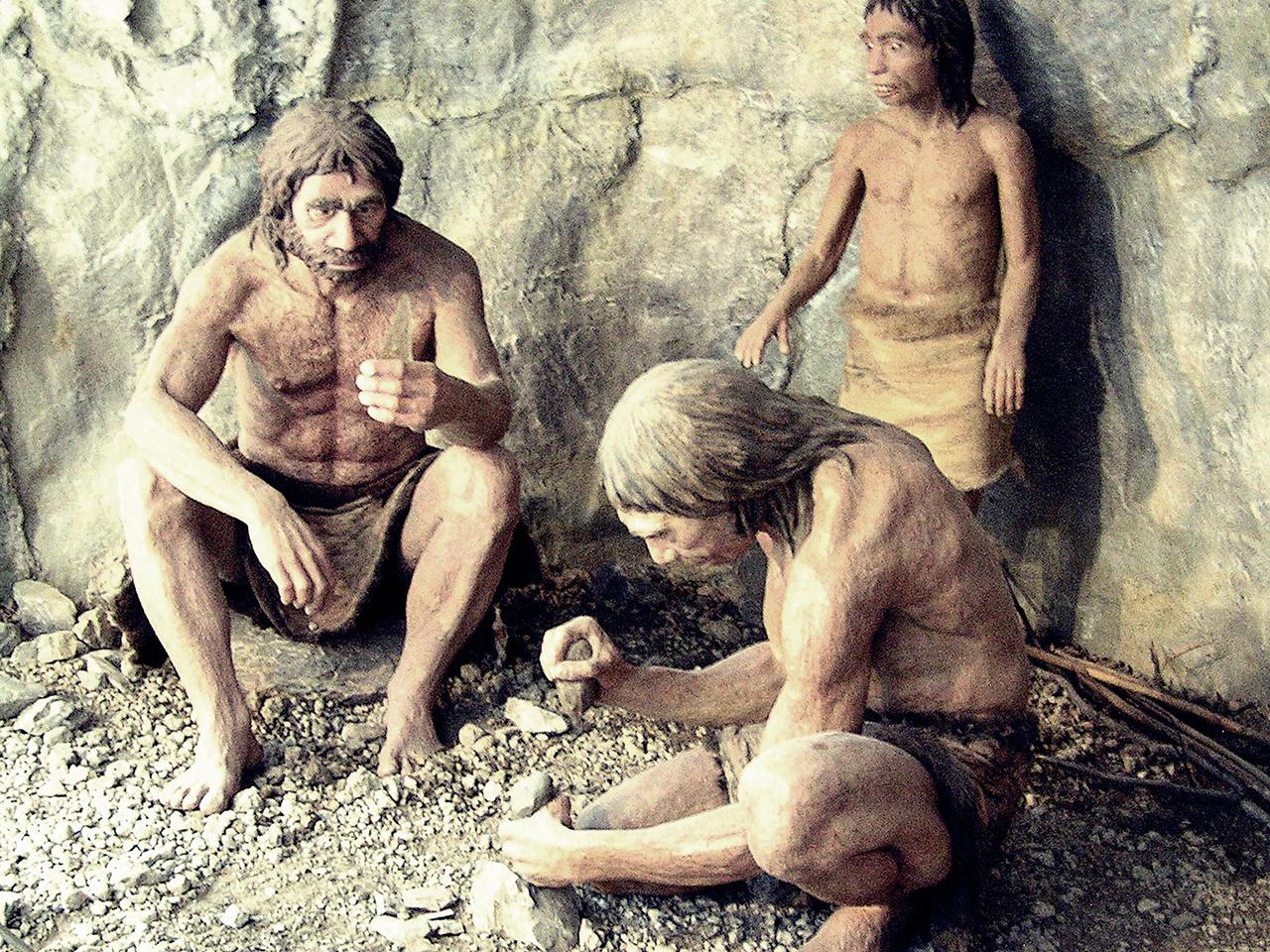 Neanderthal family, photo taken at the Anthropos Pavilion in Brno, Czech Republic. Credit: Jaroslav A. Polák
The team then tested the two GHR forms in living cells. They exposed the cells to growth hormone made by the pituitary gland.
Cells with the Neanderthal receptor grew about 40% faster after hormone exposure. The receptor also produced stronger activity in the JAK2-STAT5 signaling pathway.
Further tests pointed to one amino acid change as the main cause. The change affects signals inside the cell after growth hormone binds to the receptor.
The researchers also looked at body measurements from modern human carriers. Adults with one copy of the Neanderthal gene weighed about 285 grams more.
Almost all of this extra weight came from muscle. Each copy of the gene was linked to about 271 grams of additional muscle mass.
Carriers also showed several small traits linked with Neanderthal anatomy. These included shorter parts of the lower jaw, a higher risk of overbite, and shorter tooth roots.
The effects don’t seem to appear during early childhood. Researchers found no clear differences among carriers up to age 11.
The difference emerged later, around the period when growth hormone levels rise during puberty. This suggests the gene has a stronger effect during puberty and adult growth.
The study also found an important difference before birth. The Neanderthal receptor responded more strongly to pituitary growth hormone, but not to placental growth hormone.
Placental growth hormone supports growth before birth. The finding fits the lack of differences in birth weight among people carrying the Neanderthal gene.
The gene doesn’t explain the full Neanderthal body shape. Neanderthals had many genetic and environmental factors shaping their stocky build.
Other genes also sit close to GHR on the inherited DNA segment. Researchers therefore can’t rule out effects from nearby genetic changes.
Still, the results show how ancient gene flow shaped some traits in modern humans. A gene once common among Neanderthals now affects growth hormone signaling in part of today’s population.
The findings also add to evidence that some features of Neanderthal anatomy survived through interbreeding. In this case, the ancient gene is linked with muscle mass, growth, and small differences in the face and teeth.
Publication: Kanis, P., Berreiter, M., Sieme, D., Wootton, O., Ju, X.-C., Holzwart, N. E., … Zeberg, H. (2026). Increased signaling of the Neanderthal growth hormone receptor. Current Biology. doi:10.1016/j.cub.2026.07.025