
Credit: Far Out / Alamy
Fri 14 August 2026 15:51, UK
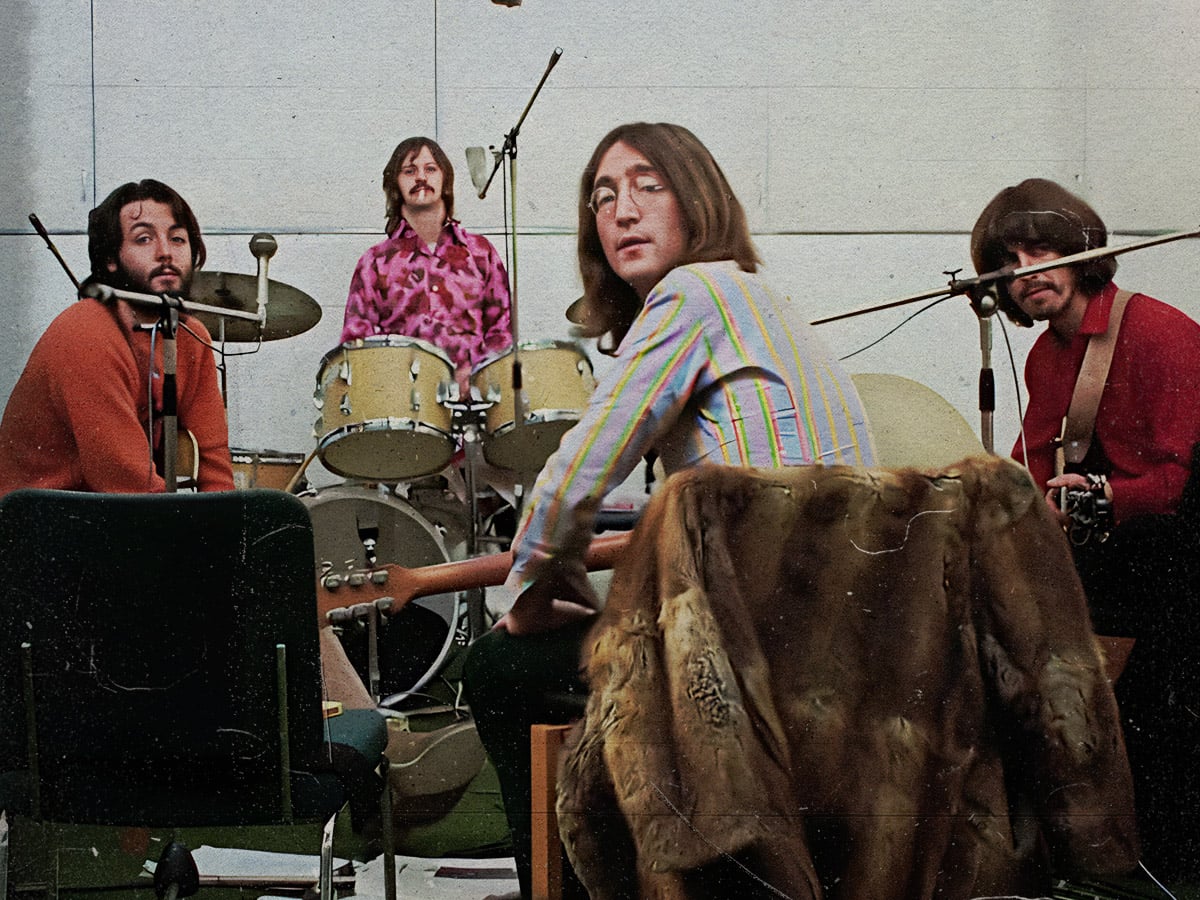
In April 1969, The Beatles released a song that was supposed to prefigure their return to the rock and roll roots that first took them from Liverpool to London via Hamburg and on their way to global fame.
‘Get Back’ turned out to be the only song released from the project, apart from its B-side ‘Don’t Let Me Down’, until two final singles were released alongside the album Let It Be a year later, without Paul McCartney’s permission.
The Beatles didn’t dwell on their unfinished project, though, swiftly moving on to their next recording sessions for their tenth studio LP, Abbey Road. The single they’d released stood on its own terms as a tale of two characters struggling to define their identity.
The title of ‘Get Back’ may also be a subtle allusion to the incitement of nationalist fervour and racial hatred propagated in Britain at the time by Tory MP Enoch Powell. After all, a few days before McCartney famously entered the studio with the bare bones of the song, Powell had appeared on television spewing some of his darkest, headline-grabbing remarks.
So, it stands to reason that McCartney was inspired to craft a ferocious satirical retort. However, a mystery remains as to who exactly the two characters in the song are based on. Was “Jojo”, the man “who thought he was a loner”, a real person? And who is the cross-dressing “Loretta Martin”, “another man” who “thought she was a woman” supposed to be?
The most obvious inspiration for Jojo was the first husband of McCartney’s new wife, Linda. She’d already divorced Joseph Melville See Jr prior to meeting McCartney, and the two remained on good terms. And so, it wasn’t long before Linda introduced the Beatle to her previous spouse, whom she was dating.
See lived in Tucson, Arizona, just as the song describes, where he worked as an academic at the University of Arizona. He and Linda had lived together in the city while they were married, and the stories she told McCartney about her time there likely inspired his lyrics.
 Credit: Far Out / Alamy
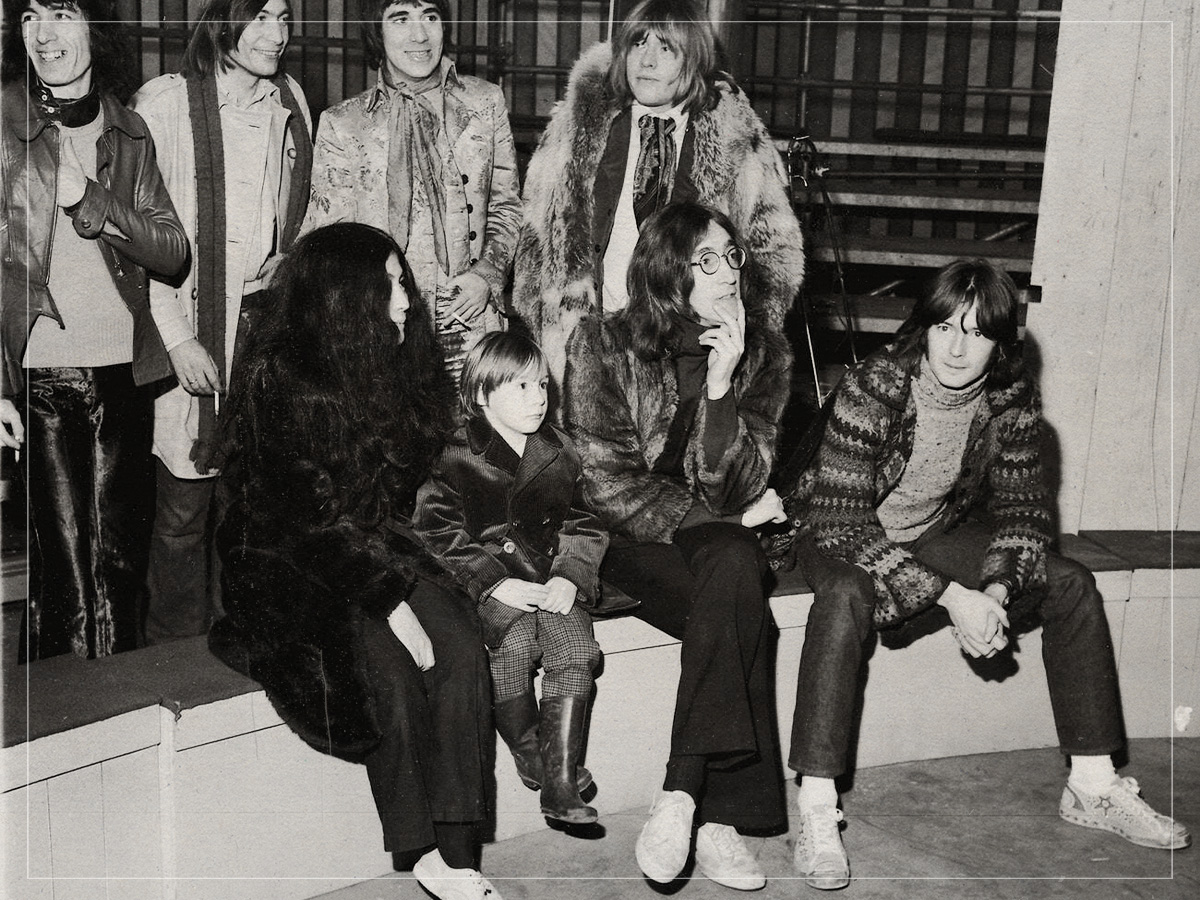
On the other hand, John Lennon was convinced that the song referenced him. He believed that McCartney’s increasing frustration with his desire to forge his own artistic path away from The Beatles led to the composition. According to this theory, McCartney believed that Lennon’s idea of himself as a “loner” artist without the rest of the band “couldn’t last”, and The Beatles would soon rekindle the camaraderie they’d shared in days gone by. He would, in effect, be brought back into the fold.
Yet, in light of the Powell situation and the evident wider political bent of the progressive anthem, this seems like a rather self-indulgent conclusion for Lennon to have come to.
So, what about “Loretta Martin”?
If Lennon thought he was the person behind “Jojo”, then he naturally assumed that “Loretta Martin” was his wife, Yoko Ono. He even suggested that there was real hostility insinuated in McCartney’s lyric “Get back to where you once belonged”, which he felt implied Ono should leave the recording studio and go back to Japan.
“Every time he sang the line in the studio, he’d look at Yoko,” Lennon later told interviewer David Sheff. “Maybe he’ll say I’m paranoid.” Or perhaps he was utilising the line as a jab, but it wasn’t truly about her?
An alternative theory, which better explains the name of the character, posits that “Loretta Martin” is in fact a reference to Lauretta Sullivan, the wife of British comedian Marty Feldman. McCartney, who would have socialised with the couple in swinging London establishments such as the Bag O’Nails, is said to have been making fun of Sullivan’s masculine appearance with his lyrics. A fairly troubling quip if true.
The man himself denies both theories. “I had no particular person in mind,” he claimed to Beatles biographer Barry Miles. “Again it was a fictional character, half man, half woman, all very ambiguous.” In any case, Loretta does seem to have been one of the first references to a trans person in popular music, predating The Kinks’ single ‘Lola’ by over a year.
But McCartney has said he meant nothing by it. “I often left things ambiguous, I like doing that in my songs,” he explained. It was a feature he had picked up from his ”idol”, Bob Dylan. This ambiguity has left room for rumours to flourish about the characters he created. But what remains irrevocable is the quality of the anthemic song, and the satirical message it sent out that now, sadly, is more pertinent than ever.
The full ‘Get Back’ lyrics:
“Jojo was a man who thought he was a loner
But he knew it couldn’t last
Jojo left his home in Tucson, Arizona
For some California grass
Get back, get back
Get back to where you once belonged
Get back, get back
Get back to where you once belonged
Get back Jojo
Go home
Get back, get back
Back to where you once belonged
Get back, get back
Back to where you once belonged, yeah
Oh, get back, Jo
Sweet Loretta Martin thought she was a woman
But she was another man
All the girls around her say she’s got it coming
But she gets it while she can
Oh, get back, get back
Get back to where you once belonged
Get back, get back
Get back to where you once belonged
Get back Loretta, woo, woo
Go home
Oh, get back, yeah, get back
Get back to where you once belonged
Yeah, get back, get back
Get back to where you once belonged
Ooh
Ooh, ooh
Get back, Loretta
Your mummy’s waitin’ for you
Wearin’ her high-heel shoes
And a low-neck sweater
Get back home, Loretta
Get back, get back
Get back to where you once belonged
Oh, get back, get back
Get back, oh yeah.”
ADD AS A PREFERRED SOURCE ON GOOGLE  The Far Out Beatles Newsletter
All the latest stories about The Beatles from the independent voice of culture.
Straight to your inbox.