
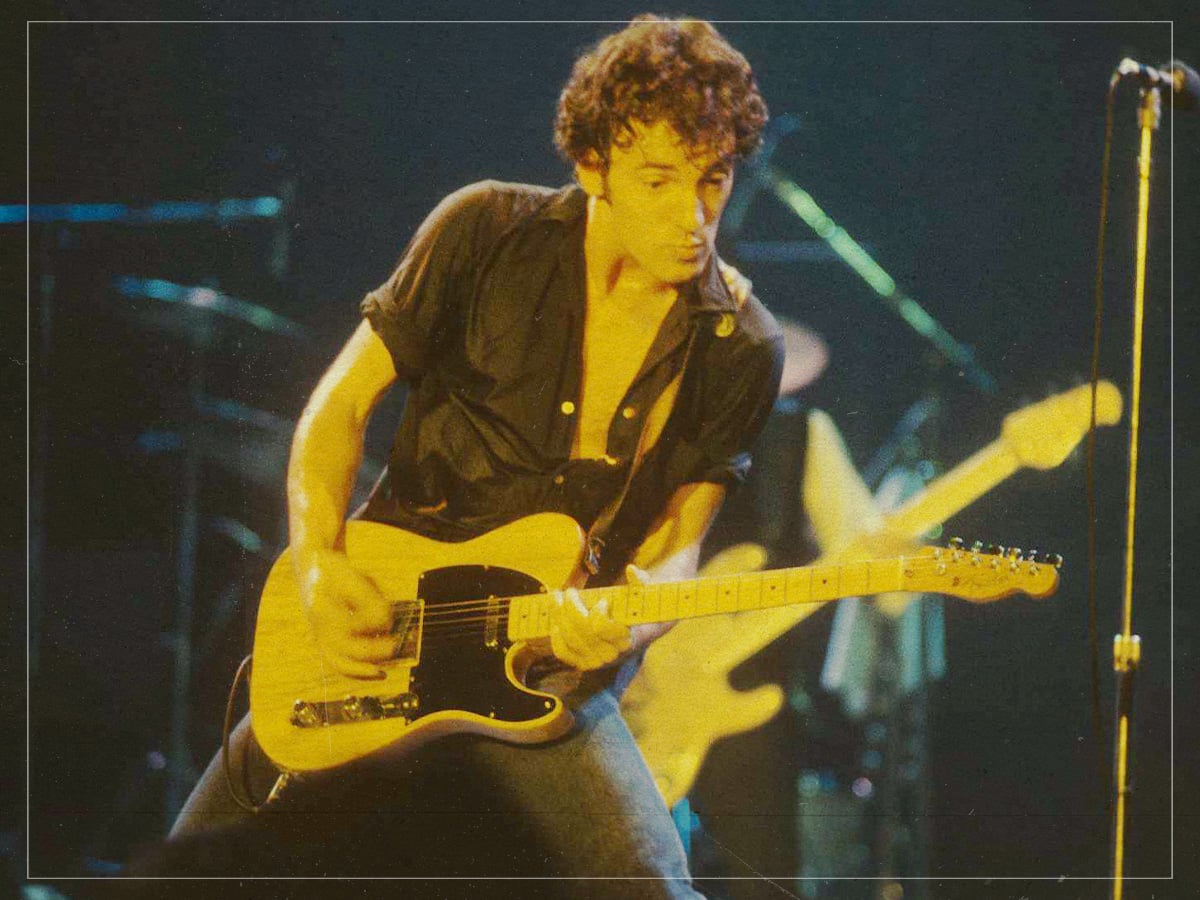
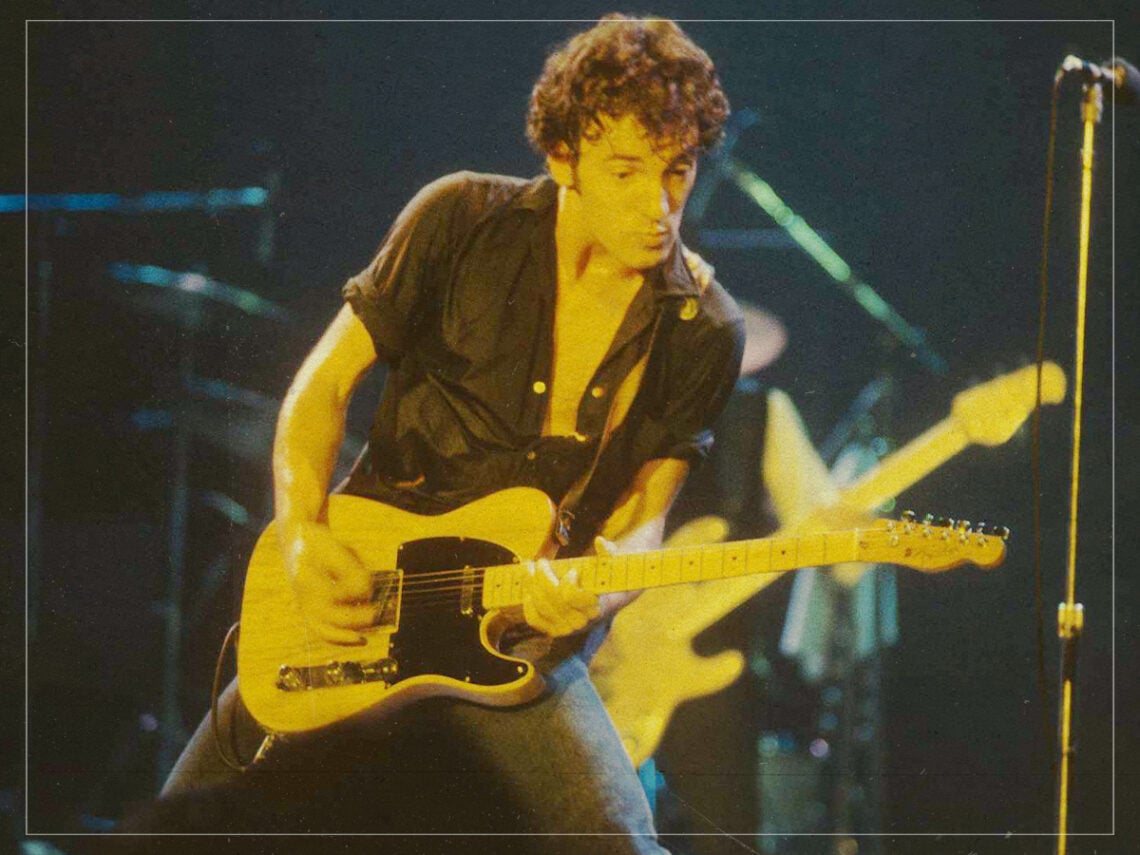
Credit: Far Out / Carl Lender
Sat 15 August 2026 2:00, UK
Bruce Springsteen really broke through in the 1970s, but he didn’t rule the singles charts. If you look at his track record, he followed in Bob Dylan’s footsteps, more famous for whole albums than catchy number one singles.
By that time, Bruce had two albums in the top five: Born to Run and Darkness on the Edge of Town. But not a single song cracked the top 20 on the US Billboard chart. ‘Born to Run’ hit 23, and ‘Prove It All Night’ barely slid in at number 33.
Even so, Bruce had shown he was capable of writing hits, just not for himself. Take ‘Blinded By the Light’: when Springsteen dropped it in 1973, almost nobody noticed. Manfred Mann’s Earth Band picked it up three years later and took it to number one. The Pointer Sisters did the same with ‘Fire’ in 1978, landing at number two. Patti Smith made ‘Because the Night’ her own and soared to number 13 the same year.
It seems bizarre to consider in retrospect, but Springsteen might have had legitimate reason to believe that his long-term royalties were always going to be largely dependent on finding other artists to deliver his songs to a wider pop audience. That likely played a role in a specific series of events from the spring of 1979.
On March 25th, Springsteen was back in his hometown of Asbury Park, New Jersey, on a break from promoting the previous year’s Darkness on the Edge of Town. Hearing that the Ramones were playing a gig at a local club called the Fast Lane, he decided to take in the show as a spectator. The Fast Lane was the same club, incidentally, that had supposedly installed a private toilet exclusively for Joey Ramone, a request the famously germaphobic singer had made at the height of his band’s success.
In any case, Springsteen enjoyed himself at the gig and came away with a bolt of inspiration.
“They were great, and we went backstage and were talking, and I said, ‘I wanna write these guys a song,’” Springsteen recalled to the Star-Ledger in 2015.
“I ended up writing ‘Hungry Heart’ before I went to bed that night; it was one of those you write in the time it takes to play it, practically.”
Joey Ramone and Co had happily accepted Springsteen’s offer to write them a tune, but before he could formally present the retro soul-pop sound of ‘Hungry Heart’ to them, the song was swiftly intercepted by Springsteen’s manager Jon Landau, who’d grown tired of the artist giving away his hits. That selfish instinct paid off, as Springsteen and the E Street Band kept ‘Hungry Heart’ and recorded it for their next album, 1980’s The River. The romantic, radio-friendly single might have felt a bit odd or ironic as a Ramones jam, but it worked perfectly for ‘The Boss’, becoming his long-awaited first top five single.
Discussing the twist of fate with the song during a guest appearance on The Howard Stern Show, Springsteen said that ‘Hungry Heart’ was also the “first time we became a ‘date night’ band, where we had women show up at the show.”
Some diehard Springsteen fans weren’t thrilled about the comparatively less edgy sound of ‘Hungry Heart’ when it came out, but Bruce’s own bandmate, Little Steven Van Zandt, saw it as an important leap forward for the band.
“People think, ‘Oh, it’s such a big deal to be original’,” Van Zandt told Uncut in 2016. “As a songwriter, I can tell you it’s not that difficult to be original. What’s difficult is writing in an existing genre and keeping your identity. In that period [early 1980s], [Bruce’s] writing started to become very pop/rock-oriented in a really good way, in a substantial way. All of a sudden, every single thing sounds like it belongs on the radio and yet it never lost the identity of Bruce Springsteen and the E Street Band. That was just a monumental development.”
