
Credit: Far Out / Alamy
Sat 15 August 2026 16:19, UK
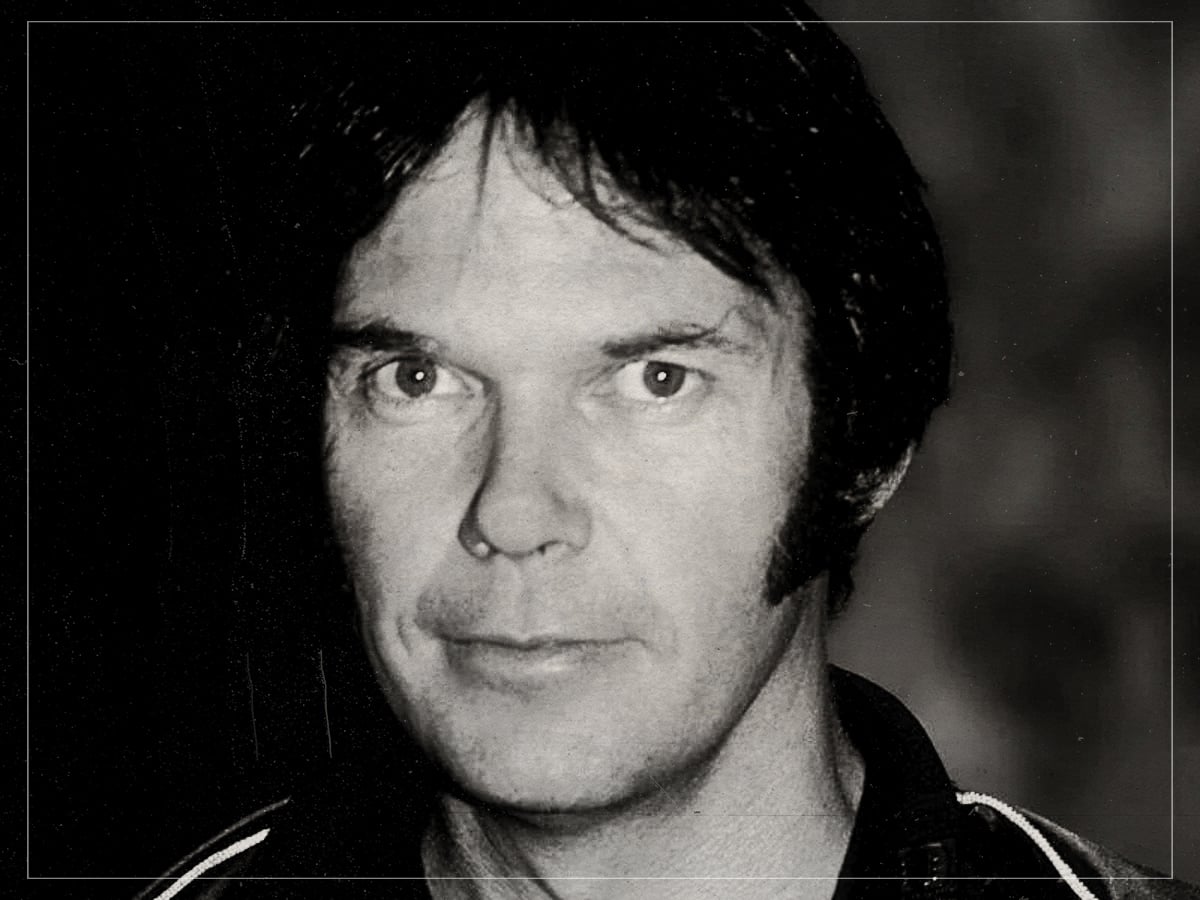
Neil Young will be the first to admit that he’s always been solely in the Neil Young business, rather than one to bend himself over backwards to cater for industry demands.
As much as it may have angered bandmates, record executives, and even fans, Young has followed his instincts at every step. He’s never pretended to be anybody else but his authentic self, or wrote a single song with the intention of it becoming a radio hit.
For him, artistry is a necessary form of self-expressionism, and a way to deal with how he was feeling at any particular moment. While there have been missteps along the way, such as 1982’s sonic left-turn on Trans, all of them are honest reflections of where he was during that brief moment.
While Young has always worn his heart on his sleeve with his lyrics often not allowing him any room to hide, this mantra is particularly true across 1978’s Comes a Time, which was initially envisioned to be an acoustic solo record.
Every single one of his greatest works has always been about the hard-living side of life, whether it be about the emotional struggles people have to live with day after day or having to slave away every day to put food on the table, which is particularly true on Comes a Time.
While on other albums, there were occasional moments where he would get far too close to his heroes like Bob Dylan, but even then, he’d still pull off a complete flip. Yet for Young, he believes Comes a Time is the most high-concentrate version of himself.
If there was one running thread throughout his music is country, and Comes a Time was the moment where he settled into his role as a Western-tinged rockstar.
Further reading: From The Vault
Despite being released in the same era that birthed Gram Parsons and the Eagles, Young wasn’t trying to piggyback off a trend. If anything, songs like ‘Four Strong Winds’ are executed so well that they are able to put artists like Glenn Frey and Don Henley to shame for their work on Desperado.
However, for Young, the highlight is ‘Goin’ Back’, which he later discussed at length in Shakey. “That was one point where I think overdubbing worked, especially on that one song, ‘Goin’ Back’,” he first acknowledged, before sharing, “That’s one of my favourite records. It’s funky. Not that it’s technically great, that’s for sure. The sounds are a little muddled. It’s got a great amount of feeling.”
“There’s something there that’s me, that record,” he continued before explaining the beautifully melancholic composition, “‘Goin’ Back’ is sorta like the debris of the sixties. There’s nowhere to stay, nowhere to go and nothin’ to do. You could go anywhere.”
Although Young was one of the biggest stars in music in 1978, he exhibited his fragile side on ‘Goin’ Back’ as he yearned for a simpler time, before every man and his dog were watching over him. Nevertheless, he channels this emotion with warmth and earnestness rather than anger, giving it a peaceful calm. Moreover, the stripped-back nature of the recording makes the listener feel like they are sitting around the campfire at his Broken Arrow Ranch.
Young may have been proud of his writing on Comes A Time, especially on ‘Goin’ Back’, but the sound quality was another matter altogether. For years, there was an unfounded rumour that he owned 20,000 copies of the LP to stop others from hearing it, which he remarkably confirmed to be true in 2014, sharing, “The tape got damaged when it went through the airport or something. I had to go back and use a copy of the master – it was a copy, but it had better-sounding playback than the other one. No, no, I made a barn roof out of them. I used them as shingles.”
While the sound quality of the original ‘Goin’ Back’ recording will likely never be to Young’s high standards, he will always adore it from a pure songwriting perspective and appreciate the snapshot of his life that it captured. A song that is Neil Young at his most unbequitable.
