
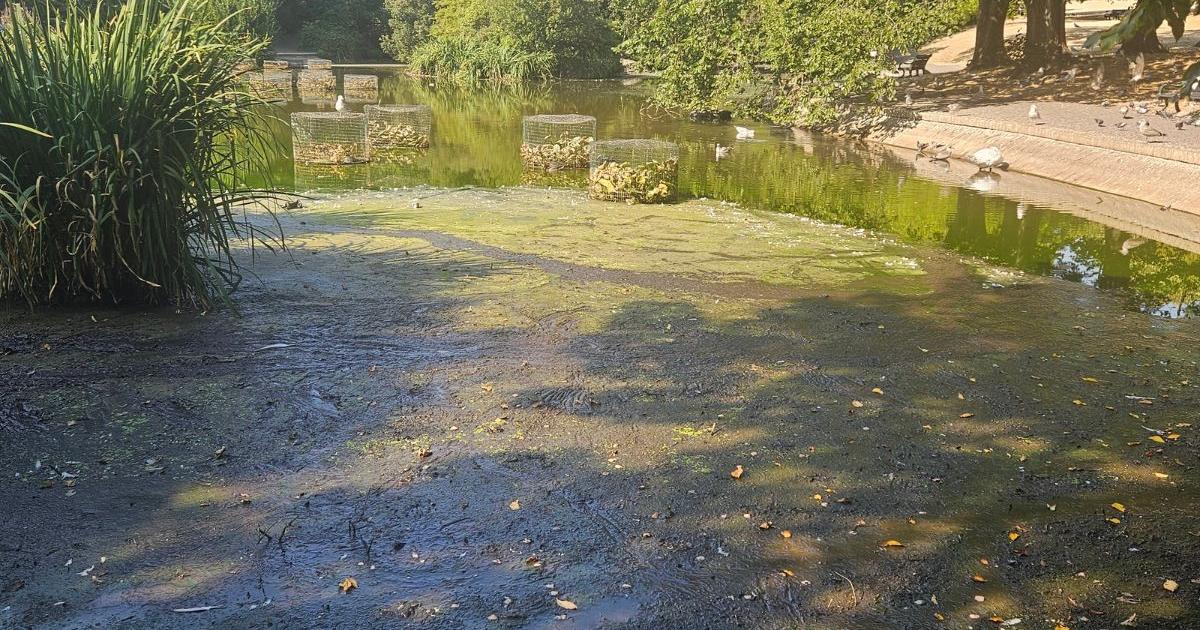
The long periods of hot and dry weather have led to a risk for wildlife in Queens Park pond, as a video was captured of a seagull getting stuck in the mud.
Queens park pond (Image: NQ)
South Coast and Sussex Gull Advice/Resource Network (SCARN) shared a video of a seagull struggling to take off after landing in the pond at Queens Park, East Drive in Brighton.
In the video, that was taken last week, the bird can be seen struggling to wrench itself free from the mud beneath it while onlookers appear to be calling for help.
(Credit: South Coast and Sussex Gull Advice/Resource Network (SCARN)
The seagull was rescued by SCARN.
According to a statement from Brighton and Hove City Council, the pond is sustained by natural water run-off and that the recent period of hot and dry weather means the pond is more likely to dry out.
The council has attached a message to on of the benches beside the pond that reads: “Brighton and Hove City Council are aware of of the low water levels, the pond is sustainably filled by rain water.
“Tap water would be detrimental to the ecosystem and cause filamentous algae blooms (blanket weed) that could entangle wildlife.
“Nature is very resilient and it will recover when the rain comes.”
Message from Council (Image: NQ)
The statement goes on to mention two young swans have been taken to a sanctuary that has more water in it.
Locals have voiced their concerns for the wildlife on social media, with many residents taking it upon themselves to leave fresh water for the birds.
Queens Park Pond (Image: NQ)
Posting on the Queens Park Community Facebook page a spokesman for Brighton &Hove Wildlife Advice and Rescue Service (WARS) said: ” Us rescuers are very concerned about the wildlife there, we are regularly called to this park to rescue birds. The situation is dire there now.
“It is so sad.”
Another resident who also shared an image of the rescued seagull described the pond as as a “death trap” for wildlife.
Diana Brambo, 62, wrote to the Argus about how both the park and the pond has changed since she was growing up in Brighton.
She said: “From when I was little, I have seen a vast difference in the park and its maintenance. It used to be kept so tidy.
“You had the peace garden and the little stream used to run through into the pond that has now dried up and is no longer in use.
“The pond was also looked after and cleaned out now and again. I know that we have a drought but all the rubbish in the pond is disgusting and it has been neglected.
Queens Park pond (Image: NQ)
“The wire round nets with plants in them are also not friendly to the wild life, several times seagulls have been caught on them or stuck inside them due to no tops on some of them. ”
Ms Brambo said that she goes to the park to feed the ducks, swans and birds.
Councillor Alan Robins, the Cabinet Member for Sports, Recreation and Libraries at Brighton and Hove City Council, said in a statement that the council are aware of the concerns around the wildlife pond at Queens Park.
Cllr Robins said: “This area is entirely fed and sustained by natural surface water run off, rainwater and high groundwater tables rather than a natural spring or mains water.
“Historically that meant rainwater from the surrounding hills and streets draining naturally into the peace garden area before cascading down into the central lake.
“In 2005 we diverted local drainage so a nearby storm drain collection system also now feeds the lake directly.
“Because it relies so heavily on natural rainwater and localised surface runoff, the pond’s water levels are highly seasonal. Unfortunately this can mean that during extended hot and dry spells like we are currently seeing, the pond is prone to severe evaporation and drying out, which can also impact the appearance of water remaining.
“We are continuing to monitor the water here, but this is an unfortunate impact of the current unprecedented heat wave and dry spell.”
Cllr Robins said that the council avoid pumping water from the mains into this wildfire pond because it contains chlorine and high nitrate levels which he explained could be of harm to the ecosystem.