
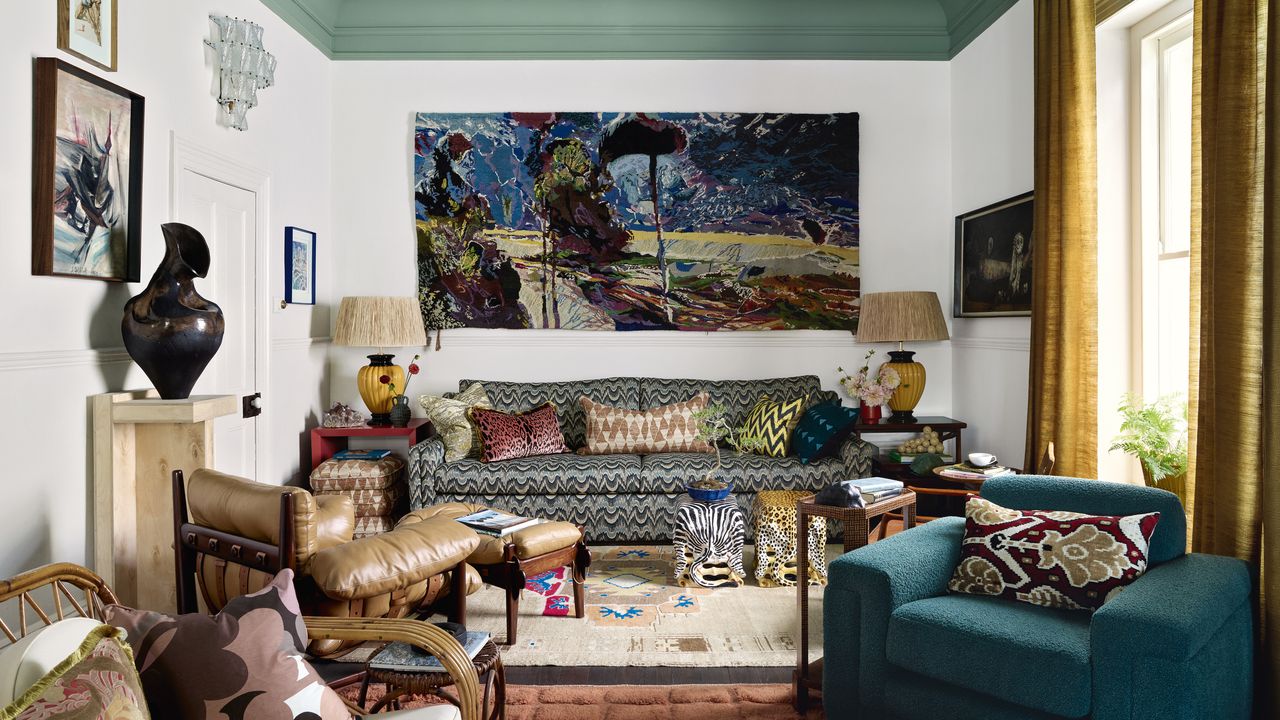
Hubert Zandberg, the London-based South African designer, likes to give his clients an alter ego – invariably someone fabulous, with big design energy. ‘For this project, I imagined a grand dame who’d travelled the world, was a voracious collector and had finally – in pursuit of endless summer – decided to settle in Cape Town,’ he says of a late-Victorian property in the coastal enclave of Green Point. It soon transpires that the exuberant persona is a stand-in for the tastemaker himself, and the layered live-work space is a celebration of his homeland’s vibrant art and design heritage.
Hubert left post-apartheid South Africa after completing legal studies to pursue a more creative career in London. ‘Moving to Europe was a dream I’d had since I was a child,’ he explains. ‘It was a cultural awakening and I met so many inspiring people.’ Among them was the decorator David Champion, alongside whom Hubert worked for several years before striking out on his own.
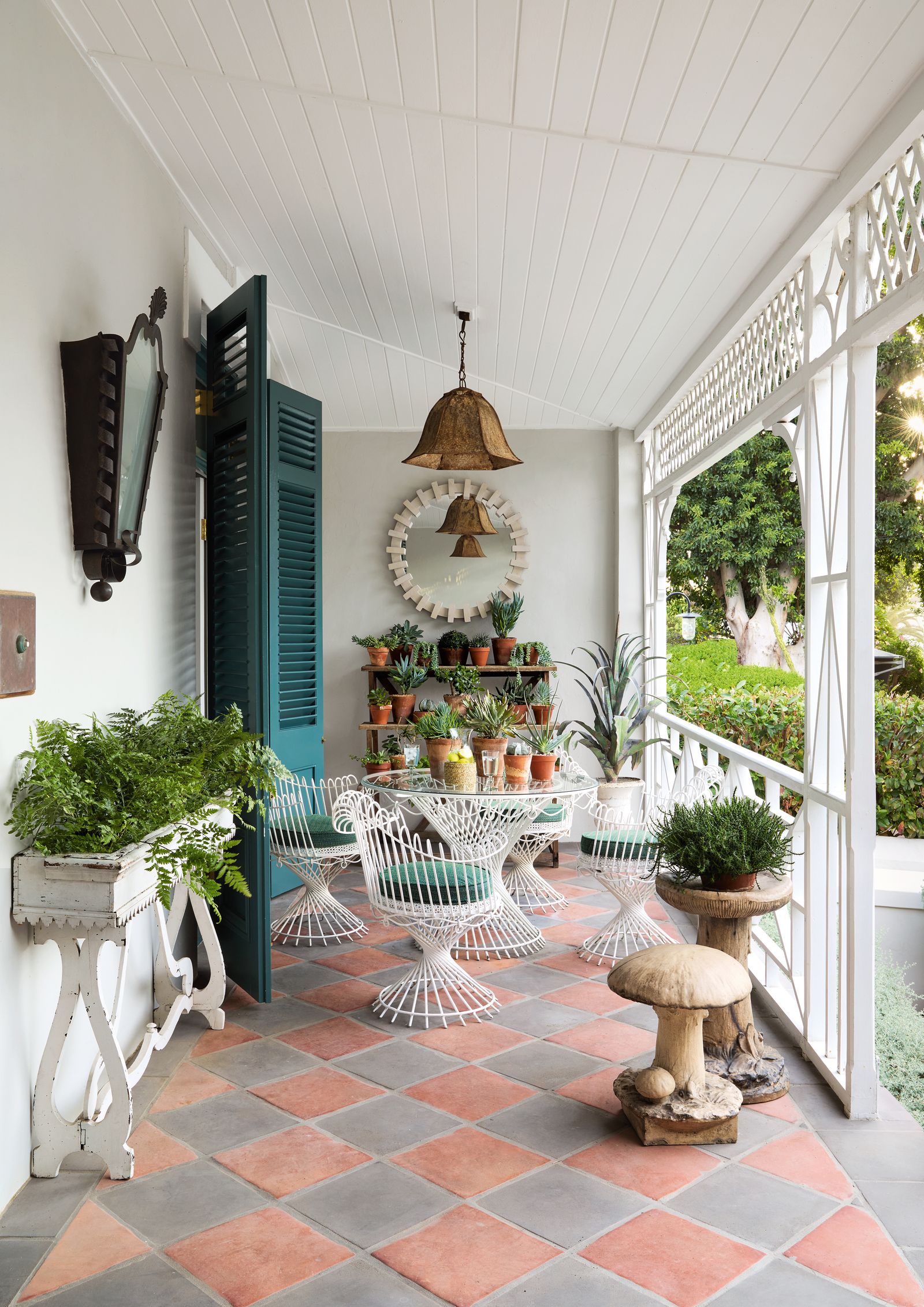
The 1950s steel table and chairs are Mathieu Mategot’s ‘Antheor’ dining set, and the 1940s wall lantern was sourced from Christopher Butterworth.
Elsa Young
Over the years, he has lived and worked in a variety of places – Berlin, Paris, Tuscany, Ibiza – and it was only during the pandemic that a pull on the heartstrings led him to purchase a pied-à-terre in Cape Town. Since then, he has immersed himself in the local creative landscape and established his eponymous studio’s South African outpost, Acasia Design. ‘When a property on this street came on the market, I thought it was the perfect opportunity to create something I had been dreaming of,’ he says about Antrim House, his new design gallery and atelier, which doubles up as a community space for supper clubs and cultural programmes. With two guest houses attached, it is also the perfect spot for his extended family and friends to stay when visiting.
Being his own client allowed this proponent of more-is-more style to manifest what he calls ‘a maximalist African fever dream’. But before the glamour came an ‘energetic detox’. First, Hubert had to rid the rundown listed house of ill-advised modifications. For example, the rotting external fenestrations were replaced by a more period-appropriate design. And layers of paint were stripped back to reveal the original metal ceilings and wall panels with delicate surface decoration.