
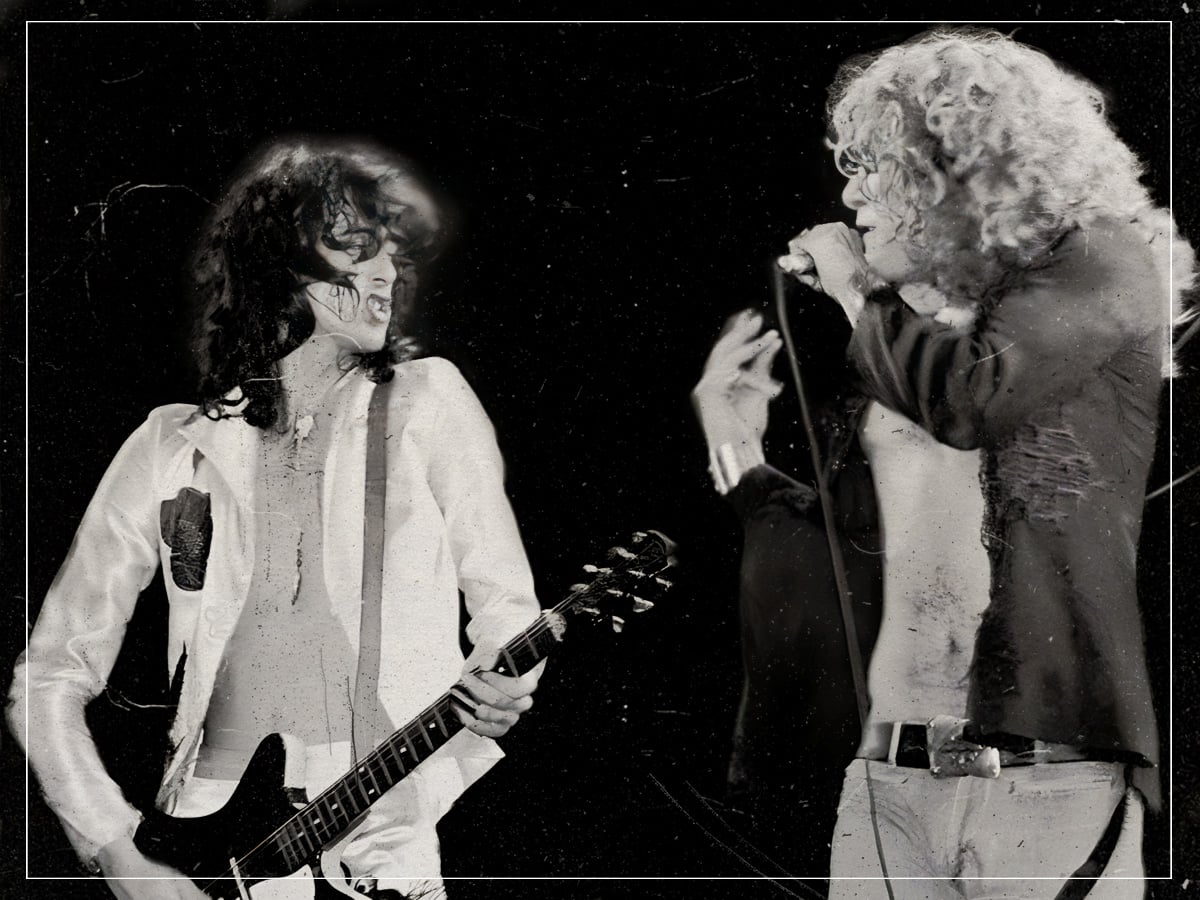
Credit: Far Out / Alamy
Wed 19 August 2026 19:00, UK
There was genuinely nothing getting in the way of Led Zeppelin in the 1970s, but the band itself.
When they announced themselves on the world scene in ‘69, they were the outfit rock desperately needed at the time. The Beatles’ domination was coming to a dramatic close, with the bitter feud between Paul McCartney and John Lennon ultimately breaking up the band, and so the future makers of rock were ready to present themselves.
The genre was about to embrace an even more liberated new era, buoyed by the appetite for live performances and encouraged by a culture of studio experimentation. Zeppelin cashed in on all of that, delivering triumphant shows on repeat while releasing albums that continued to push the expansive boundaries of their ambitious stadium rock. They had the world at their feet, and with four truly iconic albums being released in just two years, it didn’t seem as though they could be stopped.
But the rock and roll lifestyle had a habit of burning talent hard and fast, and Zeppelin were no different; in fact, that very prolific success that made them an unstoppable force was their undoing from the inside, setting a standard that would eat away at the spirit of this once invincible band.
The fading of that magic can be heard on their ‘79 record In Through The Out Door, just one year before John Bonham’s tragic death and the subsequent break-up of the band. But even before that, tragedy was seeping into the music when Robert Plant experienced a brutal car accident in Greece, which threatened the very physicality of his prowess as a rock star.
 Credit: Far Out / John Bonham
Looking back chronologically, the accident acts as something of a tipping point for the band, marking the change between the invincible beginning and fallible end. Accompanying that was the ‘76 record Presence, which, according to Jimmy Page, wasn’t just the most difficult album to record because of Plant’s circumstances, but one that packed the most emotion into it, with the band grinding to capture whatever remaining magic they believed they had.
“We made it under almost impossible circumstances,” he explained, “Robert had a cast on his leg and no one knew whether he would walk again. It was hairy!… [Presence] was a reflection of the height of our emotions of the time. There are no acoustic songs, no keyboards, no mellowness. We were also under incredible deadline pressure to finish the record.”
But it wasn’t just that Plant was compromised physically, and the pressure to be the label’s main cash cow felt completely unreasonable. Page was seemingly directing the creative all on his own now, without the more democratic approach that made Zeppelin the band they were to begin with.
He added, “It was also gruelling because nobody else really came up with song ideas. It was really up to me to come up with all the riffs, which is probably why Presence is so guitar-heavy. But I don’t blame anybody. We were all kind of down. We had just finished a tour, we were non-resident, and Robert was in a cast, so I think everybody was a little homesick.”
They may have subtly known that it was the start of the slow demise of the band. Nothing would be the same as it was in ‘69, and they could accept that, but surely, they had no idea just how different things would become after their official break-up in ‘80.
ADD AS A PREFERRED SOURCE ON GOOGLE  The Far Out Led Zeppelin Newsletter
All the latest stories about Led Zeppelin from the independent voice of culture.
Straight to your inbox.