
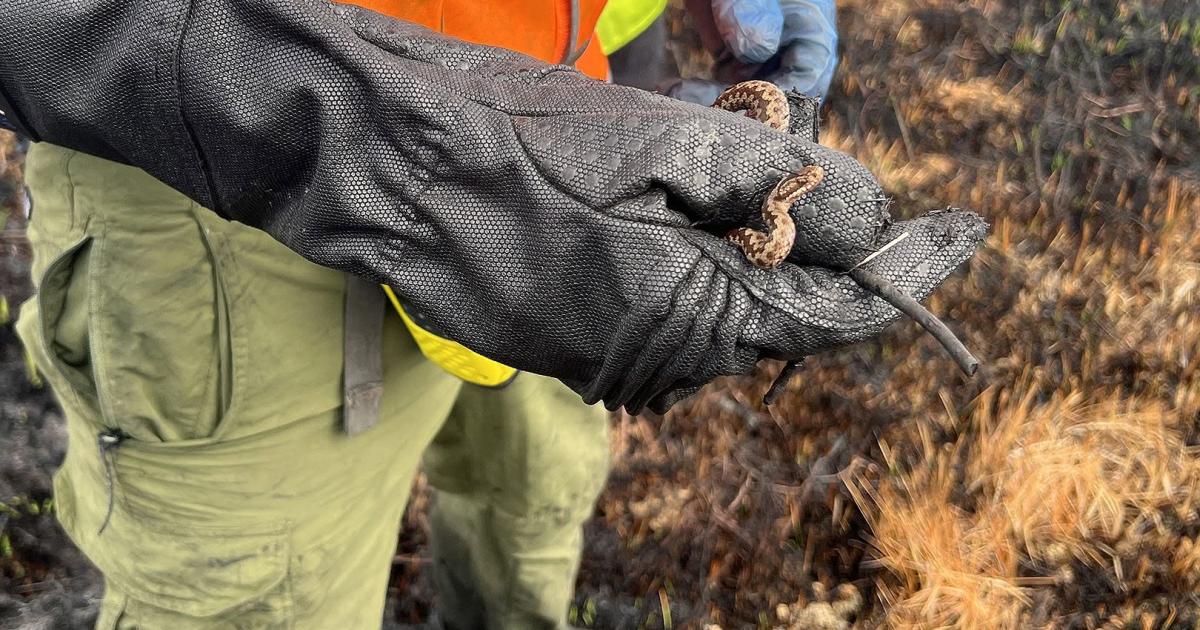
A small adder – the UK’s only venomous snake – was among the animals found during a specialist rescue operation carried out by Forestry England and trained staff and volunteers from the Amphibian and Reptile Conservation Trust.
Teams carefully searched the fire-hit area for key species including adders, sand lizards and slow worms, with surviving animals safely relocated to nearby parts of the Forest.
The rescue came as Forestry England revealed the wildfire has destroyed more than 100 hectares of New Forest heathland, with the landscape expected to take many years to recover.
The blaze, which started near Poulner Hill on the A31, spread rapidly across the heathland and required a major emergency response involving firefighters, off-road vehicles and specialist equipment.
Michael Pittock, head of planning and environment at Forestry England, said: “It is devastating to walk around the area of the wildfire and see so much destruction especially on heathland which is such a rare and important habitat.
“A large area is damaged, but we are also very aware that without the remarkable response from the fire and emergency services it could have been so much worse.”
The fire burned deeply into the ground, destroying vegetation including heathers, gorse and pillwort, a rare plant found in the New Forest.
It also damaged seed banks beneath the soil, while a significant number of ancient beech and oak trees, some of which had stood for hundreds of years, were destroyed after flames penetrated their root systems.
Even bogs, which are considered among the most resilient habitats to heat, were partially destroyed.
Forestry England said the scale of the damage means there will have been a “significant impact” on wildlife, with a considerable number of animals believed to have been killed.
Forestry England teams searching the area (Image: Forestry England)
However, conservationists were able to rescue surviving animals, including the small adder.
Forestry England is now drawing up plans to help the landscape recover, using experience from previous major heathland fires.
The site is close to an area damaged by a fire almost 40 years ago which has since been restored.
Teams plan to take cuttings from heather at the restored site and use them to create a protective layer over the damaged ground, helping soils recover and reseed.