
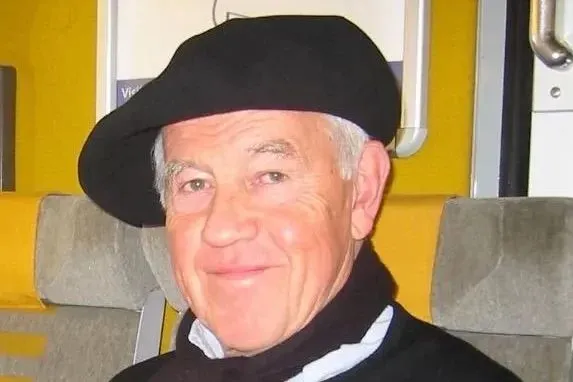
Tributes have been paid to the ‘kind, generous, and brilliant’ architect, who was one of the few Brits of his generation to have worked in the studio of Ludwig Mies van der Rohe in the USA, before returning to the UK and serving as head of the Prince of Wales’s Institute of Architecture in the late nineties.
Born in 1931, Gale studied at the Architectural Association alongside other notable post-war architects, including Kenneth Frampton, Neave Brown, Patrick Hodgkinson, John Miller and David Gray.
In the 1950s Gale travelled to Chicago, where he spent two years working at Mies van der Rohe’s practice. He returned to work for Douglas Stephen & Partners during the 1960s, before turning to education and teaching, a pursuit which would define most of his career.
Becoming the head of the Plymouth University School of Architecture in the 1980s, Gale presided over what have been described as the ‘glory years’ of the department, helping to put what had been a ‘sleepy provincial architecture school’ on the map.
The AJ said, in 1998, that Gale’s work at the university had been ‘highly effective’, managing to create a ‘cosmopolitan atmosphere at the then polytechnic’.
Gale was often seen wearing a beret, driving a Citroen 2CV and riding a Moulton bicycle, as well as ‘initiating the practice of lunching in more than one restaurant: hors d’oeuvres in the first, main course in the second, coffee in the third’.
In an unexpected career move he was appointed to lead the Prince of Wales’s Institute of Architecture in 1997. This was an unconventional decision for an institution which had been associated with the then-Prince Charles’s critical attitude towards Modernist architecture.
During his two-year tenure, Gale sought to bring a modern, socially responsible approach to the teaching and work done by the institute, which had, in his words published in a 1998 New Yorker article, been ‘superficial – about how you dress the building, not about space, not about soul’.
Gale continued to contribute to architectural education and criticism in later life. He served as a jury chair for the RIBA Awards in the South West and was a member of the jury for the inaugural Neave Brown Award for Housing in 2019.
Mark Farlow, adjunct professor at Lawrence Technological University, who worked with Gale at Plymouth, said: ‘Adrian Gale was a lovely man. Serving on a faculty exchange in 1988, I served on his faculty at Plymouth.
‘He was kind, generous and brilliant. I have thought of him often since my time there. Rest in peace, Professor.’
Alan Phillips, founder of Alan Phillips Architects and a former colleague of Gale’s at Plymouth, writes in an obituary published by the AJ: ‘There was [a] consistency running through Gale’s career: architecture was never treated simply as the production of buildings. It was a way of thinking about culture, construction, landscape, teaching and the relationship between people and place.’
Peter Morris, of Peter Morris Architects, was taught by Gale at Plymouth between 1992-1995 and recalled learning ‘not just about architecture, but about life’ during his time in Gale’s class.
Morris said: ‘Adrian Gale taught us about an an inquisitive way of life, where we consumed and considered everything and anything. Thank you Adrian I will be forever grateful.’
Morris added that watching Gale draw was a ‘bit like watching Paul McCartney play the piano’.
Gale died on 27 July and is survived by his family, including his daughter Martha.
Tributes
Glenn Howells, partner at Howells
I will never forget meeting Adrian Gale when he became our new Head of Architecture at Plymouth in the 1980s. He was different from anyone I had met before, a breath of fresh air, confident, warm and deeply passionate about design.
A few of us were struggling with Postmodernism and he couldn’t have arrived at a better time. He encouraged students not to get tangled up with style but think clearly and design from first principles, so he led many of us into the light. For Adrian design was about integrity and clarity, not showmanship. Adrian saved me when I stumbled after a disastrous final year project, telling me this was an important step in anyone’s growth that he had also experienced at my age, so he helped me dust myself off and start again – a great lesson for life, and one I know he passed on to many other young designers.
In Plymouth he also connected us to the best designers such as Ted Cullinan, Richard Rogers and Peter Ahrends, and kept us spellbound with his experiences of working alongside Mies, who was a huge influence on him.
Adrian was brilliantly eccentric. I last lectured at Plymouth in the winter of 2004 and, even though Adrian was no longer Head of School, I wasn’t allowed to stay anywhere other than with the ever-generous Adrian and Audrey at their lovely house in Modbury. The next morning, Adrian was cooking breakfast in his pyjamas at 8am, and even though my train was leaving at 9am Adrian was in no hurry. We jumped in his VW Polo at 8.30, arrived at Totnes with just enough time for him to walk me to my platform, buy me a coffee and a Guardian, and wave me off – still wearing his pyjamas, topped with a beret.
Adrian was a great teacher not just about design but about life and how to live it to the full.
Matthew Lloyd, founder of Matthew Lloyd Architects
I first met Adrian Gale in the early 1990s, after he had employed me as a young lecturer at the University of Plymouth School of Architecture, where he was Professor there during the 1980s and 90s. We have been friends ever since and right up and until his death. Adrian, sometimes known as Adie, was utterly one of a kind, and came from a generation of singular and uncompromising architects during that period. He was a Modernist through and through: he had no other cause.
He freestyled architectural education through an absolute love and belief in his subject, but also significantly through his generosity and affability. It wasn’t that he broke the rules – he knew of no rules. He invited all the best architects of the day down to that far away outpost – and they always came and were entertained lavishly – to engender an ambition and a spirit within the studios that architecture was a noble, central and vital profession to be entering. It was all Adrian. His students and staff adored him for his style and warmth. He himself made a unique place, in a unique time.
Alex de Rijke, co-founder of dRMM and professor of Timber Architecture at TU Delft
Adrian Gale had worked for Mies van der Rohe, which for staff and students of Gale seemed like a hotline to a god of modern architecture. But he was less about Mies, more about Gale. On his walls were not only blueprints of mid-20th century Chicago glazing details, but also his 1:50 survey section through engineer John Smeaton’s 18th century lighthouse at Eddystone Rock. It became clear he loved architecture of every period, and his insight and abrupt wit was his own. Perhaps the America experience made the young Gale confident and disciplined. As architect/educator he was perceptive, outspoken and irreverent.
Not one to indulge jargon or lengthy discussions, Gale was a simultaneously scary and inspirational tutor. ‘It’s do or die, Alex’. He had a knack of defining a bigger picture or problem with a scant pencil sketch, or a few choice words. For example: ‘Mies was embarrassed by a slope.’
The retired Adrian explained to me there are only three important moments in life which architects really have to frame: ‘Hatch, match, and dispatch’. I salute his elegant dismount.
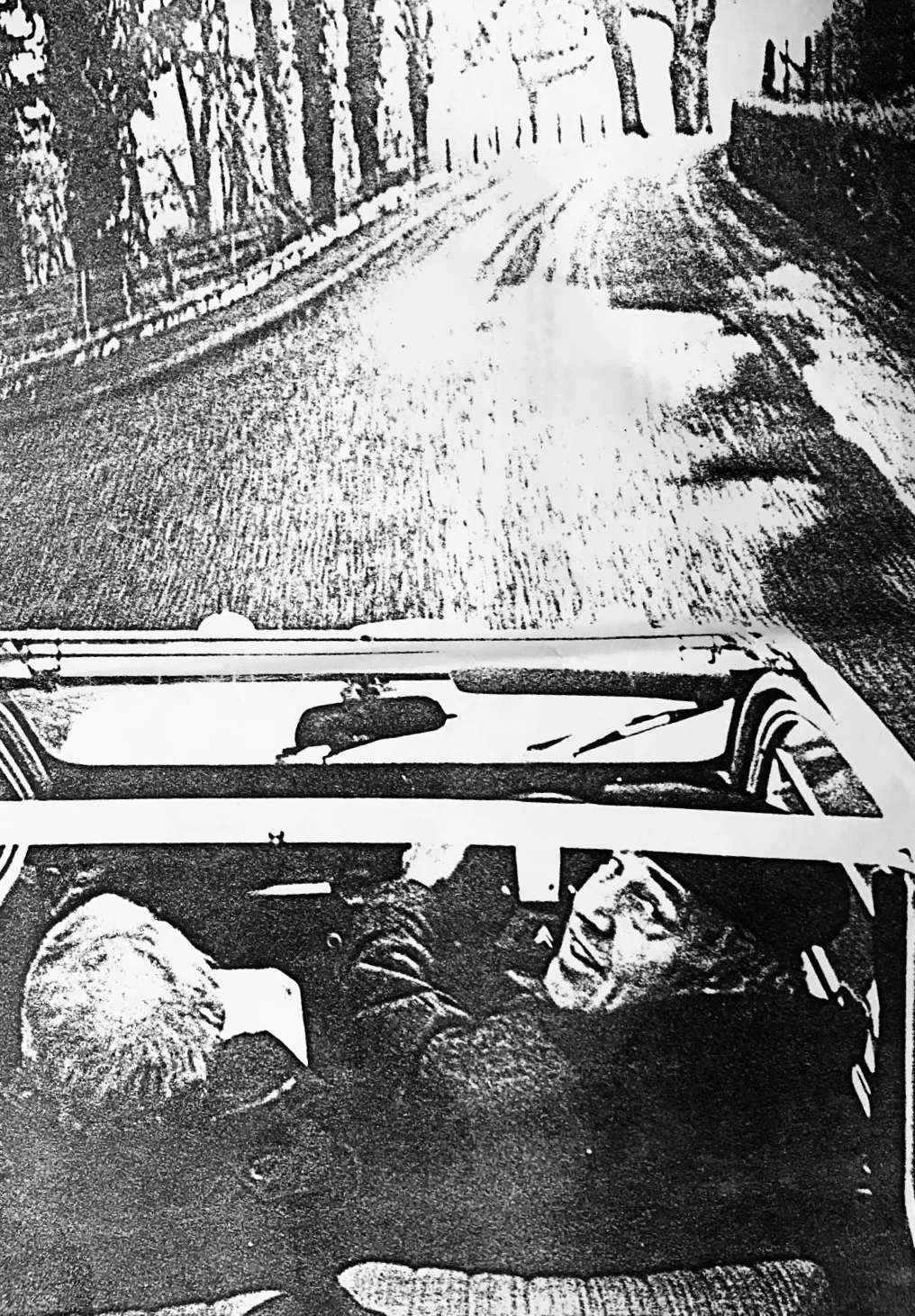
‘Adrian driving Dennis Lasdun at breakneck speed through Devon in his beloved white Citroën 2CV’ circa 1998 – taken by Alex de Rijke