


Credit: Far Out / Thin Lizzy / Richard Marchewka
Sat 22 August 2026 0:00, UK
The world of rock ‘n’ roll can be incredibly cruel, as plenty of musical legends are taken long before their time.
Phil Lynott was one of the most influential figures in rock music, as he completely defied the odds to become a legend within the genre. His singing ability, playing style, and penchant for songwriting meant that Thin Lizzy were catapulted to the top of the genre and are still considered one of rock music’s absolute must-listens.
Can you imagine where we would be without bangers like ‘Rosalie’, ‘The Boys are Back In Town’, and (I don’t care how much he hated it) their stellar cover of ‘Whiskey In The Jar’? Unfortunately, Lynott never got to truly reach his full potential. Like so many legendary rock musicians, he passed away far too soon, leaving behind a cacophony of great tunes, sure, but an equal amount of what-ifs.
So, on his birthday, we look back at the life and times of Phil Lynott, both the good and the bad, as one of the biggest names in rock.
The life and times of Phil Lynott: Phil Lynott Credit: Helge OverasThe Black Eagles, Skid Row
Before forming Thin Lizzy, Lynott cut his chops as part of The Black Eagles and Skid Row with Robbie Brennan, Gary Moore, Brush Shiels, and more.
As the frontman of Skid Row, he initially didn’t play an instrument until Shiels eventually taught him bass.
 Credit: Far Out / Steve Knight / Andy WeaverThin Lizzy form and first recordings
Thin Lizzy formed in 1969 with Lynott, Eric Bell, Brian Downey, and Eric Wrixon. Lynott arrived at Bell’s flat to play him some recordings of his own songs, which Bell immediately loved.
He later said, “They were so good. I knew right away I could put my guitar style into them.”
 Credit: Far Out / Decca RecordsFirst gig, Wrixon leaves, band signs to Decca
Thin Lizzy performed their first gig at a school near Dublin Airport, and in July, they released a single, ‘The Farmer’/’I Need You’, which sold only 238 copies. However, Wrixon left the band before the single came out, eventually rejoining his old band, Them.
Near the end of the year, the band signed to Decca Records before travelling to London to record their 1971 debut album.
 Credit: Far Out / Mercury Records / AVRO / Netherlands Institute for Sound and VisionThin Lizzy and Shades of a Blue Orphanage
Thin Lizzy achieved modest success, though failed to chart in the UK, a surprise since they’d been given extensive airplay and backing from some of the industry’s biggest names, including John Peel.
Still, Decca agreed to fund the band’s sophomore record, Shades of a Blue Orphanage, inspired by Lynott’s experience living in Dublin, though the record still failed to chart in the UK.
 Credit: Harry PottsFirst major UK tour and ‘Whiskey in the Jar’
In 1972, the band embarked on their first major UK tour, alongside Slade and Suzi Quatro. The label also secretly released the band’s cover of ‘Whiskey in the Jar’, much to their displeasure, but it ultimately led to a slot on Top of the Pops after charting at number six in the UK.
In 1973, the band released their third album, Vagabonds of the Western World, which also failed to chart. The following months saw Bell quitting the group and being replaced by Gary Moore, to help them finish the tour.
Moore eventually left, and Lynott enlisted guitarists Brian Robertson and Scott Gorham.
 Credit: Far Out / Harry Potts / Album CoverBreakthrough: Jailbreak and ‘The Boys are Back in Town’
In Thin Lizzy’s story, it seems that sixth time’s the charm, as their sixth record, Jailbreak, and its lead single, ‘The Boys are Back in Town’, scored them the breakthrough they’d been craving.
After supporting Bob Seger and Bachman-Turner Overdrive in early 1975, and previous records Nightlife and Fighting, Jailbreak bagged them charting success, solidified by their trademark twin-guitar sound they’d honed over the years.
 Credit: Album CoverThe rise and fall
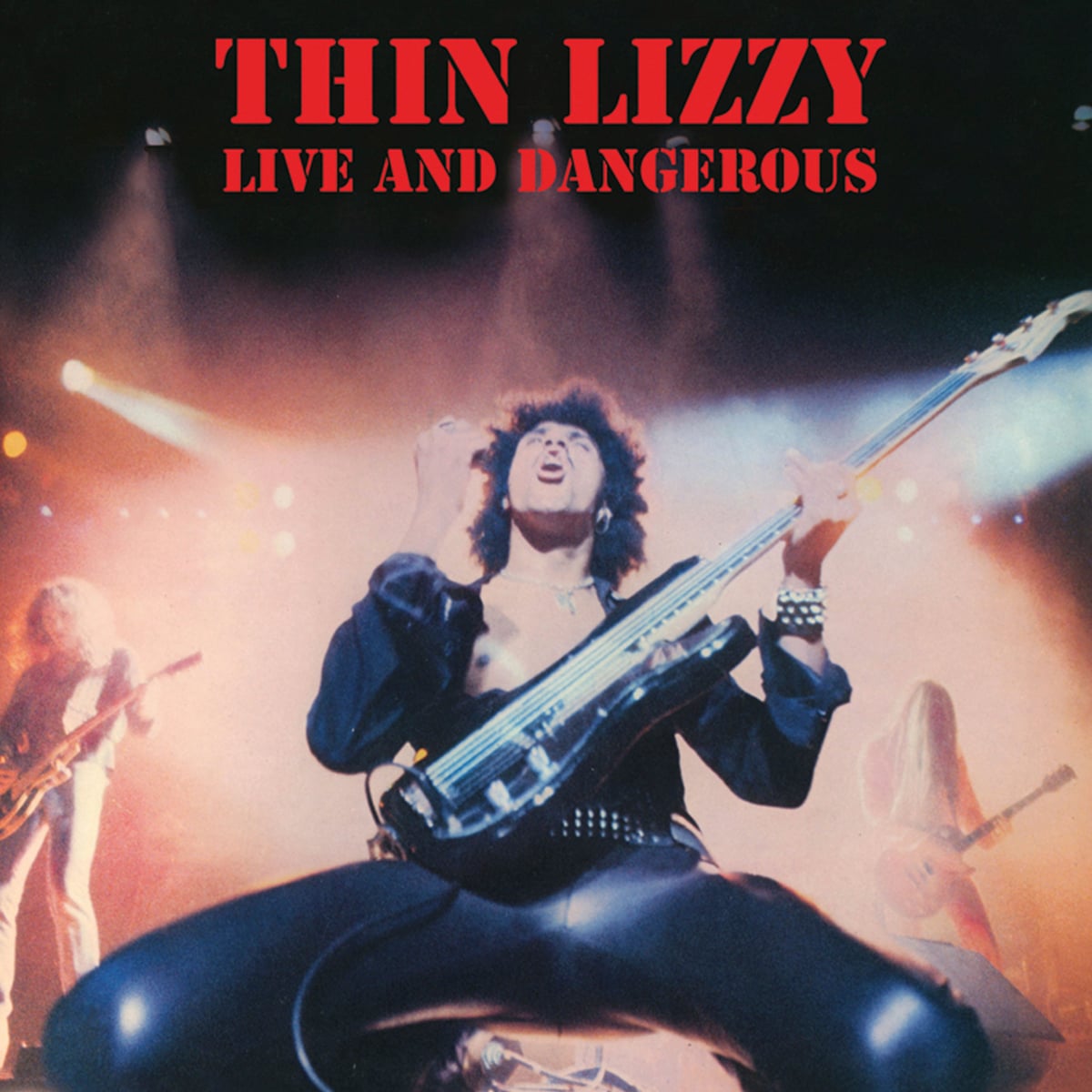
Following the success of Live and Dangerous, Robertson left the band, with Moore returning in his place. He suddenly left in 1979 during the middle of a tour, however, and the band continued as a trio before Lynott recruited Midge Ure as Moore’s temporary replacement.
He also eventually brought in Dave Flett temporarily, and started focusing on projects outside of the band, like The Greedy Bastards. Following the release of Chinatown, the band embarked on their final US tour, while Lynott used Thin Lizzy members to work on his second solo album.
Thunder and Lightning re-energised the band, but following mounting issues internally and with drug use, the band performed their last concert in September 1983 in Nuremberg.
 Credit: Far Out / Thin LizzyFinal years
By the end of 1983, Lynott formed Grand Slam, but they split by 1985. He continued working on solo material, and reportedly spoke about a possible Thin Lizzy reunion in 1986, to which Downey and guitarist Robin George agreed.
However, Lynott unfortunately passed away on January 4th, 1986, from multiple organ failure caused by his drug dependency.
