
Here are five reserves which are hard to beat.
1. Cley and Salthouse Marshes
Location: Coast Road, Cley-next-the-Sea, Holt, NR25 7SA
Cley and Salthouse Marshes was named one of the best coastal spots in the UK for wildlife. (Image: Mark Bullimore)
This is one of the UK’s most famous bird reserves, with vast marshes, reedbeds and coastal paths, alongside hides, boardwalks and big-sky scenery.
Visitors may spot spoonbills, avocets, marsh harriers, bitterns, bearded tits and pink-footed geese in winter. Snow buntings can be seen along the coast during colder months.
Autumn is good for rare birds, whereas winter brings huge goose flocks, and spring is the season for breeding birds.
It was also included in the top 20 places across the UK for coastal wildlife in the summer by The Times.
2. Hickling Broad and Marshes
Location: Stubb Road, Hickling, near Stalham, NR12 0BW
An aerial image of Hickling Broad (Image: Mike Page)
The largest broad in the Norfolk Broads offers quiet walking trails through reedbeds and wetlands. Boat trips are available to remote wildlife areas.
Wildlife includes common cranes, bitterns, marsh harriers, otters, bearded tits and swallowtail butterflies, Britain’s largest butterfly.
Visit in spring or summer for cranes and swallowtails, or in winter for spectacular bird roosts.
It also holds National Nature Reserve (NNR) status, one of the highest conservation designations in England.
3. RSPB Titchwell Marsh
Location: Main Road, Titchwell, King’s Lynn, PE31 8BB
A bittern was pictured in flight over RSPB Titchwell Marsh (Image: Sue Wood)
RSPB Titchwell has accessible routes through lagoons, reedbeds and saltmarsh to the beach, making it suitable for walking and photography.
Avocets, marsh harriers, bearded tits, water voles, geese, waders, migrant birds, dragonflies and damselflies may be seen.
The reserve is open for wildlife watching year-round, with particularly special migrations in spring and autumn.
It has also been ranked among the best RSPB bird reserves in the UK in a study by Independent Cottages, for its diversity of bird species, including globally endangered species.
4. Weeting Heath
Location: Near Brandon, Norfolk/Suffolk border, IP27 0FD
Stone curlews which were once “on the brink of extinction” in 1985 are often seen at Weeting Heath (Image: Norfolk Wildlife Trust)
Weeting Heath has been hailed as one of the best places in Britain to see one of its rarest birds.
Stone curlews are the star attraction, while visitors may also see woodlarks, tree pipits, crossbills and spotted flycatchers.
The quiet Breckland heathland has woodland trails and hides, and is less busy than the coastal reserves.
Late spring and early summer are the best times to visit, when stone curlews are breeding.
5. Roydon Common
Location: Near Grimston, east of King’s Lynn
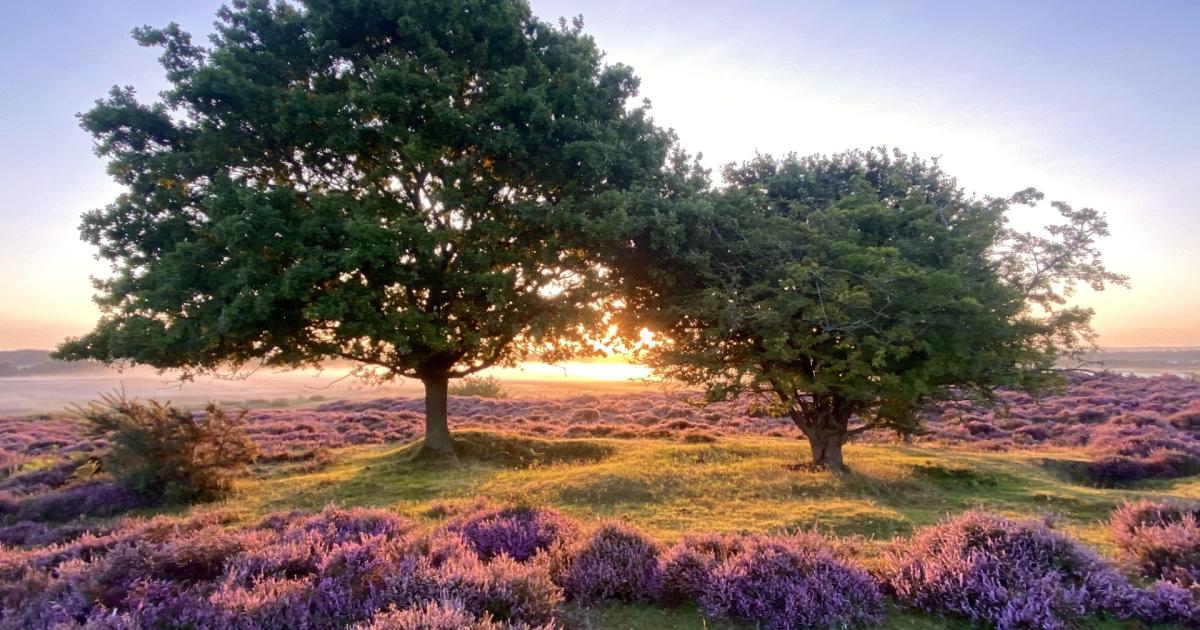
Roydon Common (Image: Julie Smart)
One of East Anglia’s finest heathland reserves, Roydon Common has peaceful, long sandy trails and purple heather displays in August.
The reserve forms part of Norfolk Wildlife Trust’s Gaywood Valley Living Landscape and shares a rich mosaic of habitats.
It is home to nightjars, woodlarks, black darter dragonflies, minotaur beetles, more than 30 butterfly species and over 450 moth species.
Rare bog plants, including sundews, can also be found. August and early September are recommended, when the heath is in flower.
It also holds National Nature Reserve (NNR) status.