
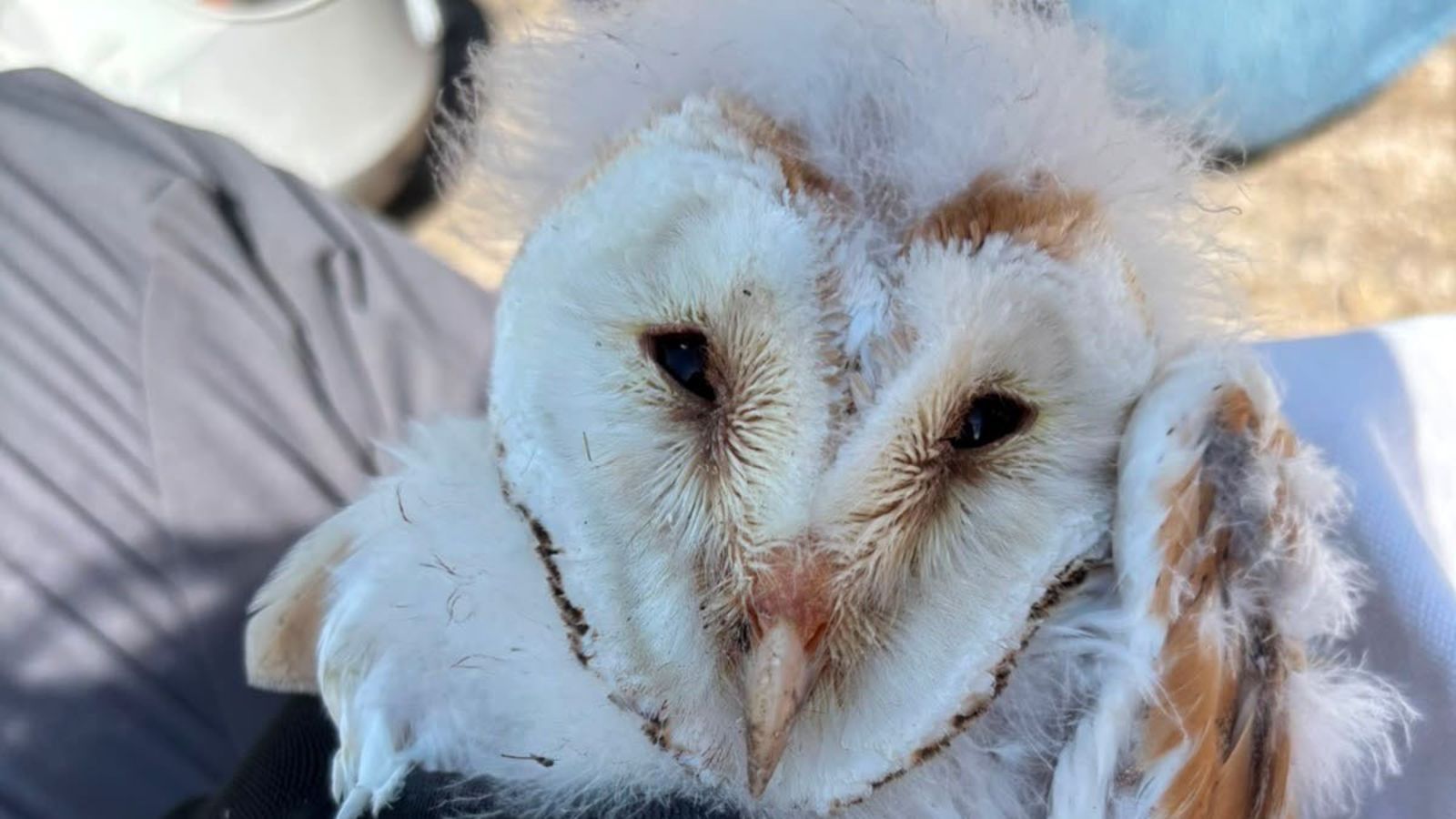
Ten barn owl chicks hatched in Co Fermanagh is “huge and exciting,” the conservation charity Ulster Wildlife has said.
The barn owl is one of Northern Ireland’s (NI) rarest and locally endangered birds because of habitat loss, rodenticide use and lack of food prey.
It is believed there are now only 30 breeding pairs remaining in NI.
The chicks were discovered in two nests in different locations for the first time in the county for 50 years.
They are the largest number ever to be recorded in Fermanagh.
Katy Bell, Senior Conservation Officer with Ulster Wildlife said: “After such a difficult breeding season last year for barn owls, finding two successful nest sites, each with five healthy chicks, is fantastic news.
“Barn owls remain incredibly scarce in Co Fermanagh, with few reported sightings, so this is a real boost for their conservation – and a real cause for celebration.”
“As a result, we are now able to protect these sites and safeguard them from disturbance, ensuring Fermanagh’s barn owls have the best chance of success.”
The exact locations of the nest sites are being kept confidential because barn owls are so rare in the west of Northern Ireland.
Ulster Wildlife called on anyone who has spotted a barn owl in counties Fermanagh, Tyrone and Londonderry to report their sighting.
Every single observation could help conservationists discover an unknown breeding pair and protect an important nest site.
Katy added: “We believe there are more barn owls out there than our records currently show, particularly across the west of Northern Ireland.
“While there are no confirmed nest sites currently known in counties Tyrone or Londonderry, regular sightings suggest breeding birds are likely to be present,” she said.
“If you think you’ve seen or heard a barn owl, we’d love to hear from you. This information could help us locate important breeding areas and protect these iconic birds for the future.”
Barn owls are mostly nocturnal but can be seen hunting at dawn and dusk over fields, hedgerows or roadside verges.
Barn owls don’t make nests but use old buildings, hollow tree trunks or readily use artificial nest boxes.
Signs of active nest or roosting sites include white droppings or “whitewash” on barns, sheds, trees or fence posts and the presence of dark, oval pellets containing the fur and bones of small mammals.
The charity is particularly keen to hear from farmers, landowners and anyone who regularly travels rural roads at dawn or dusk.
All sightings are treated in the strictest confidence to help protect the vulnerable birds.
Sign up for our free weekly newsletter here.
Want a quick and expert briefing on the biggest news stories? Listen to our latest podcasts to find out What You Need To Know…