
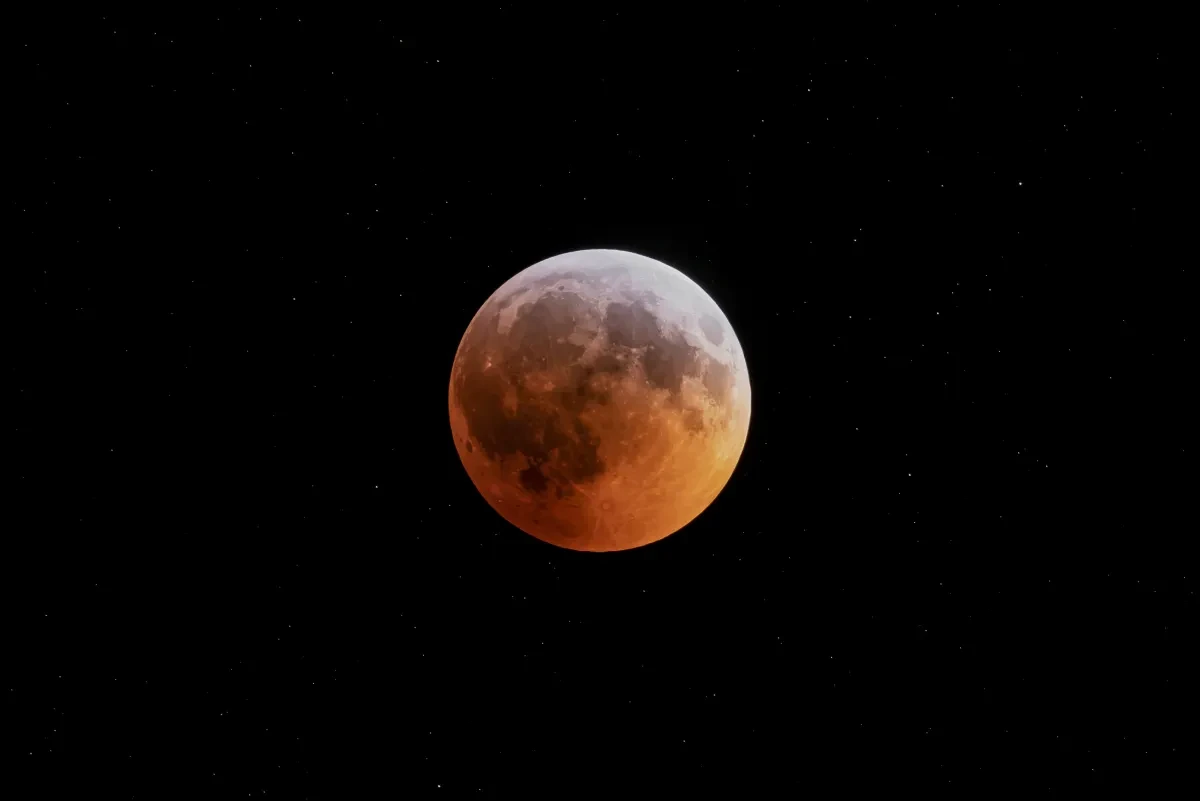
A lunar eclipse happens when Earth moves between the Sun and the Moon, and the Moon lies in Earth’s shadow.
A deep partial lunar eclipse will be visible from the UK and Ireland in the early hours of 28 August 2026, with around 93% of the Moon in the darkest part of Earth’s shadow at the eclipse’s maximum.
This takes place just over a fortnight after the spectacular 12 August partial solar eclipse, but that isn’t a coincidence; a solar eclipse always happens around two weeks before or after a lunar eclipse.
During a partial lunar eclipse, the portion of the Moon within Earth’s umbra (deep shadow) may appear reddish or copper-coloured. This is because sunlight passing through Earth’s atmosphere is scattered and refracted towards the Moon.
This partial eclipse will also be visible from North and South America, Africa, and other parts of Europe. For some time zones, the eclipse will occur in the late hours of 27 August.
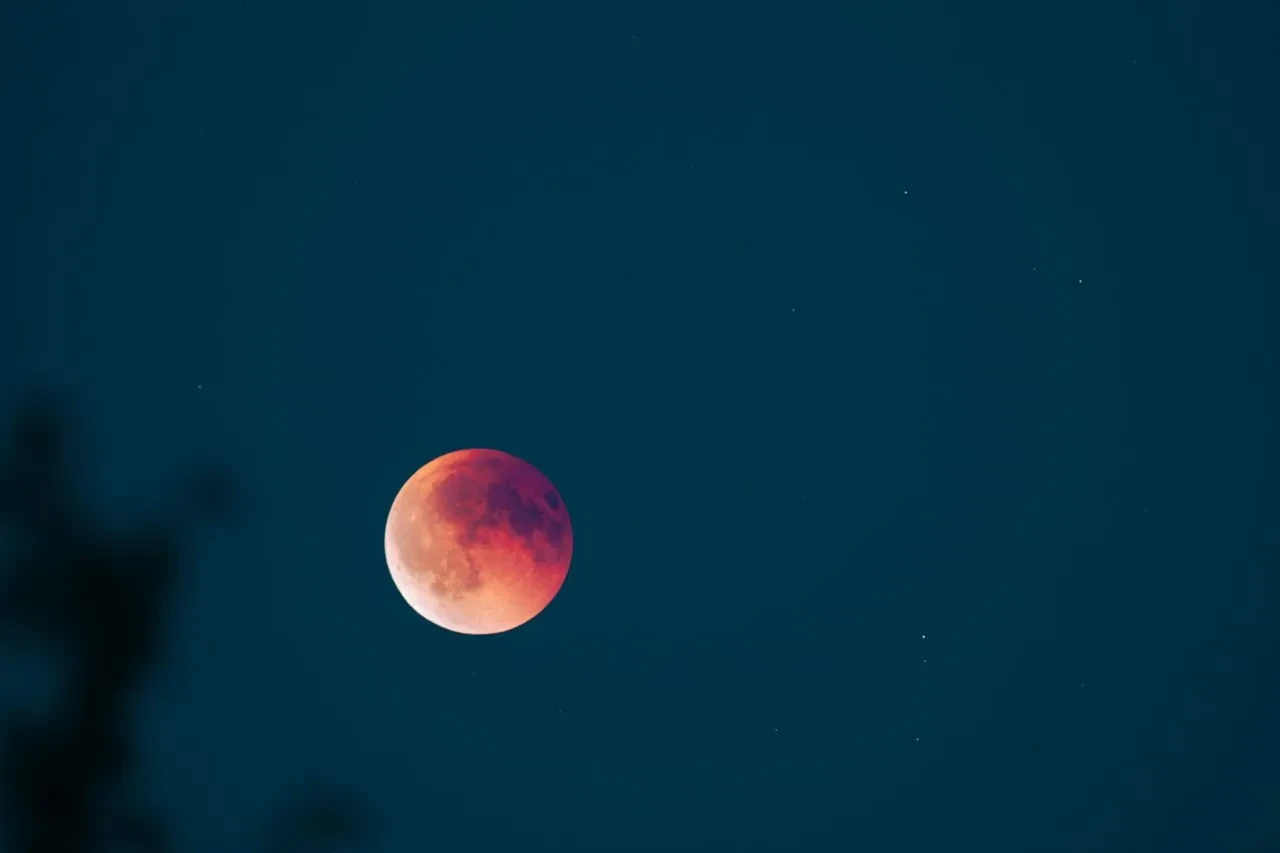
Partial lunar eclipse by Jan Reichelt on Pexels
What is a partial lunar eclipse?
This content is hosted by a third party
Please allow all cookies to watch the video.
Manage cookie preferences
A partial lunar eclipse happens when the Moon passes through Earth’s penumbra (the outer, lighter region of Earth’s shadow), and a section of it passes through the umbra (the darkest part of Earth’s shadow).
On 28 August we’ll see a partial lunar eclipse from the British Isles, but there’ll be a particularly large portion of the Moon in Earth’s umbra at about 93%, making this worth looking out for.
Nowhere in the world will see a total lunar eclipse this time.
You may sometimes hear a lunar eclipse referred to as a ‘blood moon’. This is a popular term which references the reddish colour of the portion of the Moon in the umbra.