
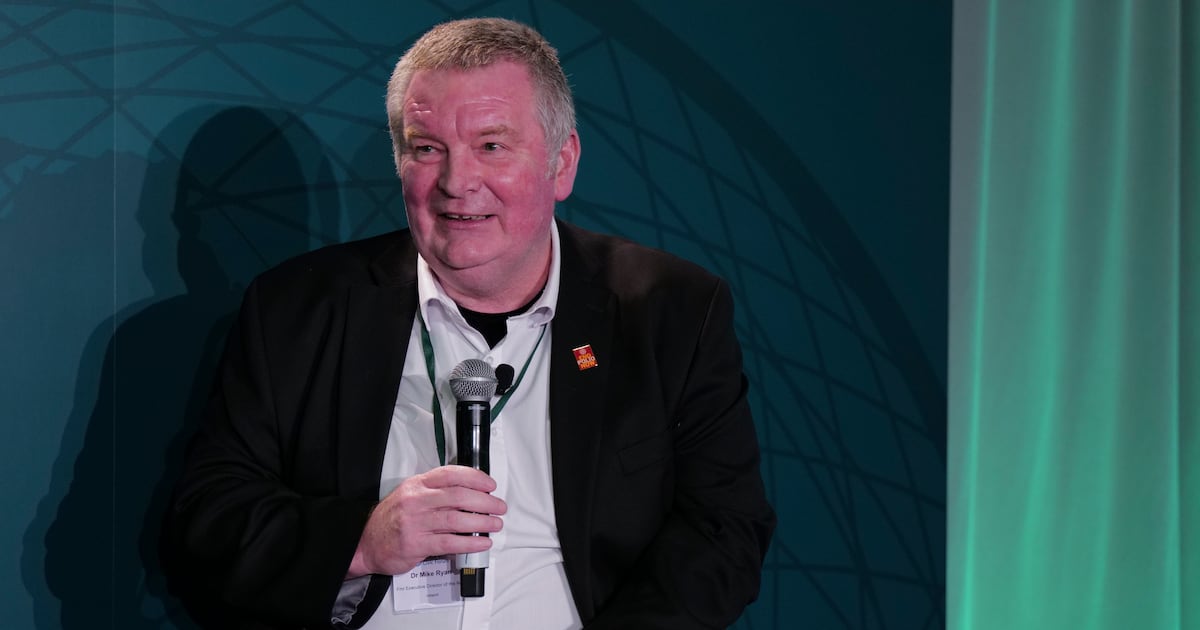
Healthcare has become a choice for some people between seeing a doctor and buying food, former World Health Organisation (WHO) chief Dr Mike Ryan has said.
Speaking at a public webinar on universal healthcare for Ireland, organised by Doctors for Universal Healthcare, Ryan said the concept is not just a health issue, but also a foundation for economic development, social justice and human security.
“For so many people on this planet, it’s not reality.”
He said for billions of people around the world, getting sick does not just threaten their health but also their ability to feed their family, keep their children in school or stay in their own home.
“If we’re going to deliver universal healthcare, we have to change the cost structure of delivering that healthcare. We have to change the outcomes that people are dealing with.”
The Sligo man said systems need to be built where “people’s access to healthcare does not depend on their wealth or where they live or where they happen to become sick and what time they happen to become sick”.
“There are different ways to structure the way that healthcare is paid for but the single worst way of paying for that healthcare is making the patient pay for that healthcare as the primary payment,” he said.
The webinar was held on Wednesday and was chaired by the co-founder of Doctors for Universal Healthcare, Dr Domhnall McGlacken-Byrne.
He said the organisation is calling for the introduction of universal healthcare in Ireland.
The organisation is made up of doctors with a diverse range of specialties and career stages from different parts of Ireland.
“What we have in common is that we all believe Ireland needs and deserves a universal health system so, we were set up a number of years ago to advocate for that purpose,” McGlacken-Byrne said.
“In terms of general practice, we are the only country in Europe without universal primary care, which means we’re the only country in Europe where a majority of people still pay in full, out of pocket to see a GP [general practitioner].
Prof Sara Burke, director of the Centre for Health Policy and Management at Trinity College Dublin, described universal healthcare as “access to care based on medical need and not ability to pay”.
“That, to me, is crucial, that the amount of money you have in your pocket should not define or determine how you access care,” she told the webinar.
Burke also said there is national and international evidence that “having charges deters people [from] getting necessary care”.
She said 57 per cent of Irish people pay out of pocket for GP care in Ireland currently, with just under 30 per cent of the population having a medical card and 14 per cent holding a GP visit card.
Some of the 57 per cent may have to pay up to €80 a month per family for prescription charges, she said.