
The most recent data from the first nine walk-in centres showed that an average of 120 appointments were delivered each day last month, compared to around 136,000 interactions on a typical weekday.
Medical groups have written to the Scottish Government to demand the extension is reversed and no additional funding allocated to the clinics in next week’s Programme for Government.
The joint statement from the Royal College of Pharmacy Scotland, the Chartered Society of Physiotherapy Scotland and the Royal College of General Practitioners (RCGP) warned the centres were an “expensive intervention” with a “negligible impact” on the NHS.
The statement, seen by The Herald, said: “We are concerned that they risk undermining our existing services and could lead to unintended consequences across the wider healthcare system.”
If more money is allocated to GP walk-in clinics in the Programme for Government, there are risks the workforce could be “destabilised”, ministers have been told, with primary care staff working additional hours to cover the centres.
SNP ministers were told there have been staff pressures in physiotherapy, GP practices and community hospitals as a result.
The medics also highlighted that walk-in clinics in England were closed or repurposed as urgent treatment centres after evidence showed between 10% and 16% of patients would not otherwise have sought healthcare advice without a walk-in centre, while a further 46% still went on to consult their routine GP within two weeks.
Further concerns in Scotland centre around the lack of access to medical records or history.
“Rather than reducing demand elsewhere in the system, walk-in centres often generated unnecessary healthcare consumption and duplication,” ministers were told.
The Scottish Government has also been told health inequalities could be “exacerbated” by the centres because they are disproportionately used by people who are generally healthier and more affluent.
“Health inequalities remain deeply entrenched in Scotland and there is a real risk that this approach could widen, rather than reduce, existing inequalities in access to care and health outcomes,” the letter said.
Instead, ministers have been told to prioritise policies that deliver “evidence based meaningful improvements for patients, clinicians and the wider health and care system”.
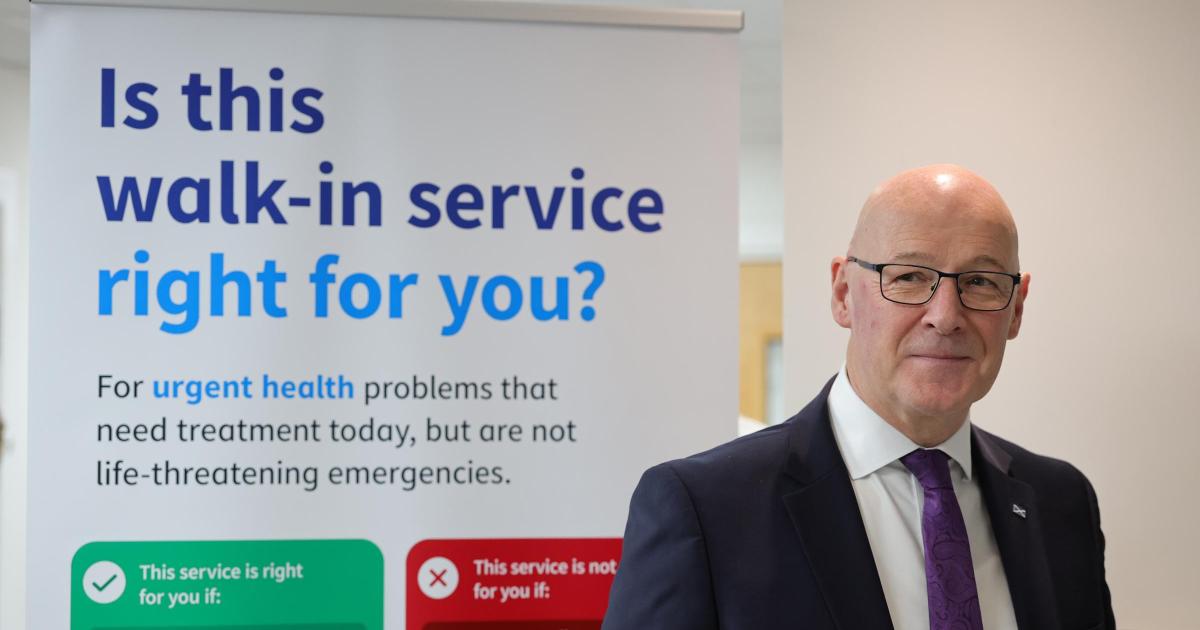
First Minister John Swinney speaking to Dr Helen Hellewell during a visit to officially open the new GP walk-in service at Randolph Wemyss Memorial Hospital in Leven, Fife. (Image: Steve Welsh/PA)
Resources should be “redirected” towards a range of proven measures that would improve access and strengthen patient care.
The Programme for Government must also focus on improving access through better appointment booking systems, ministers have been warned, with some GP practices operating with “outdated” infrastructure.
The letter concluded: “We must resist becoming an over industrialised and transactional medicine system because it is bad for patients and bad for clinicians.
“Instead, we believe the Programme for Government 2026-27 should focus on the measures outlined above to deliver more meaningful and lasting improvements for patients, clinicians and the wider health system.”
Dr Chris Provan, chair of the RCGP Scotland, said: “As a GP, I am as frustrated as patients when difficulties arise in accessing appointments. Patients should be able to see their trusted GP in a timely way, and GPs are committed to supporting efforts that improve access to care.
“That is why we are calling on the Scottish Government to focus on measures that we know will make a real difference. This includes investing in IT and digital infrastructure, supporting practices to improve telephony and appointment booking systems, and tackling the barriers that prevent some patients from accessing healthcare.
“These practical solutions would do far more to help patients see the right healthcare professional at the right time than piloting GP walk-in centres, which risk duplicating existing services at significant cost, worsening health inequalities and repeating approaches that have failed to deliver elsewhere.
“Ultimately, the most effective way to improve timely access to general practice is to increase capacity within the system. That means training, recruiting and retaining more GPs and growing the number of appointments available to patients.”
Laura Wilson, director for Scotland of the Royal College of Pharmacy, said: “As a group of Royal Colleges and professional bodies, we are fully committed to improving access to and quality of primary care services, so patients can see the right healthcare professional at the right time and right place.”
She said community pharmacies already provide a wide range of walk-in services for conditions such as urinary tract infections, respiratory and chest infections, ear, nose and throat issues and skin conditions.
Promoting Pharmacy First services has cost £7.5 million across more than 1,200 locations, while 16 walk-in GP centres are estimated to have cost £36 million.
“GP walk-in centres duplicate this offering and have the potential to divert a significant amount of resources away from where they are needed most,” she added.
“Instead of investing to duplicate resource, we would prefer to see investment directed into revolutionising the existing primary care offering; including by creating interoperable digital systems which allow for patient information to be shared with community pharmacy teams so that pharmacists have access to all the information required to be able to effectively treat patients in the community.”
Mr Swinney said it will “take time” for the number of Scots using the service to “build up” as he insisted he had confidence they will help improve access to health services.
“I am confident this model will help the Government to do exactly what we promised in the election, which is tackle the 8am rush for GP appointments and make sure members of the public can get access to healthcare services when they require them.”
The First Minister added: “I am pleased we have now got 11 of these centres up and running, and we are going to expand the programme to 40.”