
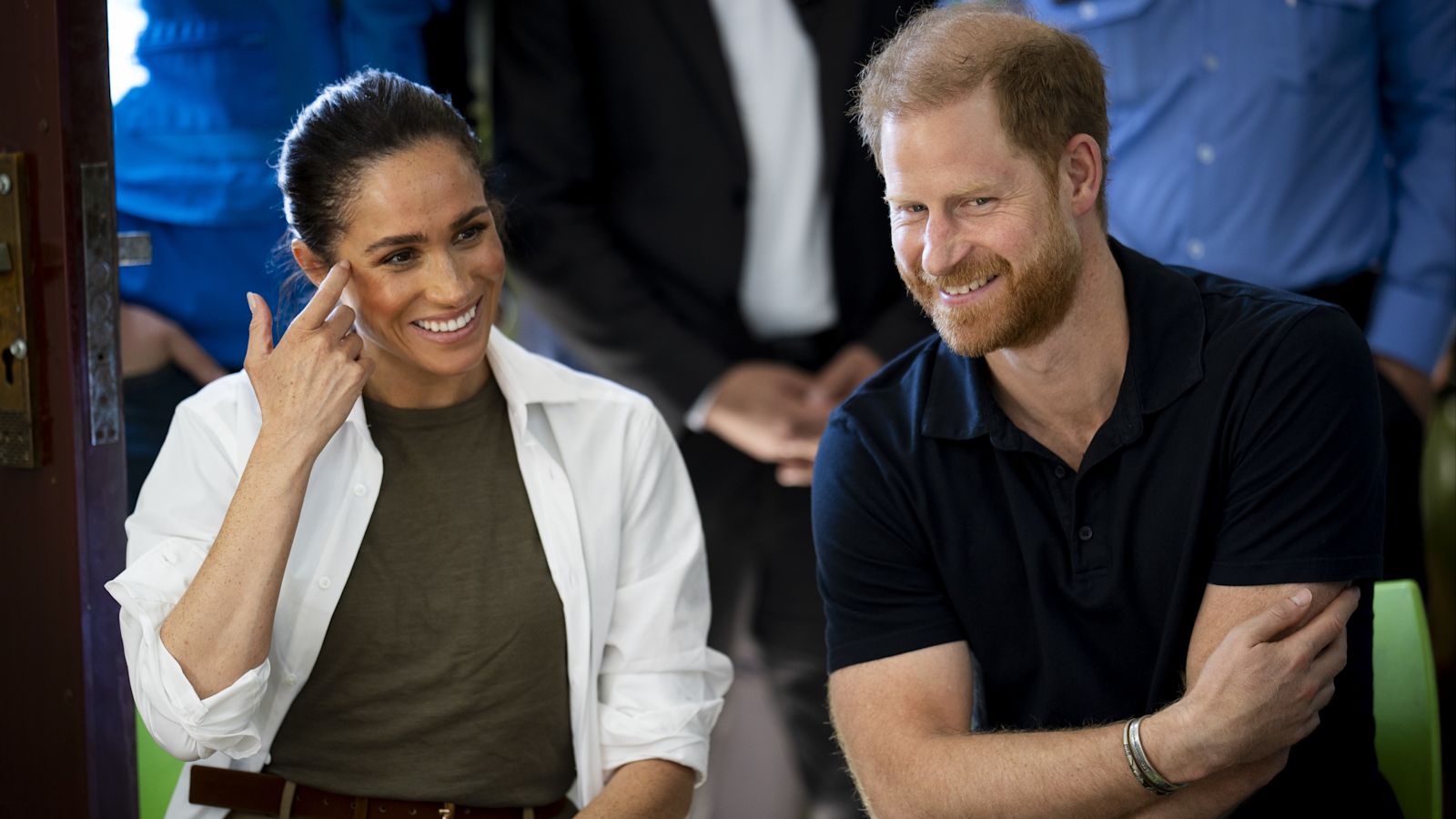
Prince Harry has still not been given any state-funded security despite his high-profile return to the UK with his wife and children.
A former police officer who used to protect the then-Prince Charles said that was putting the Sussex family “in danger”.
The Duke of Sussex landed in Birmingham with Meghan, Prince Archie and Princess Lilibet on Wednesday for the start of their new life based in Britain, but they’ve been told their protection will not be increased beyond being given the phone number of a police liaison officer.
The former Metropolitan Police protection officer who was responsible for King Charles when he was the Prince of Wales told ITV News that the decision was “incredible”.
Scott Hamer, a former royal protection officer, said the decision not to provide the Sussex protection is ‘incredible’
A phone number is “not protection”, said former royal protection officer, Scott Hamer. “It’s a fudge.”
“I have been involved in protection for 25 years; I find it absolutely incredible,” Mr Hamer said.
Prince Harry’s lawyers have written to the Home Secretary, Shabana Mahmood, asking her to personally intervene in the process.
Harry’s team believes the risk factors have significantly changed now the family is resident in the UK.
Harry and Meghan have not shared the location of their new British home, nor the name of the school their two children will attend from September.
“We currently have eight non-working prime ministers who are in receipt of police protection that is paid for by the public,” Mr Hamer said. “The threats and risks to Prince Harry are far greater.”
He said: “I am not privy to the intelligence regarding Liz Truss, but having been prime minister for 49 days… if we are basing this purely on threat and risk, which it should be, I would argue that Prince Harry should be in receipt of protection.”
Harry and Meghan’s return to the UK, after quitting their royal roles six years ago and moving to California, has reignited the debate about the level of publicly funded protection he should be given by the state.
The Duke told ITV News earlier this year that he does not recognise the term “non-working royal” as it has been used to avoid granting his family proper protection. He was speaking on a trip to Ukraine, where he said he was born into the Royal Family so would always be committed to a life of service.
Following the murders of three politicians, including Anne Widdecombe in July, the home secretary promised a review of security for high-profile public figures.
Subscribe free to our weekly newsletter for exclusive and original coverage from ITV News. Direct to your inbox every Friday morning.
As the son of King Charles, who has fought the Taliban in Afghanistan, Prince Harry believes the risk assessment process should apply to him just as it does to any other individual in public life.
Harry is fifth in line to the throne, and his children are sixth and seventh in line; however, the review into his security by a Home Office Committee, known as RAVEC, has once again concluded that a phone number, rather than any physical protection, is sufficient for the Sussex family.
“It’s putting them in danger,” Mr Hamer said. “The public are now aware of this whole issue and, of course, those people out there who may wish to do him harm – or his family harm – now know what his protection is or isn’t like. And that creates a risk.”
Mr Hamer said: “What we should be looking at is purely threat and risk – if you look at those objectively then I would argue that the current threat and risk to him and his family would mean that he should be entitled to police protection… it should not be about personality.”
The RAVEC Committee is made up of representatives from the police and security services as well as the Royal Household, and the Duke of Sussex believes he’s been singled out for some form of punishment and claims the system was changed only after he quit the institution in 2020.
Recent opinion polls have shown the public is largely opposed to the Sussexes getting protection paid for by taxpayers.
Harry and Meghan do pay for their own private security teams, but those individuals do not have access to intelligence from MI5 or MI6, nor can they carry guns when they are on UK soil.
This is the Talking Royals – our weekly podcast about the Royal Family, with ITV News Royal Editor Chris Ship and Producer Lizzie Robinson.