
2026-08-28T06:01:40.408Z
That’s a wrap! The lunar eclipse is over. Stay tuned for more incredible photographs
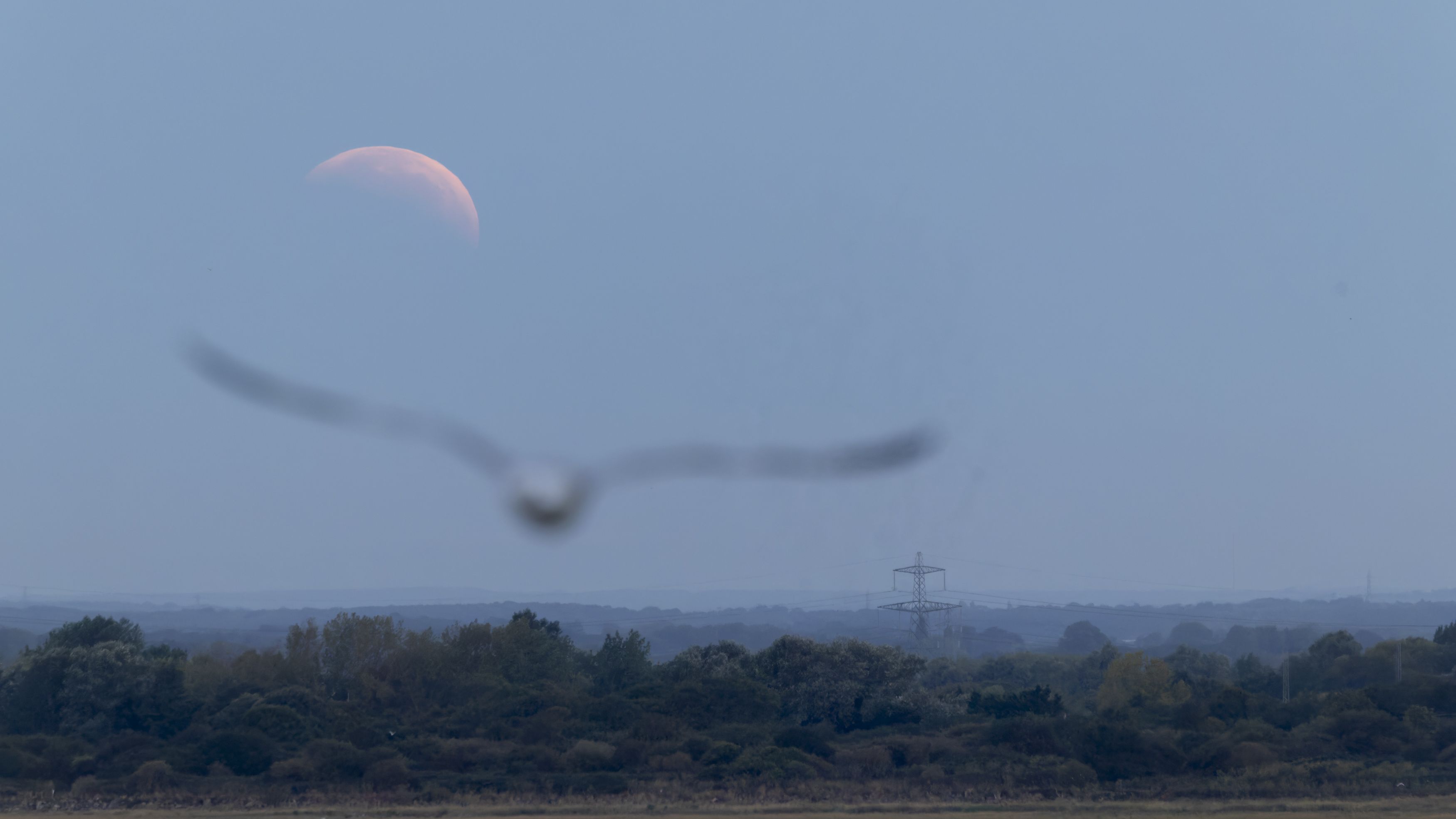
Partial lunar eclipse seen across Pegwell Bay, Aug. 28, 2026 in Ramsgate, England. (Image credit: Photo by Brook Mitchell/Getty Images)
And that’s a wrap! Five hours and 38 minutes, several cups of coffee and one spectacular “almost blood moon” later, the Aug. 27-28 lunar eclipse is officially over.
At 3:01 a.m. EDT (0701 GMT), the moon completely left Earth’s penumbral shadow, bringing the celestial show to a close.
At its peak, 96.2% of the lunar surface was immersed in Earth’s umbra, producing a spectacular sight for skywatchers across much of the world.
We’ll be bringing you some of the best photos and reactions from the eclipse, so stay tuned to our live coverage — and let us know in the comments if you managed to see it!
As for me? I may go and make another coffee… and hand over live blog updates to my colleague Anthony Wood, who will be taking us through the best photos and when we can expect to see the next lunar eclipse!

Daisy Dobrijevic
Social Links Navigation
Skywatching Editor
Daisy is an avid eclipse chaser with a deep appreciation for lunar eclipses. One of her most memorable was the total lunar eclipse of Sept. 7, 2025, which she watched from a beach in Barcelona.
2026-08-28T05:51:19.816Z
The partial phase of the lunar eclipse is over
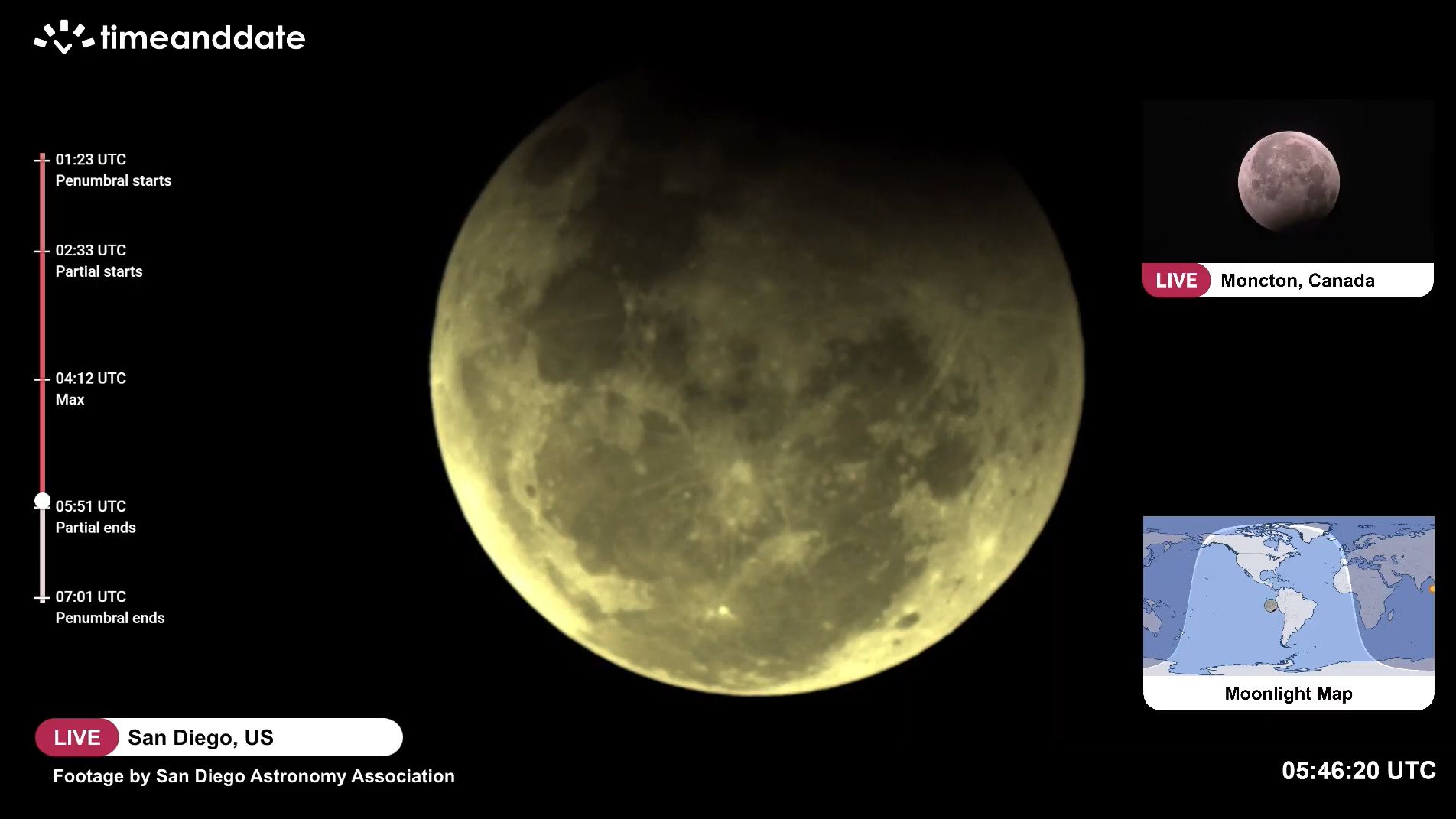
Last views of the partial phase of the eclipse from San Diego, US. (Image credit: San Diego Astronomy Association/Time and Date (timeanddate.com))
The partial phase of the lunar eclipse has officially come to an end. Womp womp.
At 1:51 a.m. EDT (0551 GMT), the last of the moon emerged from Earth’s dark umbral shadow, bringing more than three hours of partial eclipse to a close.
The event isn’t technically over just yet. The moon is still passing through Earth’s much fainter penumbral shadow, but the remaining changes will be considerably more subtle.
The penumbral phase — and the eclipse itself — ends at 3:01 a.m. EDT (0701 GMT). We’re almost there!
Daisy Dobrijevic
Social Links Navigation
Skywatching Editor
Daisy is an avid eclipse chaser with a deep appreciation for lunar eclipses. One of her most memorable was the total lunar eclipse of Sept. 7, 2025, which she watched from a beach in Barcelona.
2026-08-28T05:22:37.003Z
From full moon to ‘almost blood moon’ over Phoenix

Partial lunar eclipse from Pheonix, Arizona. (Image credit: Kohinoor Kar)
What a transformation!
This beautiful composite image from the Phoenix metro area captures the moon’s journey from the bright full Sturgeon Moon to the dramatic 96% partial lunar eclipse.
Photographer Kohinoor Kar was treated to relatively clear skies throughout the evening, allowing him to capture the eclipse as Earth’s shadow progressively swept across the lunar surface.
At maximum eclipse, 96.2% of the moon was covered by Earth’s dark umbral shadow, leaving only a thin sliver directly illuminated by the sun.
Daisy Dobrijevic
Social Links Navigation
Skywatching Editor
Daisy is an avid eclipse chaser with a deep appreciation for lunar eclipses. One of her most memorable was the total lunar eclipse of Sept. 7, 2025, which she watched from a beach in Barcelona.
2026-08-28T05:09:42.845Z
The eclipsed moon is setting over Europe but continues for the US
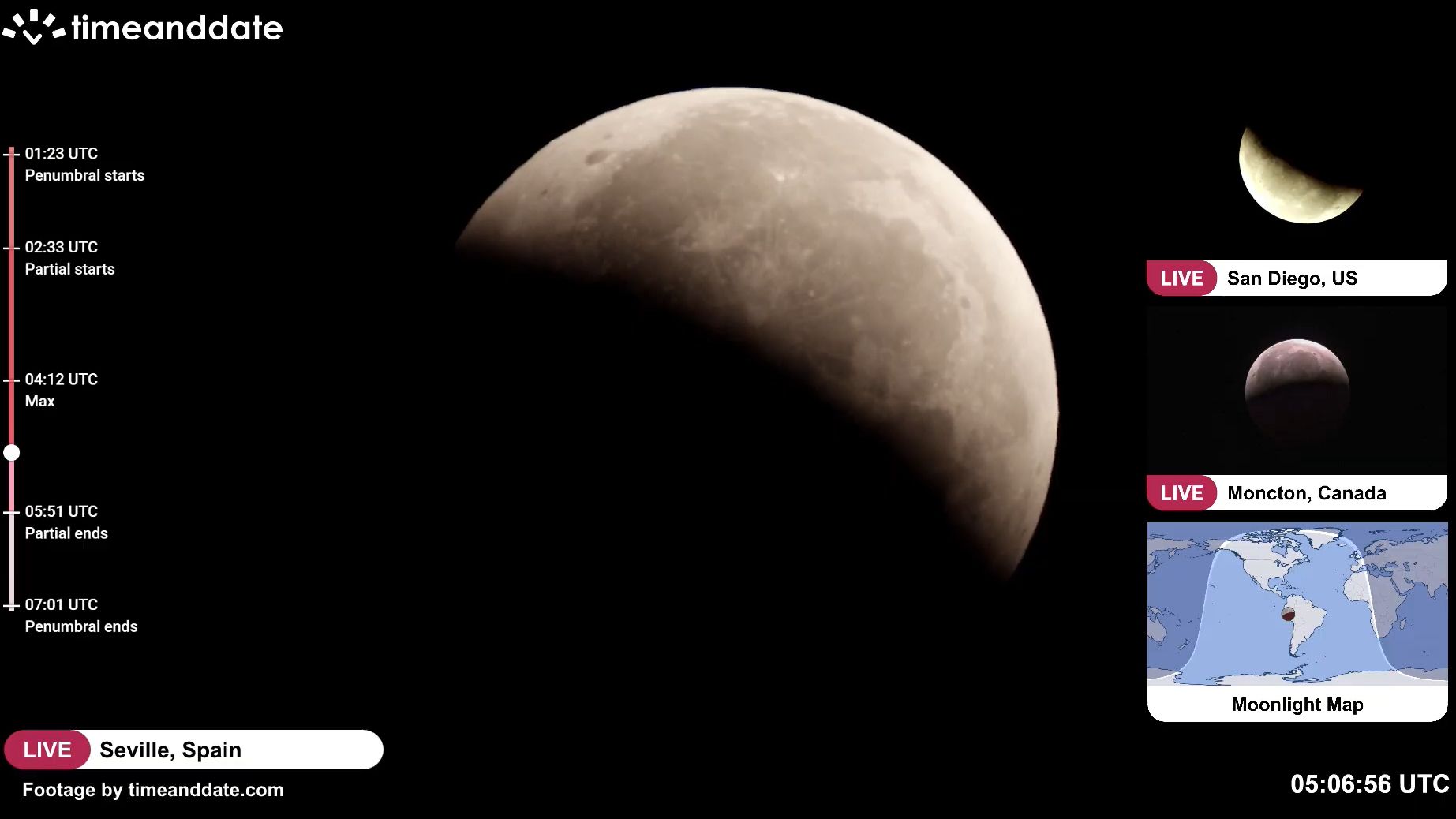
Partially eclipsed moon from Seville, Spain. (Image credit: Time and Date (timeanddate.com))
Good morning skywatchers in Europe! While the eclipse continues elsewhere in the world, the show is coming to an end for observers here. So you may now go to bed; you are excused. Not me, though; I’m here for the long haul…
The partially eclipsed moon is now setting in the west as dawn brightens the sky. Exactly when moonset occurs depends on your location, but for those with a clear western horizon, the final views could be particularly striking.
The eclipse itself isn’t over, though. Across North and South America, the moon remains above the horizon with Earth’s umbral shadow continuing to retreat across the lunar surface.
We will continue to share your amazing photos as they come in! Want to share a photo of the lunar eclipse? Please send your photo(s), comments, and your name and location to spacephotos@space.com.
Daisy Dobrijevic
Social Links Navigation
Skywatching Editor
Daisy is an avid eclipse chaser with a deep appreciation for lunar eclipses. One of her most memorable was the total lunar eclipse of Sept. 7, 2025, which she watched from a beach in Barcelona.
2026-08-28T04:59:05.975Z
Lunar eclipse unfolds over Sicily
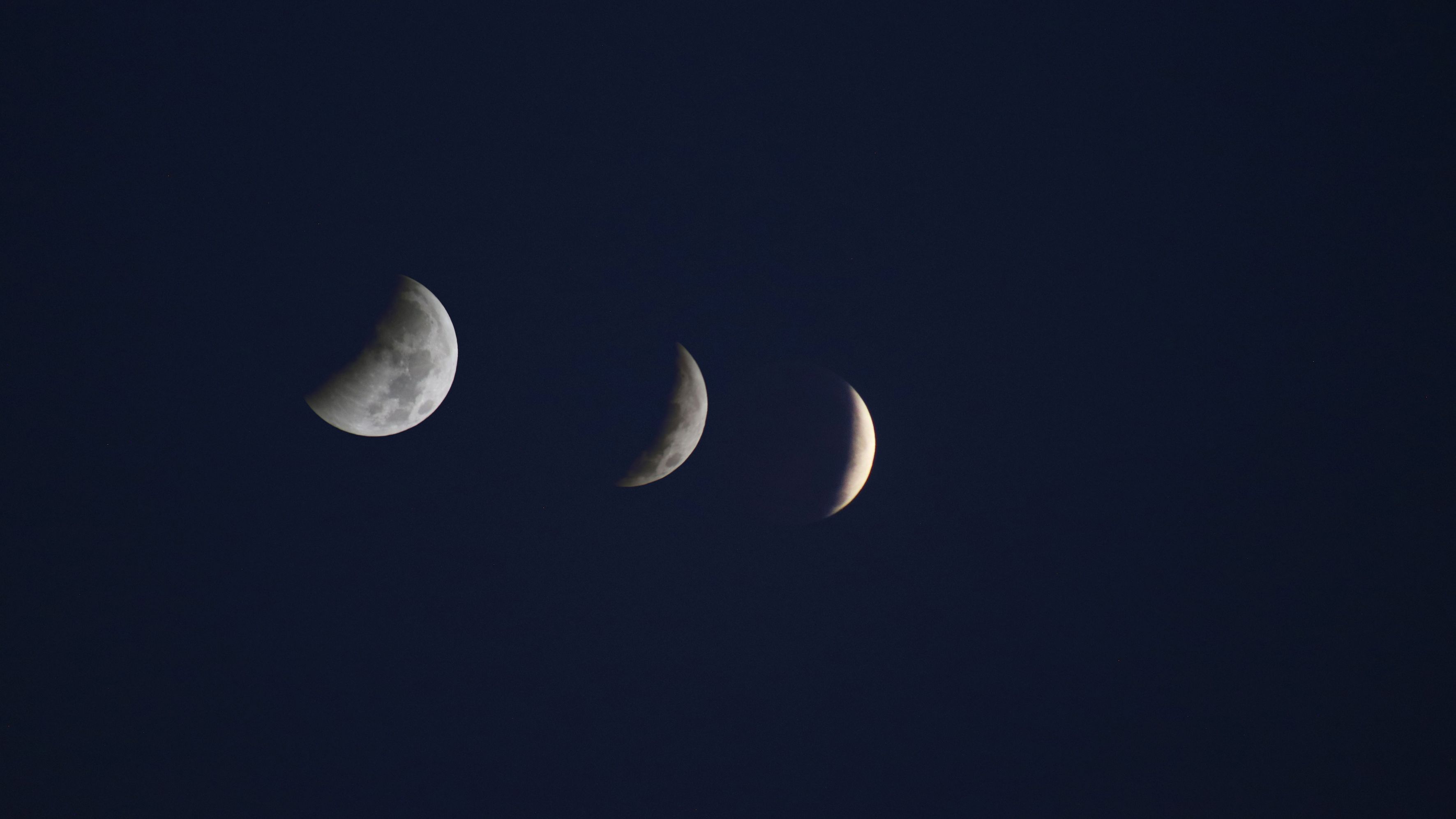
Lunar eclipse composite from Pedara, Sicily, Italy. (Image credit: Giuseppe Pappa)
What a great way to see the eclipse unfold!
This composite image from Giuseppe Pappa captures the progression of the partial lunar eclipse as seen from Pedara, Sicily, Italy, on Aug. 28.
The sequence beautifully shows Earth’s shadow moving across the lunar surface as the eclipse progresses.
The images were captured using a Canon 760D camera and a 300mm lens.
Daisy Dobrijevic
Social Links Navigation
Skywatching Editor
Daisy is an avid eclipse chaser with a deep appreciation for lunar eclipses. One of her most memorable was the total lunar eclipse of Sept. 7, 2025, which she watched from a beach in Barcelona.
2026-08-28T04:51:26.164Z
Clouds part just in time for a stunning near-total eclipse view
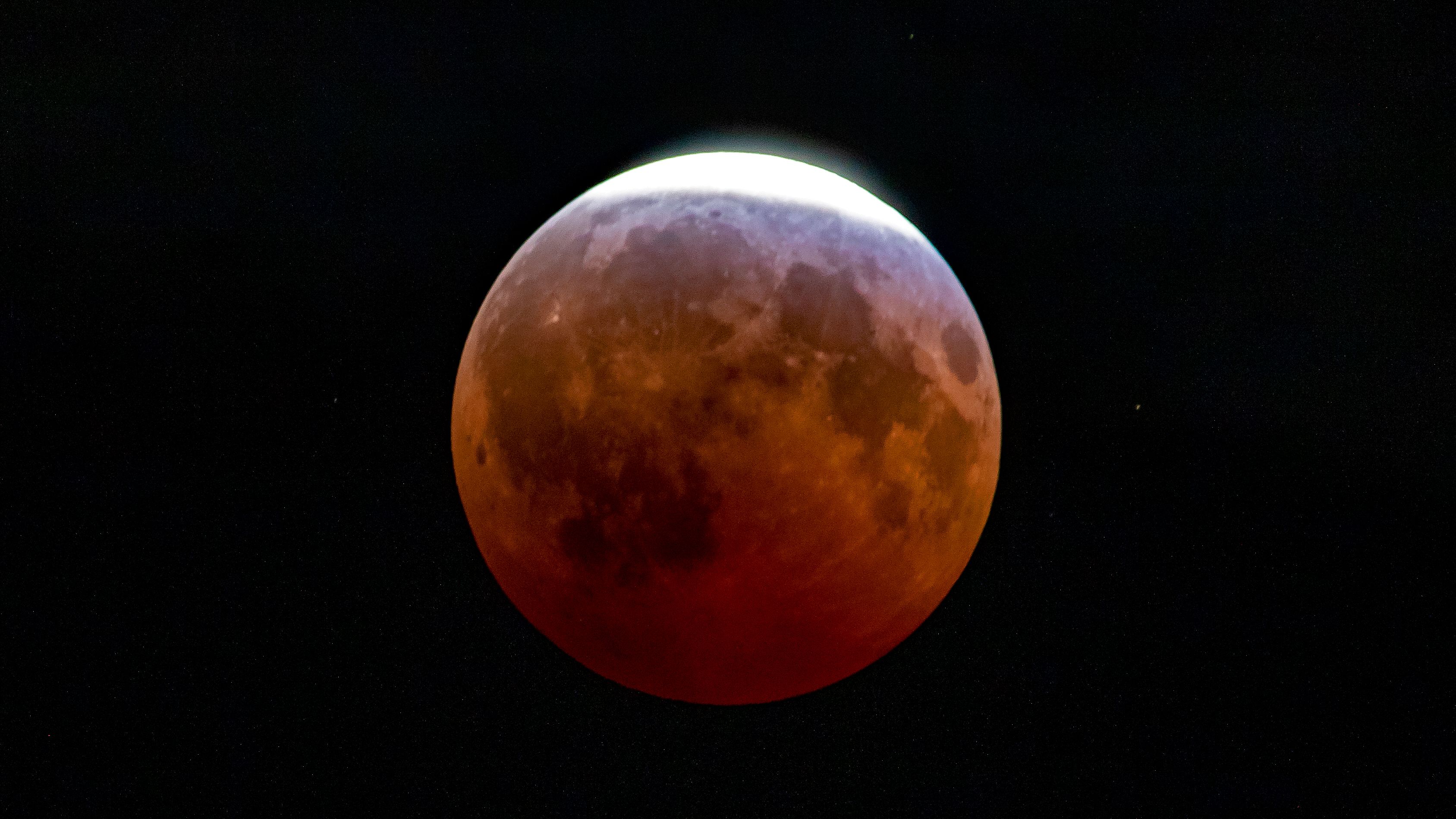
Deep partial lunar eclipse from Charlotte, North Carolina. (Image credit: Kevin McCarthy)
Talk about perfect timing!
Photographer Kevin McCarthy captured this striking close-up of the near-total lunar eclipse from Charlotte, North Carolina, after spending much of the night wondering whether the weather would cooperate.
“With thunderstorms in the area throughout the night, I was worried I may miss the chance to capture this event,” McCarthy told Space.com. “But, at the last minute, as the maximum shadow coverage approached, the clouds parted long enough for me to get the shot.”
And what a shot it is! At maximum eclipse, 96.2% of the lunar surface slipped into Earth’s dark umbral shadow, leaving just a thin, brightly illuminated sliver.
Daisy Dobrijevic
Social Links Navigation
Skywatching Editor
Daisy is an avid eclipse chaser with a deep appreciation for lunar eclipses. One of her most memorable was the total lunar eclipse of Sept. 7, 2025, which she watched from a beach in Barcelona.
2026-08-28T04:45:17.091Z
Stunning lunar eclipse views over Lake Ohrid
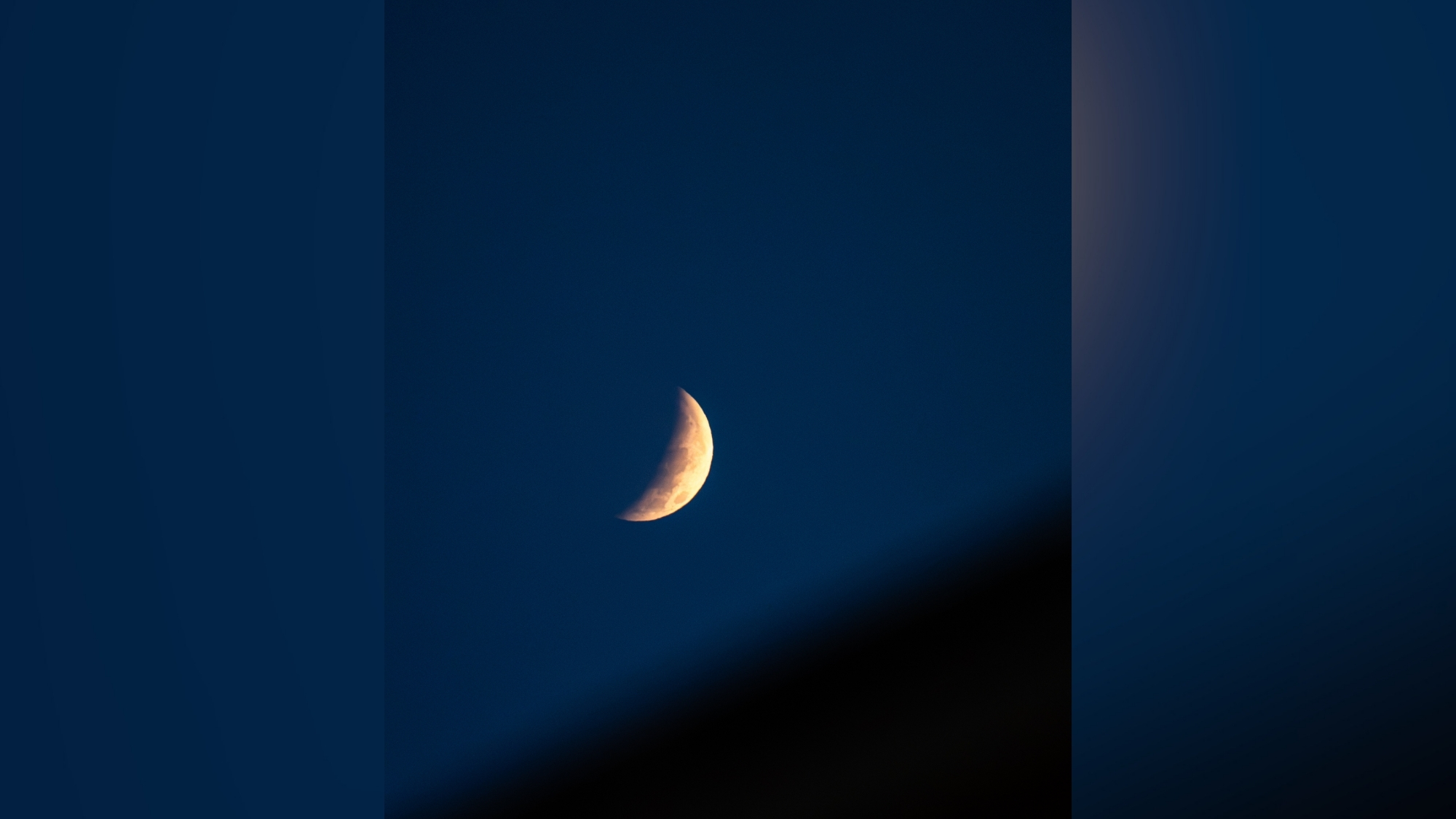
Partially eclipsed moon. (Image credit: Dimitar Birachoski)
We’re starting to see some fantastic images from the lunar eclipse!
These beautiful views come from Ohrid, North Macedonia, where photographer Dimitar Birachoski captured the partially eclipsed moon above Lake Ohrid as it sank toward the horizon.
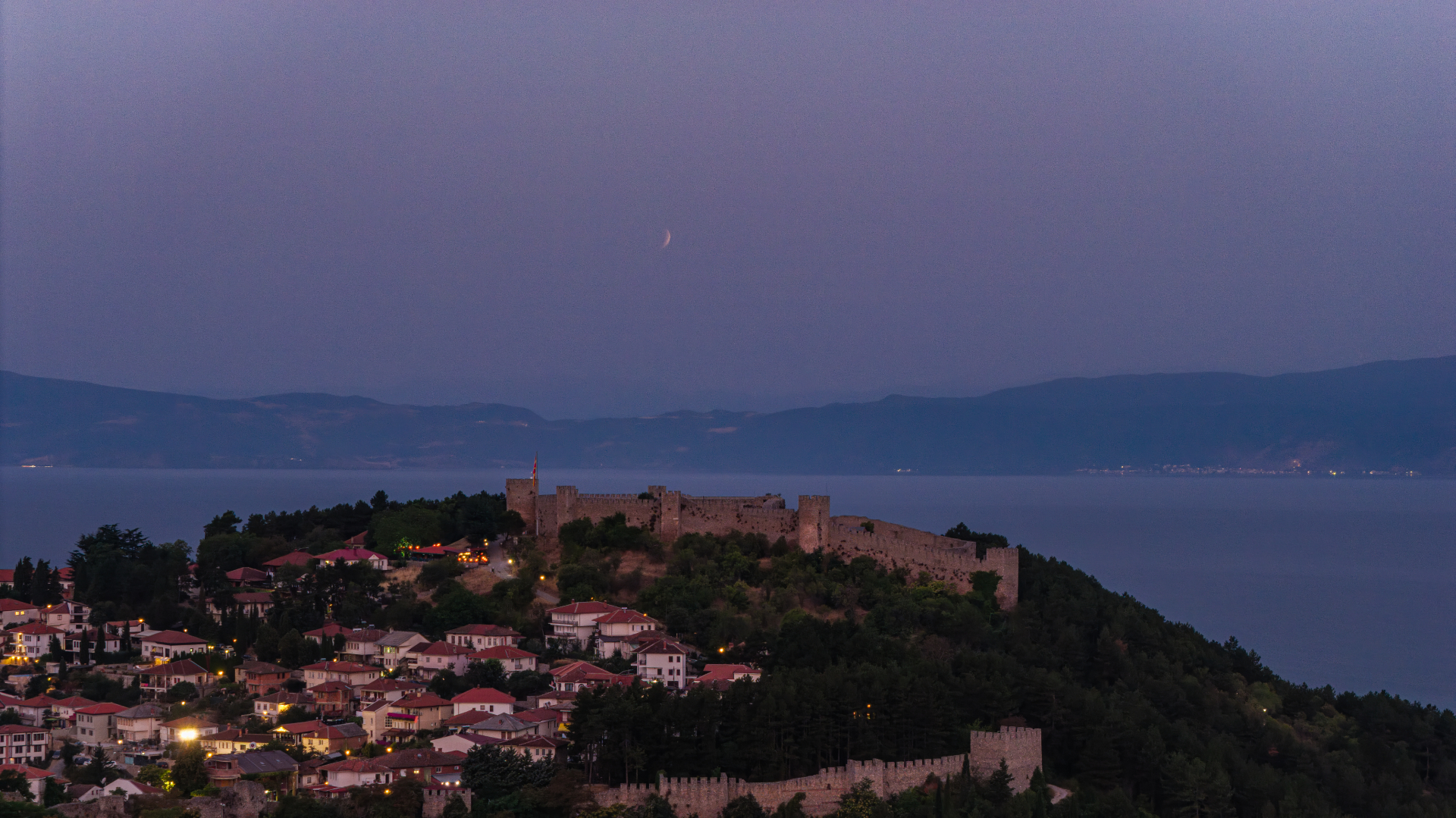
Partially eclipsed moon in the early morning sky. (Image credit: Dimitar Birachoski)
Local conditions meant the deepest, reddest stages of the eclipse weren’t visible before the moon disappeared from view. Sunrise was approaching, while Saharan dust and cloud also affected the view.
“Even if it was 5 a.m., I stayed, photographed and created some good photos,” [NAME] told Space.com. “Feeling tired, and also a little bit sad because we were unable to see the ‘red phase,’ but that’s it.”
The images were captured using a Nikon Z6 III with a Sigma 120-400mm lens and a DJI Mavic 4 Pro.
Daisy Dobrijevic
Social Links Navigation
Skywatching Editor
Daisy is an avid eclipse chaser with a deep appreciation for lunar eclipses. One of her most memorable was the total lunar eclipse of Sept. 7, 2025, which she watched from a beach in Barcelona.
2026-08-28T04:34:39.301Z
Don’t go back to bed just yet! The eclipse isn’t over
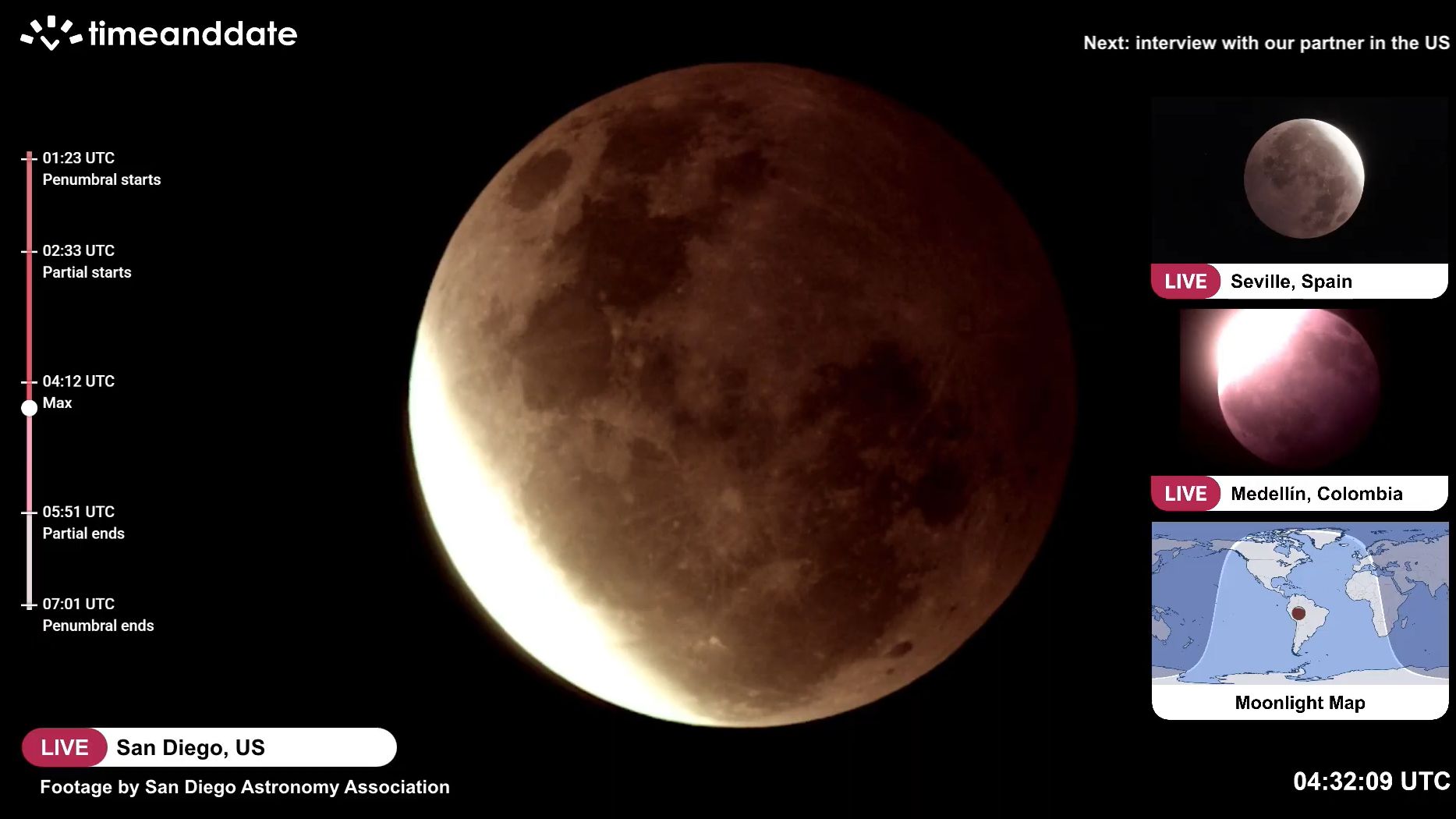
If you have clear skies and a view of the moon, check it out! It’s still very impressive. (Image credit: San Diego Astronomy Association/Time and Date (timeanddate.com))
Maximum eclipse may be behind us, but there’s still plenty of celestial action to come.
The moon is now slowly moving back out of Earth’s umbral shadow, essentially reversing the sequence we’ve just watched. The brightly illuminated portion of the lunar surface will gradually grow as Earth’s shadow retreats.
The partial phase continues until 1:51 a.m. EDT (0551 GMT), so don’t head back to bed just yet. (please, stay with me here… go on, get another coffee…)
For observers across parts of Europe, the moon is now sinking toward the western horizon as dawn approaches, potentially making for some beautiful views of the partially eclipsed moon low in the sky.
Daisy Dobrijevic
Social Links Navigation
Skywatching Editor
Daisy is an avid eclipse chaser with a deep appreciation for lunar eclipses. One of her most memorable was the total lunar eclipse of Sept. 7, 2025, which she watched from a beach in Barcelona.
2026-08-28T04:15:14.908Z
Maximum eclipse! 96% of the moon is in Earth’s shadow
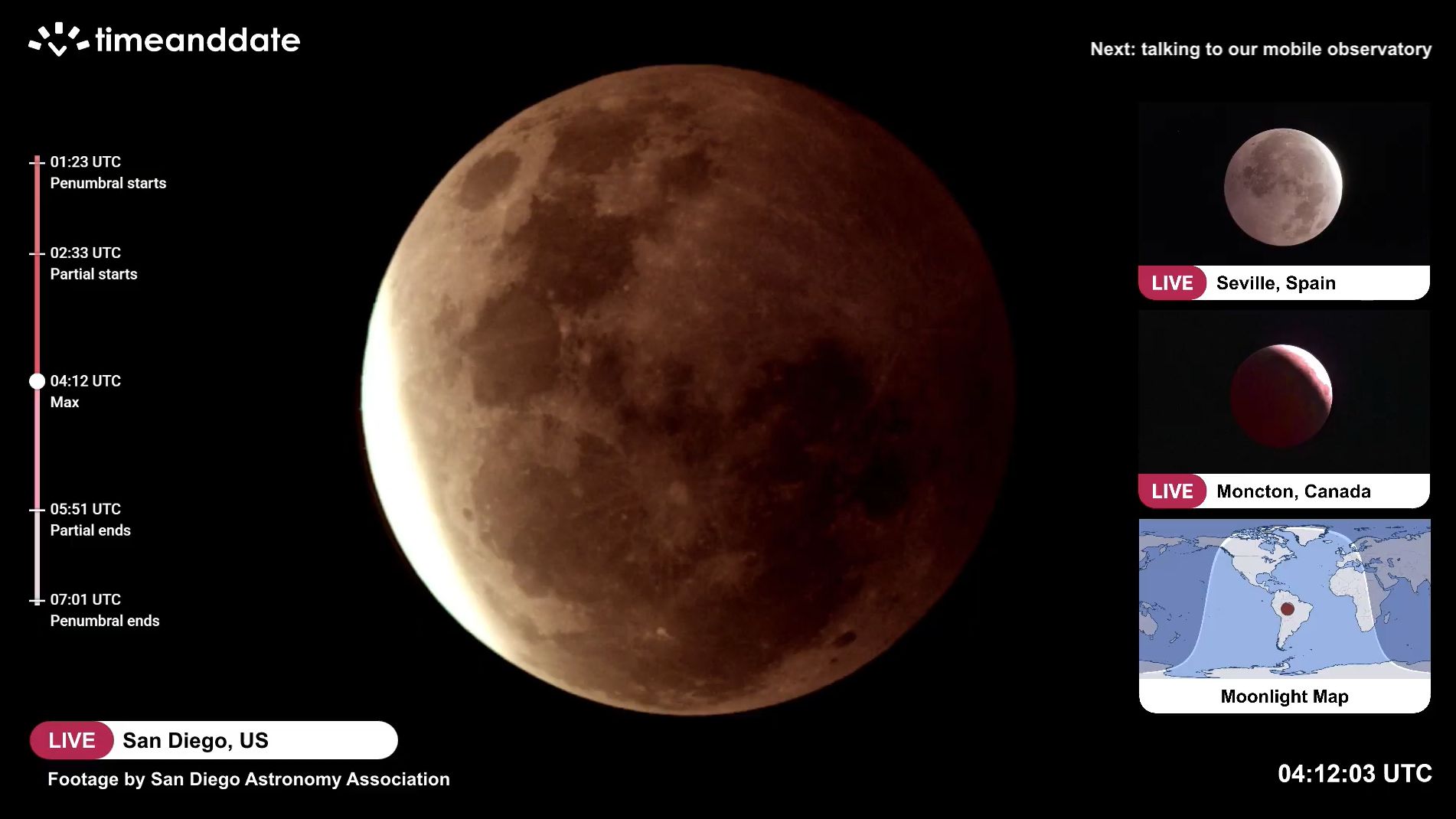
We have reached maximum eclipse! Doesn’t the moon look spectacular? (Image credit: San Diego Astronomy Association/Time and Date (timeanddate.com))
This is it! The Aug. 27-28 deep partial lunar eclipse has reached its spectacular maximum. Just missing out on a full “blood moon”.
At 12:12 a.m. EDT (0412 GMT), 96.2% of the lunar surface was covered by Earth’s dark umbral shadow, leaving just a thin sliver of the moon directly illuminated by the sun.
This isn’t technically a total lunar eclipse — the entire moon never enters the umbra — but it is pretty close. Much of the eclipsed moon appears reddish or coppery, creating the appearance of an “almost blood moon”.
If you’ve got clear skies, take a good look now — this is the deepest point of the eclipse. And for everyone else who stayed up late or (like me) set an extremely early alarm for this… hopefully it was worth it!
But stay with us… There are more eclipse shenanigans to be had.
Daisy Dobrijevic
Social Links Navigation
Skywatching Editor
Daisy is an avid eclipse chaser with a deep appreciation for lunar eclipses. One of her most memorable was the total lunar eclipse of Sept. 7, 2025, which she watched from a beach in Barcelona.
2026-08-28T03:50:43.340Z
Less than 30 minutes until maximum eclipse!
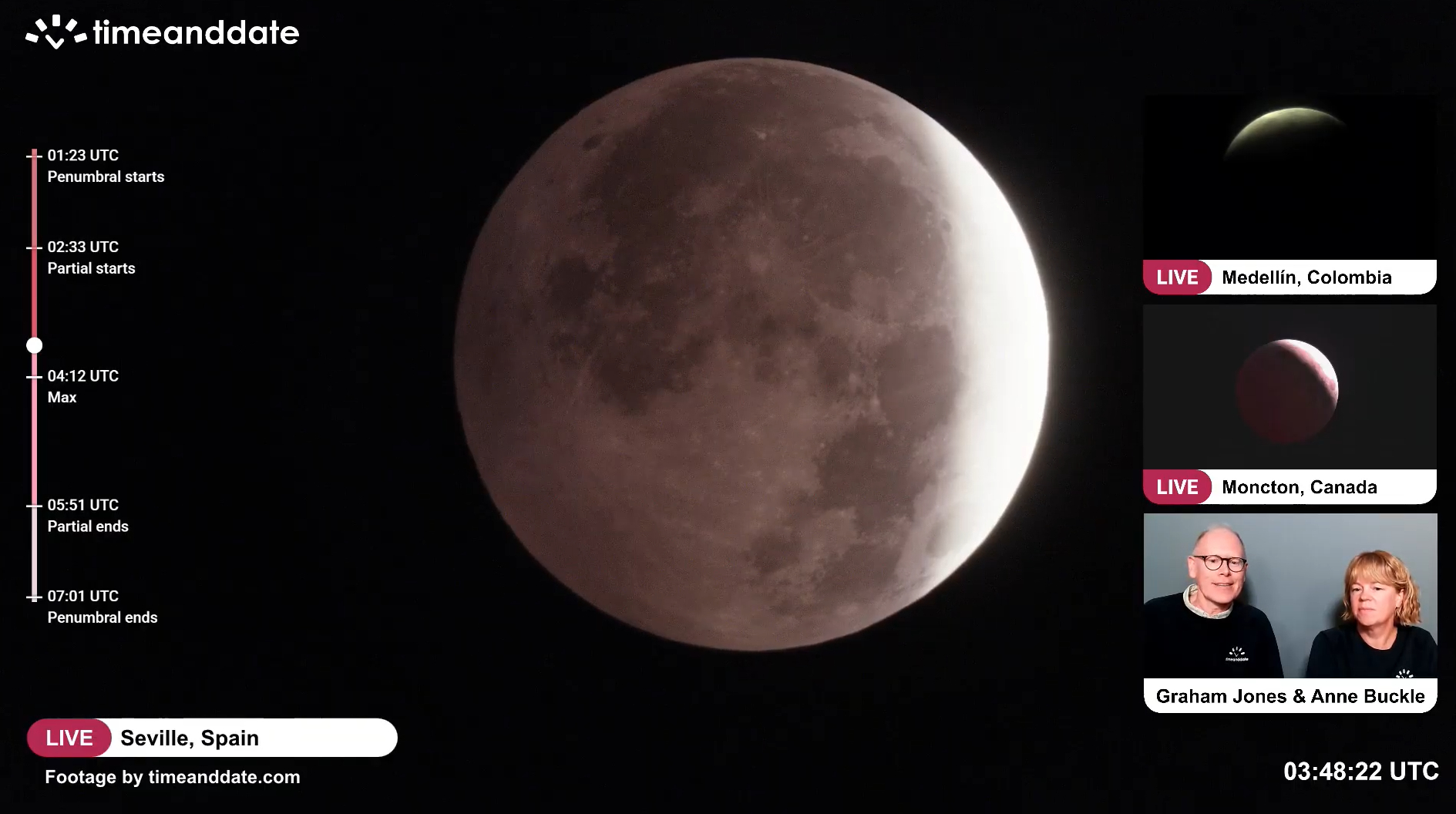
T-30 minutes until maximum eclipse. (Image credit: Time and Date (timeanddate.com))
If you’re still awake with us — or you’ve just dragged yourself out of bed after setting an early alarm — you’ve picked a good time to join. We’re now less than half an hour from maximum eclipse!
The moon is moving even deeper into Earth’s umbral shadow, with only a shrinking portion of its surface remaining directly illuminated by the sun.
At maximum eclipse, a whopping 96.2% of the lunar surface will be covered by Earth’s umbra. It won’t quite reach totality, but it should come remarkably close to looking like a total “blood moon”.
Maximum eclipse occurs at 12:12 a.m. EDT (0412 GMT).
I’m all clouded out, I hope you are having more luck! Good job I’ve got these lunar eclipse livestreams to keep me entertained!
Daisy Dobrijevic
Social Links Navigation
Skywatching Editor
Daisy is an avid eclipse chaser with a deep appreciation for lunar eclipses. One of her most memorable was the total lunar eclipse of Sept. 7, 2025, which she watched from a beach in Barcelona.
2026-08-28T03:43:59.804Z
The moon is starting to turn red
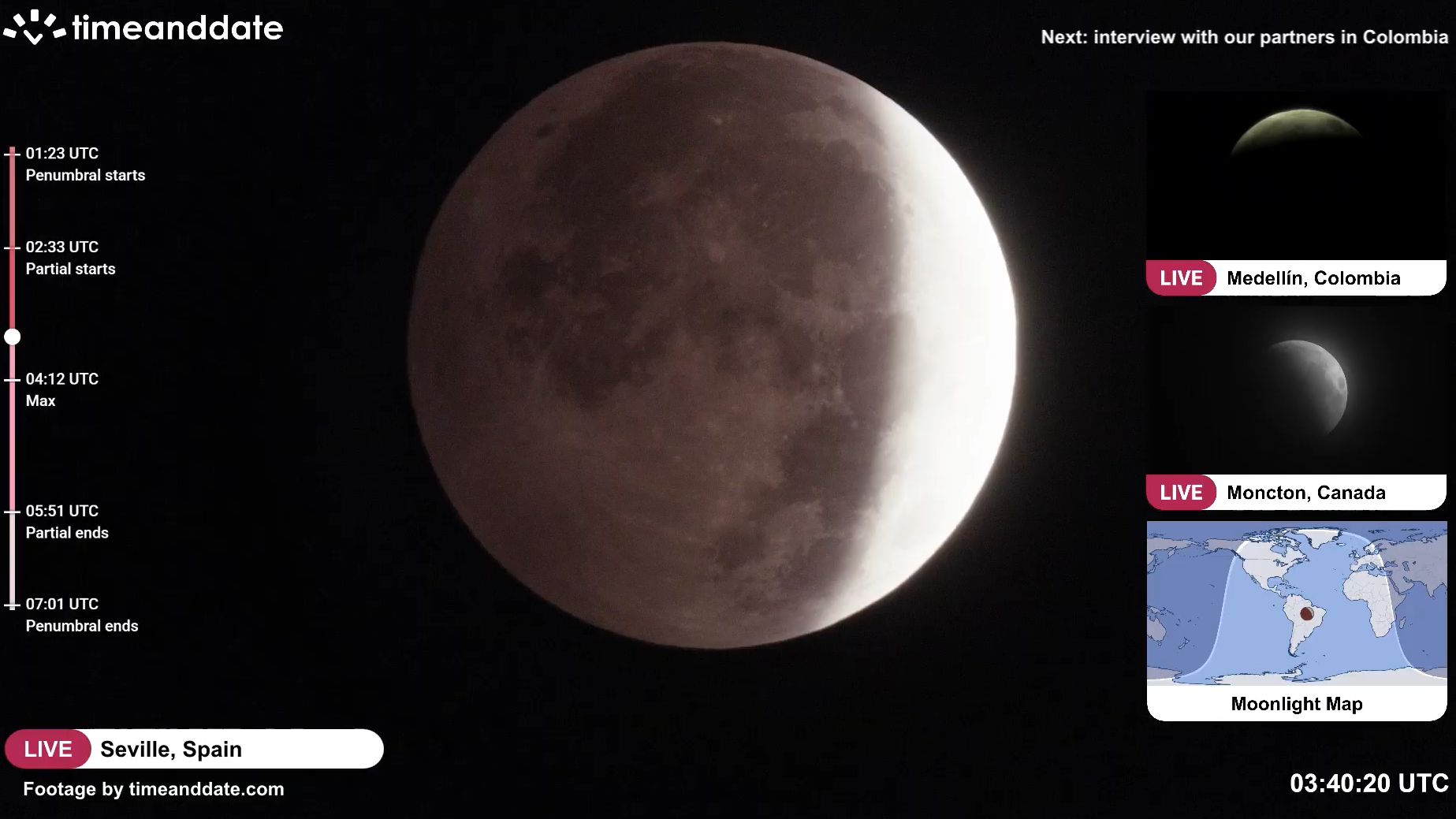
The moon is starting to turn red! (Image credit: Time and Date (timeanddate.com))
As we approach maximum eclipse, Earth’s dark umbral shadow is covering more and more of the lunar surface.
We are now starting to see the shadowed portion of the moon turn red! If you’re able and are not clouded out like I am … head outside and take a look!
Daisy Dobrijevic
Social Links Navigation
Skywatching Editor
Daisy is an avid eclipse chaser with a deep appreciation for lunar eclipses. One of her most memorable was the total lunar eclipse of Sept. 7, 2025, which she watched from a beach in Barcelona.
2026-08-28T03:12:18.401Z
Earth’s shadow is sweeping across the moon — T-1 hour to maximum eclipse!
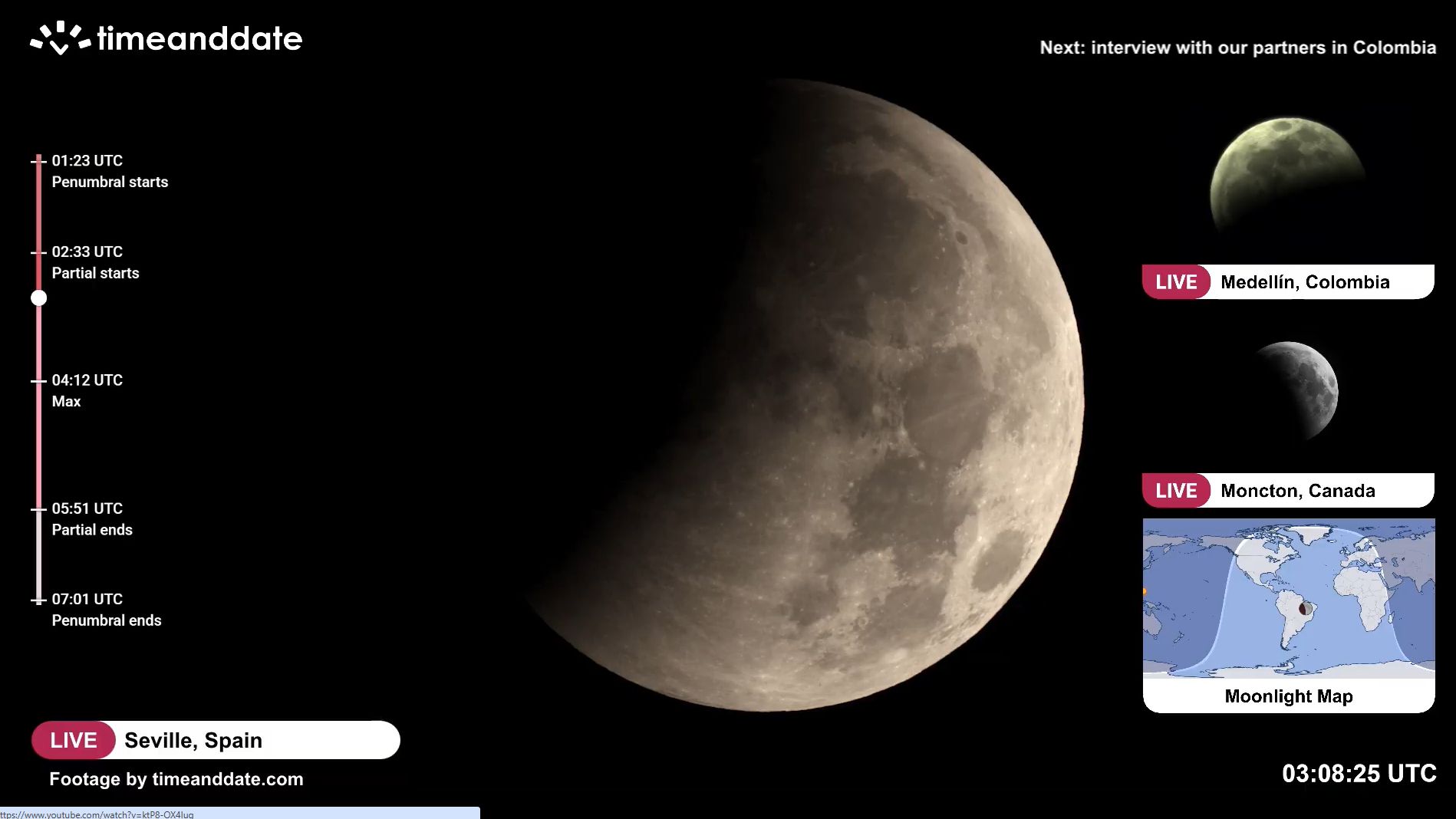
The partial phase is well underway. Earth’s dark umbral shadow is taking a large “bite” out of the moon! (Image credit: Time and Date (timeanddate.com))
Now we’re talking! The eclipse is deepening as Earth’s umbral shadow steadily spreads across the lunar surface.
As more of the moon enters the umbra, keep an eye on the shadowed portion. You may notice it beginning to take on a reddish or coppery hue.
That color is caused by sunlight filtering through Earth’s atmosphere before reaching the moon.
We’re now an hour away from the main event, with maximum eclipse coming at 12:12 a.m. EDT (0412 GMT).
Daisy Dobrijevic
Social Links Navigation
Skywatching Editor
Daisy is an avid eclipse chaser with a deep appreciation for lunar eclipses. One of her most memorable was the total lunar eclipse of Sept. 7, 2025, which she watched from a beach in Barcelona.
2026-08-28T02:35:00.780Z
The partial phase has begun — here we go!
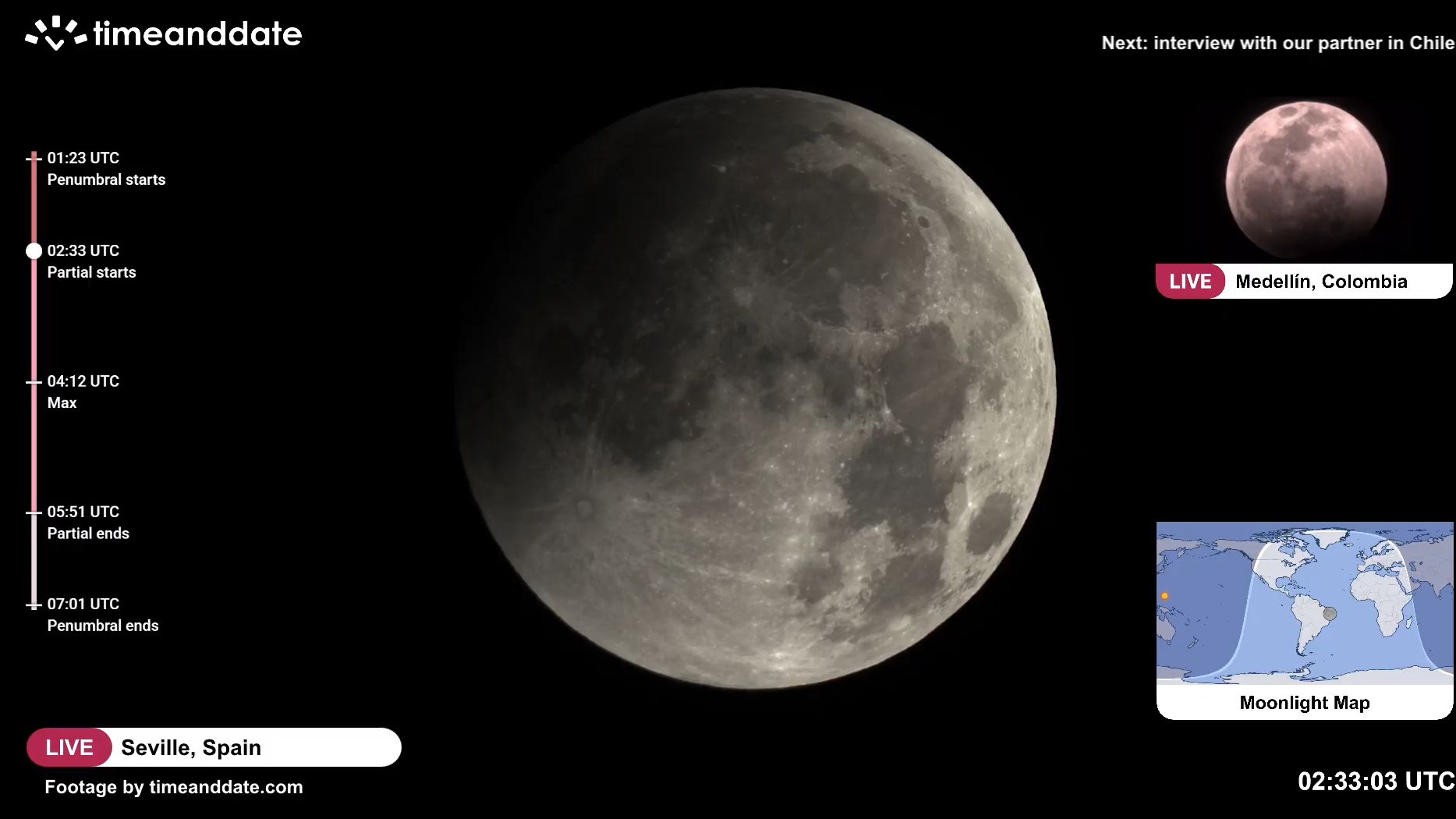
The partial phase has begun! Earth’s dark inner shadow known as the umbra has started to make its way across the lunar surface. (Image credit: Time and Date (timeanddate.com))
Time to make another coffee, because things are getting serious now!
At 10:33 p.m. EDT on Aug. 27 (0233 GMT on Aug. 28), the edge of Earth’s dark central shadow, known as the umbra, began moving across the lunar surface.
Over the next hour and a half, more and more of the moon will disappear into Earth’s shadow as we build toward maximum eclipse.
Unlike the subtle penumbral phase, this stage should be much easier to spot. Look for a dark “bite” appearing on one side of the full moon and gradually growing as the eclipse deepens.
Daisy Dobrijevic
Social Links Navigation
Skywatching Editor
Daisy is an avid eclipse chaser with a deep appreciation for lunar eclipses. One of her most memorable was the total lunar eclipse of Sept. 7, 2025, which she watched from a beach in Barcelona.
2026-08-28T02:08:07.486Z
The lunar eclipse livestream has begun!
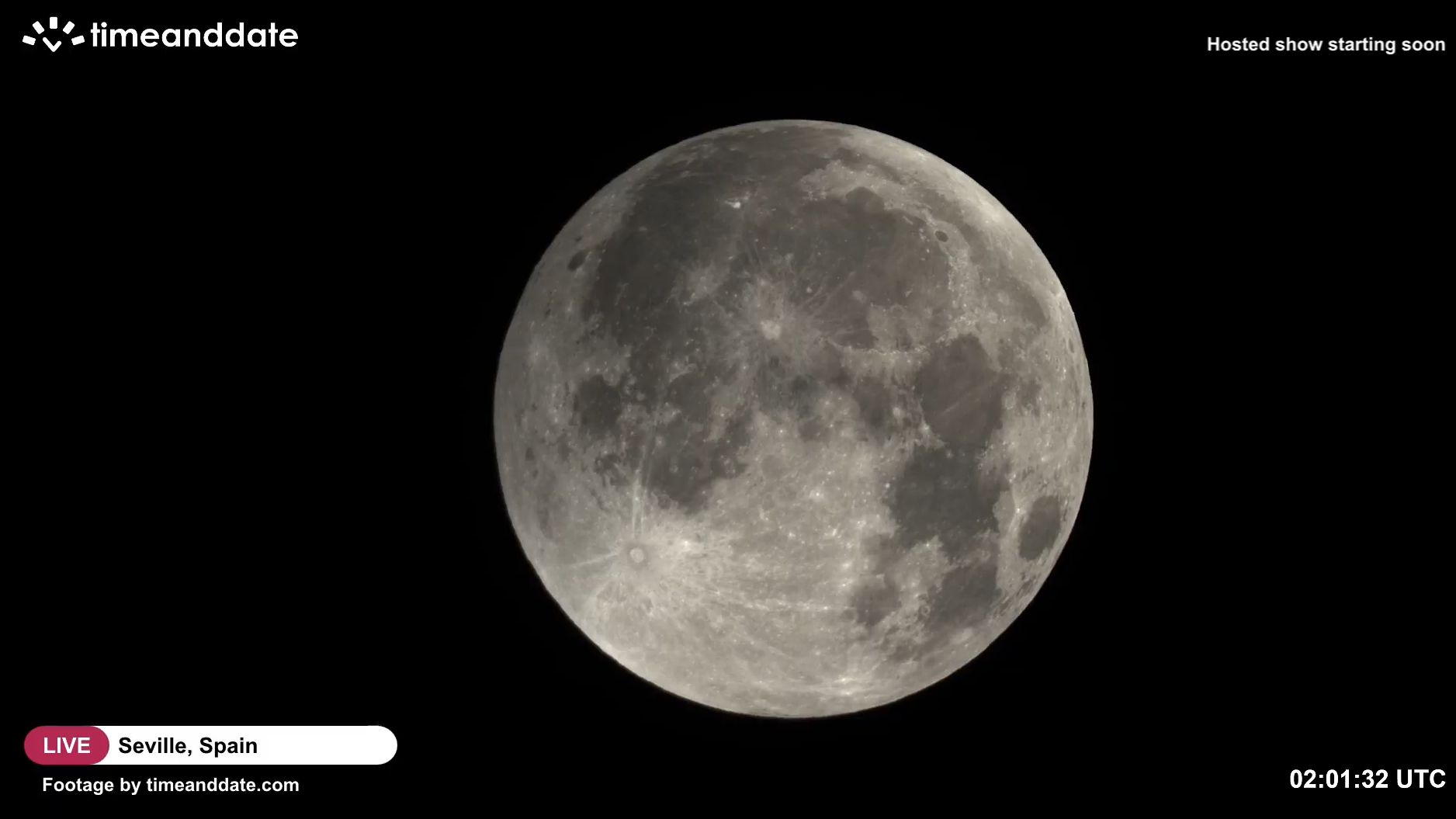
Lunar eclipse as viewed by Time and Date. (Image credit: Time and Date (timeanddate.com))
Good morning! It’s been an early alarm here in the U.K. — or, for those of you who haven’t gone to bed yet, good evening!
Time and Date’s lunar eclipse livestream is beginning, and you can watch all the action unfold live on the Space.com homepage or head over to our lunar eclipse livestream page.
Right now, the moon is passing through Earth’s faint outer shadow, known as the penumbra. The effects during this stage are very subtle, so don’t worry if you’re struggling to spot much of a difference just yet.
Things will start getting much more interesting at 10:33 p.m. EDT on Aug. 27 (0233 GMT on Aug. 28), when the partial phase begins and Earth’s much darker umbral shadow starts creeping across the lunar surface.
Grab a coffee, get comfortable and join us — the best is yet to come!
Daisy Dobrijevic
Social Links Navigation
Skywatching Editor
Daisy is an avid eclipse chaser with a deep appreciation for lunar eclipses. One of her most memorable was the total lunar eclipse of Sept. 7, 2025, which she watched from Barcelona.
2026-08-28T01:23:20.511Z
It’s begun! The lunar eclipse is now underway
(Image credit: Created in Canva Pro)
And we’re off! The deep partial lunar eclipse of Aug. 27-28 has officially begun.
At 9:23 p.m. EDT on Aug. 27 (0123 GMT on Aug. 28), the moon began entering Earth’s penumbra — the faint outer part of our planet’s shadow.
Don’t expect anything too dramatic just yet. During the early penumbral phase, the change can be very subtle, with a slight dimming appearing across the lunar surface.
But things are about to get much more interesting. The partial phase begins at 10:33 p.m. EDT (0233 GMT), when Earth’s much darker umbral shadow starts creeping across the moon.
Stay with us as we follow all the action!
Daisy Dobrijevic
Social Links Navigation
Skywatching Editor
Daisy is an avid eclipse chaser with a deep appreciation for lunar eclipses. One of her most memorable was the total lunar eclipse of Sept. 7, 2025, which she watched from Barcelona.
2026-08-27T19:13:07.789Z
Can’t see tonight’s lunar eclipse? Watch it live online
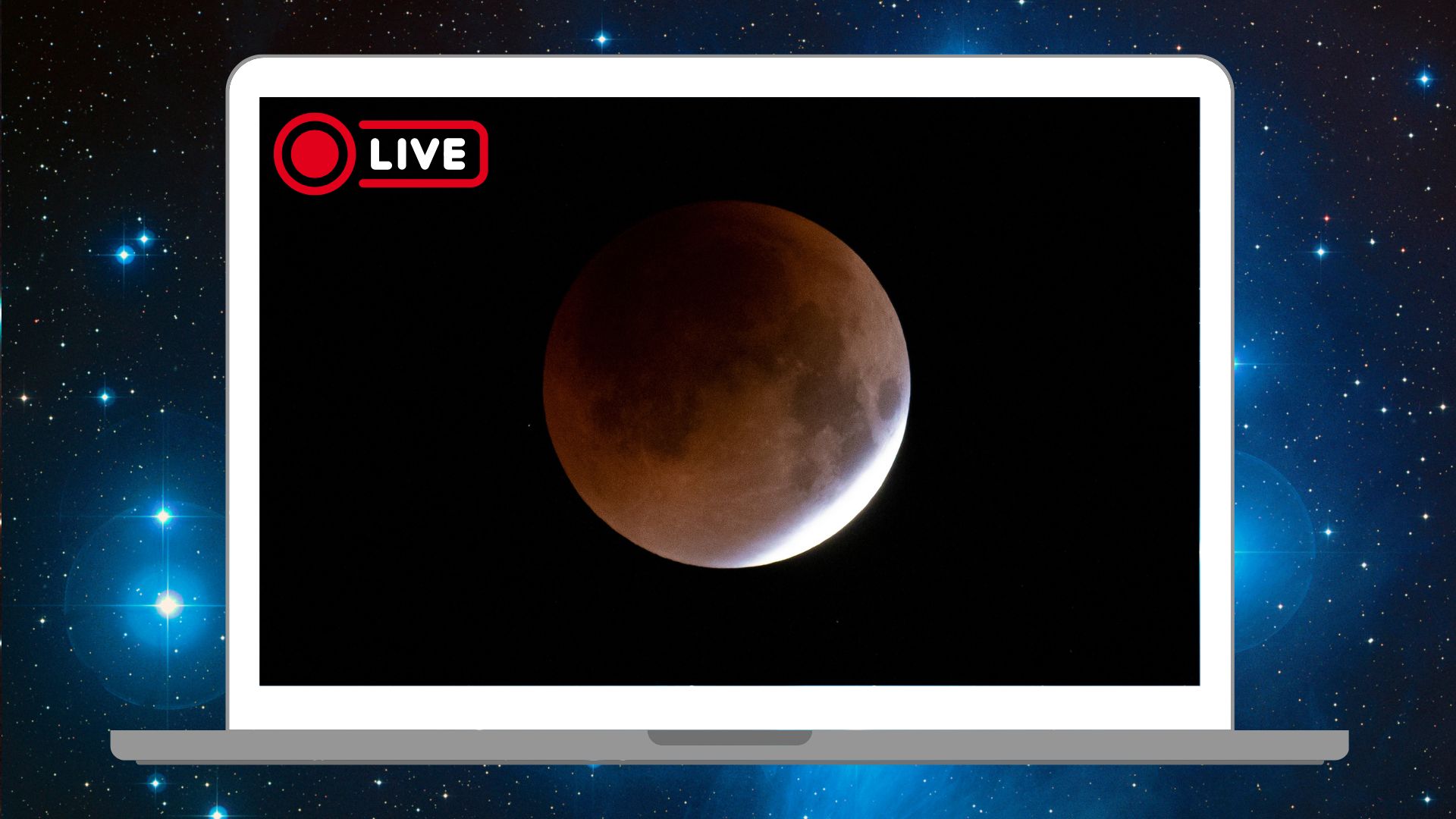
(Image credit: Inset Photo by Marcos del Mazo/LightRocket via Getty Images. Background Image: NASA, ESA and AURA/Caltech. Created in Canva by Anthony Wood.)
You don’t need clear skies — or even to be within the eclipse visibility zone — to enjoy tonight’s spectacular celestial show. (You just have to hope that the people with these cameras are!)
Several livestreams will bring you views of the Aug. 27-28 partial lunar eclipse so you can watch from the comfort of your own home as Earth’s shadow creeps across the moon.
At maximum eclipse, 96.2% of the lunar surface will be immersed in Earth’s dark umbral shadow, creating a dramatic “almost blood moon”.
Check out our lunar eclipse livestream guide!
Stay tuned! We’ll be back later to bring you all the lunar eclipse action here in the live blog so you’ll never miss a moment. My alarm is already set … see you soon!
Daisy Dobrijevic
Social Links Navigation
Skywatching Editor
Daisy is an avid eclipse chaser with a deep appreciation for lunar eclipses. One of her most memorable was the total lunar eclipse of Sept. 7, 2025, which she watched from Barcelona.
2026-08-27T13:49:28.180Z
What time is tonight’s lunar eclipse?
(Image credit: Created in Canva Pro by Daisy Dobrijevic)
Tonight is the night! The moon is about to pass deep into Earth’s shadow during a spectacular partial lunar eclipse.
The penumbral phase begins at 9:23 p.m. EDT on Aug. 27 (0123 GMT on Aug. 28), but this will be tricky to spot as the shadow is very faint. Things will start to get interesting around 10:33 p.m. EDT on Aug. 27 (0233 GMT on Aug. 28), when the partial phase begins.
Check out our complete lunar eclipse timings guide to find out when to look up tonight and make sure you don’t miss the “almost blood moon.”
Daisy Dobrijevic
Social Links Navigation
Skywatching Editor
Daisy is an avid eclipse chaser with a deep appreciation for lunar eclipses. One of her most memorable was the total lunar eclipse of Sept. 7, 2025, which she watched from Barcelona.
2026-08-27T10:09:26.409Z
Tonight’s the night! Don’t miss the deep partial lunar eclipse
(Image credit: Created in Canva Pro)
The wait is almost over! Tonight, Aug. 27-28, a spectacular deep partial lunar eclipse will sweep across the full Sturgeon Moon, with up to 96.2% of the lunar surface slipping deep into Earth’s dark umbral shadow at maximum eclipse.
The eclipse will be visible from large parts of North and South America, Europe and Africa, but exactly what you’ll see will depend on your location (and weather!)
Read more: An impressive partial lunar eclipse will turn the moon an eerie red for millions of people tonight
Daisy Dobrijevic
Social Links Navigation
Skywatching Editor
Daisy is an avid eclipse chaser with a deep appreciation for lunar eclipses. One of her most memorable was the total lunar eclipse of Sept. 7, 2025, which she watched from Barcelona.
2026-08-26T16:29:26.903Z
How many people will see August’s partial lunar eclipse?
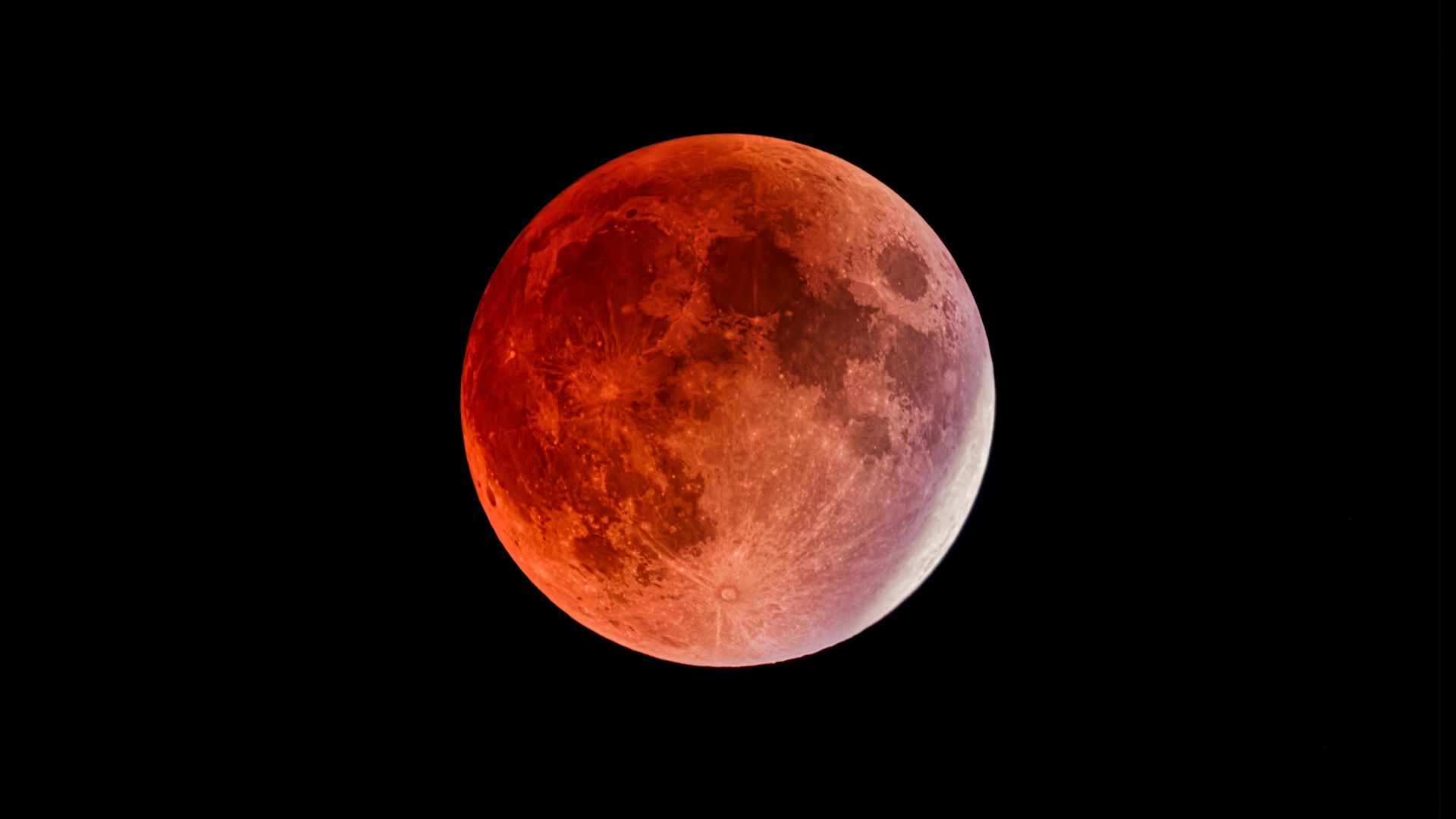
A lunar eclipse turns the moon red in the skies over southern Alberta, Canada. (Image credit: Photo by: Alan Dyer/VWPics/Universal Images Group via Getty Images)
A partial lunar eclipse is one of the most accessible skywatching events that the solar system has to offer. Everyone on the night side of Earth at the time of the eclipse will get to see our planet’s shadow encroach on the lunar disk overnight on Aug. 27-28.
North America and South America have the best seats in the house, with up to 987 million people positioned to witness the entirety of the partial stage of the eclipse, according to TimeandDate.com. Meanwhile, a staggering 3.34 billion people will get a chance to see some part of the partial phase of the lunar eclipse as it unfolds in the skies over the Americas, Europe and Africa.
Read more: Partial lunar eclipse August 2026: Where will it be visible from?
Anthony Wood
Skywatching Writer
2026-08-26T11:04:58.669Z
Why is the full moon during the lunar eclipse called the “Sturgeon Moon”?

A Sturgeon Moon rises over the San Bernardino Church in L’Aquila, Italy. (Image credit: Photo by Lorenzo Di Cola/NurPhoto via Getty Images)
Every full moon comes with its own set of traditional names inspired by events that occur around the time of their rising.
August’s full moon is often called the “Sturgeon Moon”, because sturgeon in the Great Lakes and Lake Champlain were historically most readily caught at this time of year and were an important food source for Native American peoples living in the region, according to the Old Farmer’s Almanac.
It’s also been called the “Corn Moon” (Algonquin, Ojibwe), the “Harvest Moon” (Dakota) and the “Mountain Shadows Moon” (Tlingit). Let us know your preferred name for the August full moon in the comments below!
Read More: August Full Moon 2026: When, where and how to see the Sturgeon Moon.
Anthony Wood
Skywatching Writer
2026-08-26T07:17:07.764Z
Can’t see the lunar eclipse from where you are? Watch it live online
Catch the lunar eclipse live online! (Image credit: Inset Photo by Marcos del Mazo/LightRocket via Getty Images. Background Image: NASA, ESA and AURA/Caltech. Created in Canva by Anthony Wood.)
Cloudy skies threatening to spoil your view of the Aug. 27-28 partial lunar eclipse? Or perhaps the eclipse isn’t visible from your location? Don’t worry, you can still watch all the action unfold live online.
Several eclipse livestreams will give you a front-row seat as the moon turns an eerie red as 96.2% of the lunar surface becomes immersed in shadow at maximum eclipse.
Check out our lunar eclipse livestream guide for all the best free broadcasts on eclipse day.
Daisy Dobrijevic
Social Links Navigation
Skywatching Editor
Daisy is an avid eclipse chaser with a deep appreciation for lunar eclipses. One of her most memorable was the total lunar eclipse of Sept. 7, 2025, which she watched from Barcelona.
2026-08-25T16:25:56.555Z
Why do eclipses come in pairs?
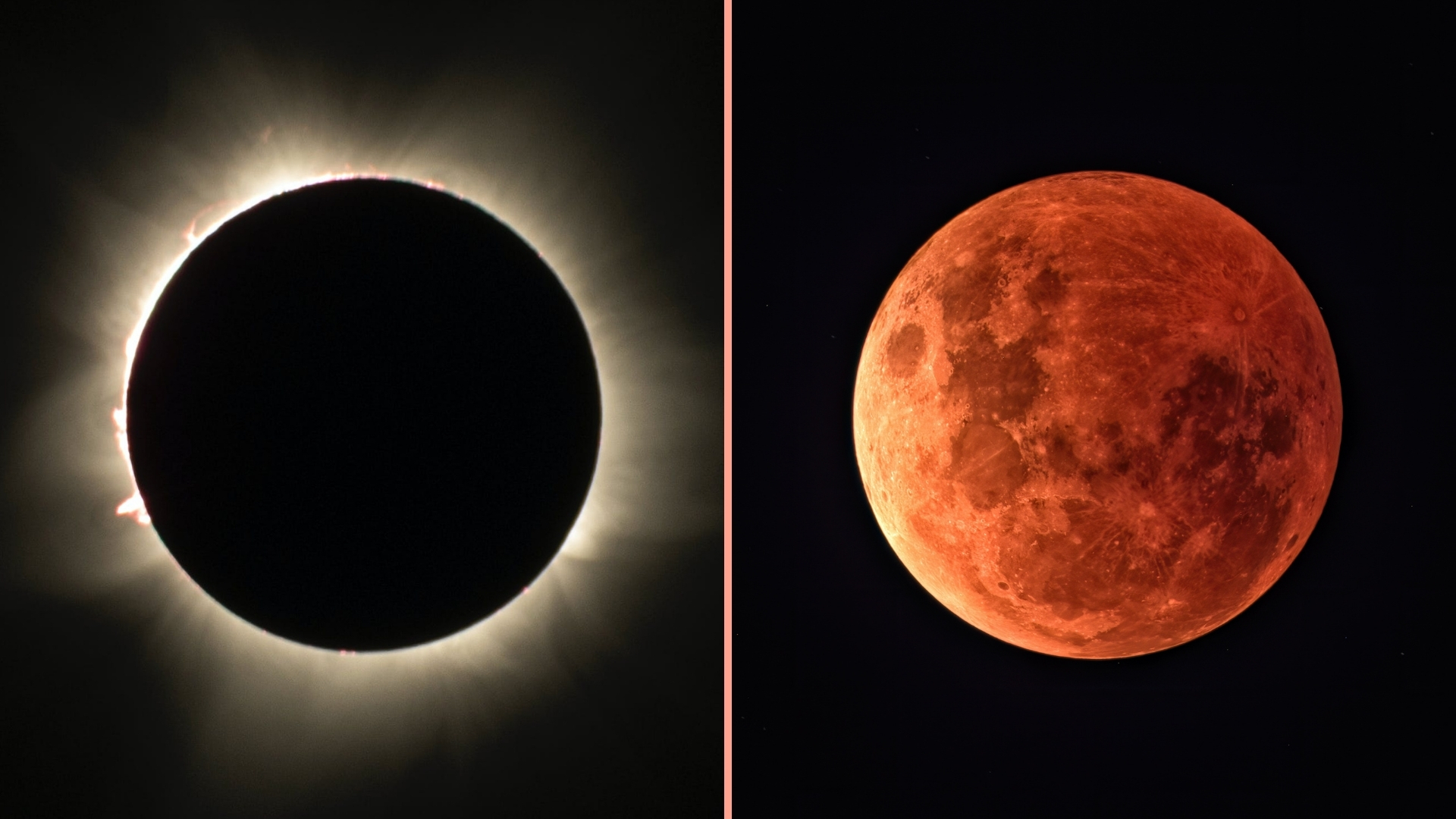
Eclipses don’t happen at random — they arrive in pairs. (Image credit: Created in Canva Pro/Future)
Solar and lunar eclipses tend to occur in close proximity to one another when the moon reaches an ascending or descending “node” in its orbit of Earth. These invisible points in space exist where the moon’s tilted orbit crosses the the flat plane on which our planet orbits the sun, which is known as the ecliptic.
When this happens, we experience an “eclipse season”, where there is a solar eclipse during the new moon and a lunar eclipse during a neighboring full moon phase, as the Earth and moon are lined up to pass between one another and the sun. An eclipse season can also occur in the opposite order, with a lunar eclipse preceding a solar eclipse.
Read more: Why solar and lunar eclipses come in pairs — and what an eclipse season really is.
Anthony Wood
Skywatching Writer
2026-08-25T12:58:43.469Z
Want to photograph the lunar eclipse? Here are our top photography tips
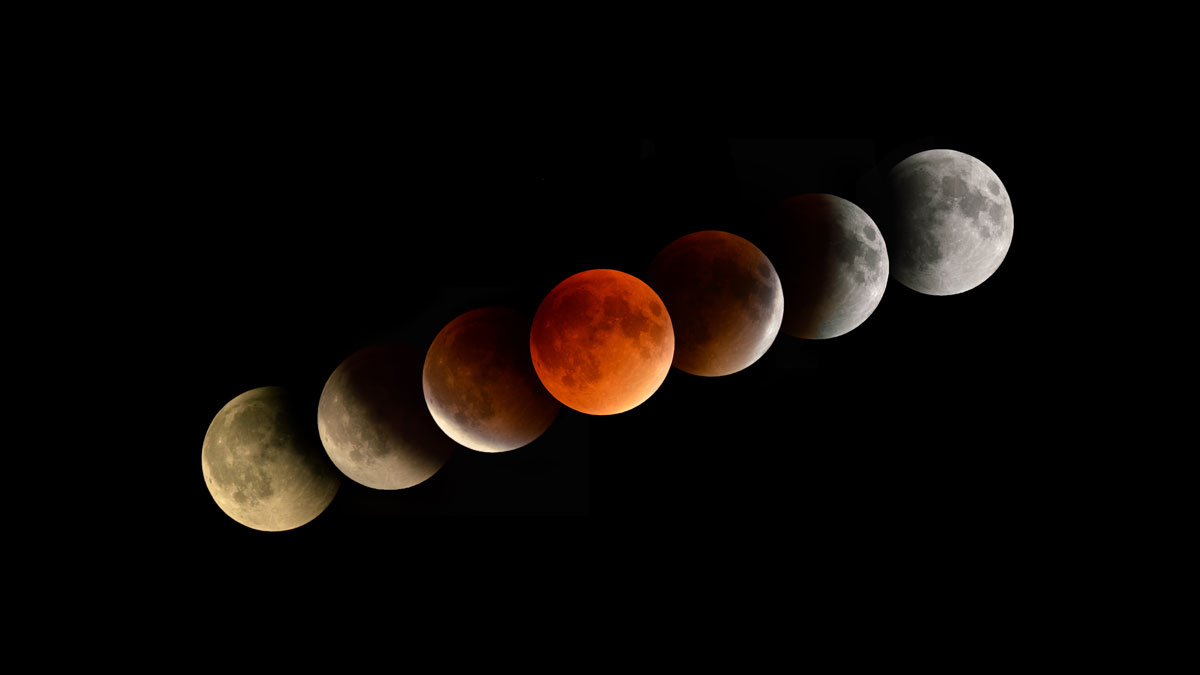
(Image credit: Josh Dury Photo Media)
Planning to watch the deep partial lunar eclipse on Aug. 27-28? Why not try capturing it on camera too? Photographing a lunar eclipse is considerably easier than photographing a solar eclipse — you don’t need any special filters to safely photograph the moon. But getting a sharp, well-exposed shot as the moon darkens and takes on a reddish hue can still be tricky, particularly as light levels change throughout the eclipse.
A little preparation can go a long way. Our guide to photographing a lunar eclipse covers everything you need to know, from choosing the right equipment and camera settings to focusing on the moon and getting creative with composition.
Daisy Dobrijevic
Social Links Navigation
Skywatching Editor
Daisy is an avid eclipse chaser with a deep appreciation for lunar eclipses. One of her most memorable was the total lunar eclipse of Sept. 7, 2025, which she watched from Barcelona.
2026-08-25T07:40:29.736Z
What time is the partial lunar eclipse?
(Image credit: Created in Canva Pro by Daisy Dobrijevic)
Planning to watch the deep partial lunar eclipse this week? You’ll want to make sure you’re looking up at the right time.
The eclipse begins at 9:23 p.m. EDT on Aug. 27 (0123 GMT on Aug. 28), when the moon enters Earth’s faint outer shadow, known as the penumbra. From then, the eclipse will deepen and become more visible over several hours as the moon passes into Earth’s darker umbral shadow, ultimately leaving 96.2% of the lunar surface covered at its peak.
For key timings and when exactly to look up, check out our guide on when the partial lunar eclipse will occur.
Daisy Dobrijevic
Social Links Navigation
Skywatching Editor
Daisy is an avid eclipse chaser with a deep appreciation for lunar eclipses. One of her most memorable was the total lunar eclipse of Sept. 7, 2025, which she watched from Barcelona.
2026-08-24T12:45:01.991Z
What will happen during each stage of the partial lunar eclipse?
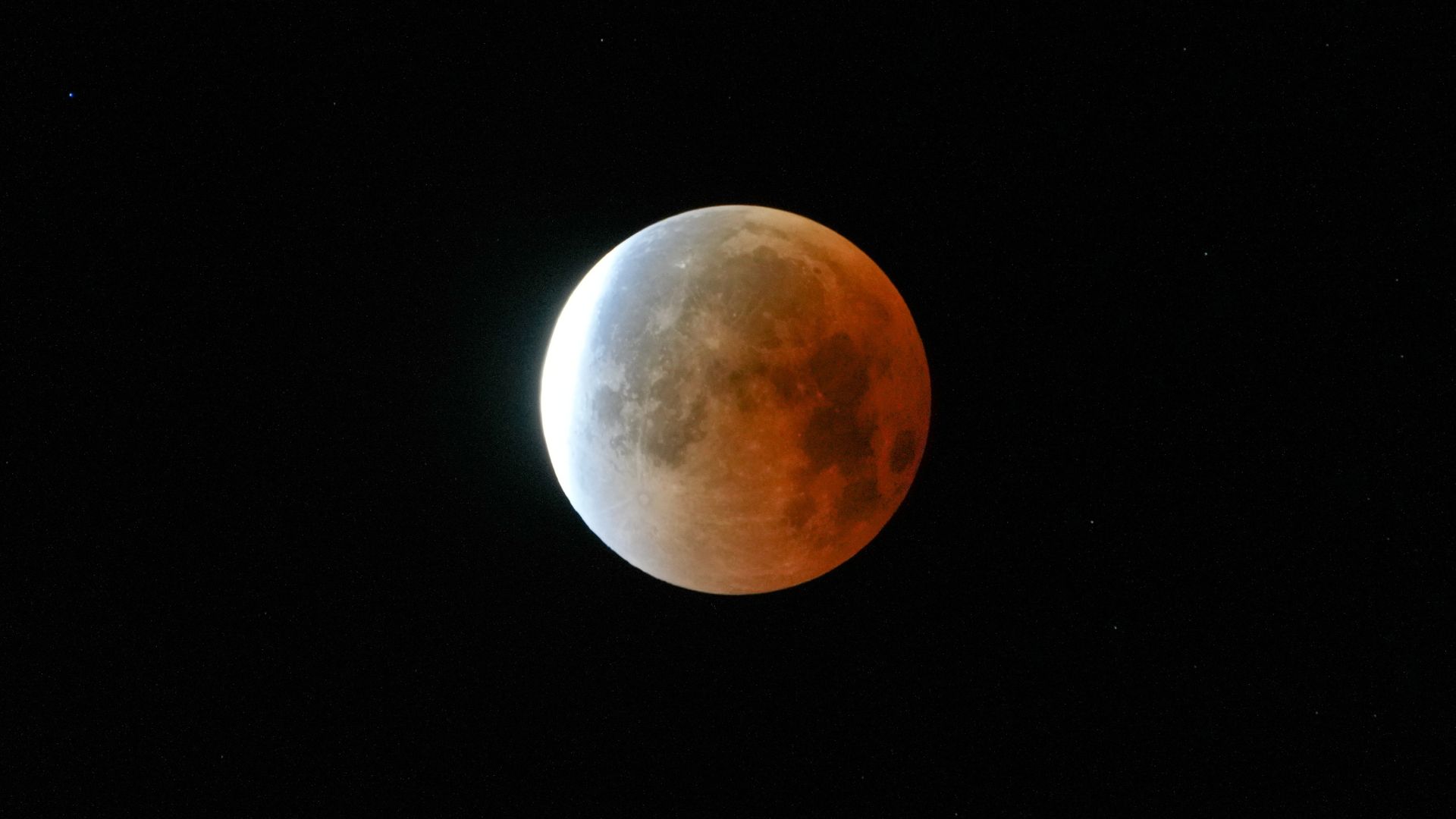
A partial lunar eclipse turns the moon red in the skies over Sri Lanka. (Image credit: Photo by Thilina Kaluthotage/NurPhoto via Getty Images)
A partial lunar eclipse has five distinct phases that occur simultaneously for everyone on the night side of Earth as our planet slips between the sun and its natural satellite during the full moon phase.
The eclipse begins as Earth’s outer penumbral shadow subtly darkens the moon, after which the inner umbral shadow reveals our planet’s curved silhouette as it advances across the lunar disk.
Read more: What to expect from each stage of the partial lunar eclipse on Aug. 27-28
Anthony Wood
Skywatching Writer
2026-08-24T07:35:40.714Z
3 days to go! Here’s everything you need to know
3 days until the partial lunar eclipse, here’s everything you need to know. (Image credit: Eclipse inset: Giovanni Bortolani via Getty Images. Royalty Free. Graphic created in Canva Pro.)
The deep partial lunar eclipse is just a few days away, so now is the perfect time to start planning how you’re going to view the “almost blood moon”.
At maximum eclipse, 96.2% of the moon’s surface will be covered by Earth’s dark central shadow known as the umbra. While the moon won’t be completely eclipsed — so this isn’t technically a “blood moon” — much of the lunar surface is expected to take on a reddish-orange hue, with just a thin sliver remaining brightly illuminated.
Check out our complete guide to the Aug. 27-28 partial lunar eclipse to make sure you’re ready for the “almost blood moon”.
Daisy Dobrijevic
Social Links Navigation
Skywatching Editor
Daisy is an avid eclipse chaser with a deep appreciation for lunar eclipses. One of her most memorable was the total lunar eclipse of Sept. 7, 2025, which she watched from Barcelona.
2026-08-23T11:07:04.809Z
How to view a partial lunar eclipse
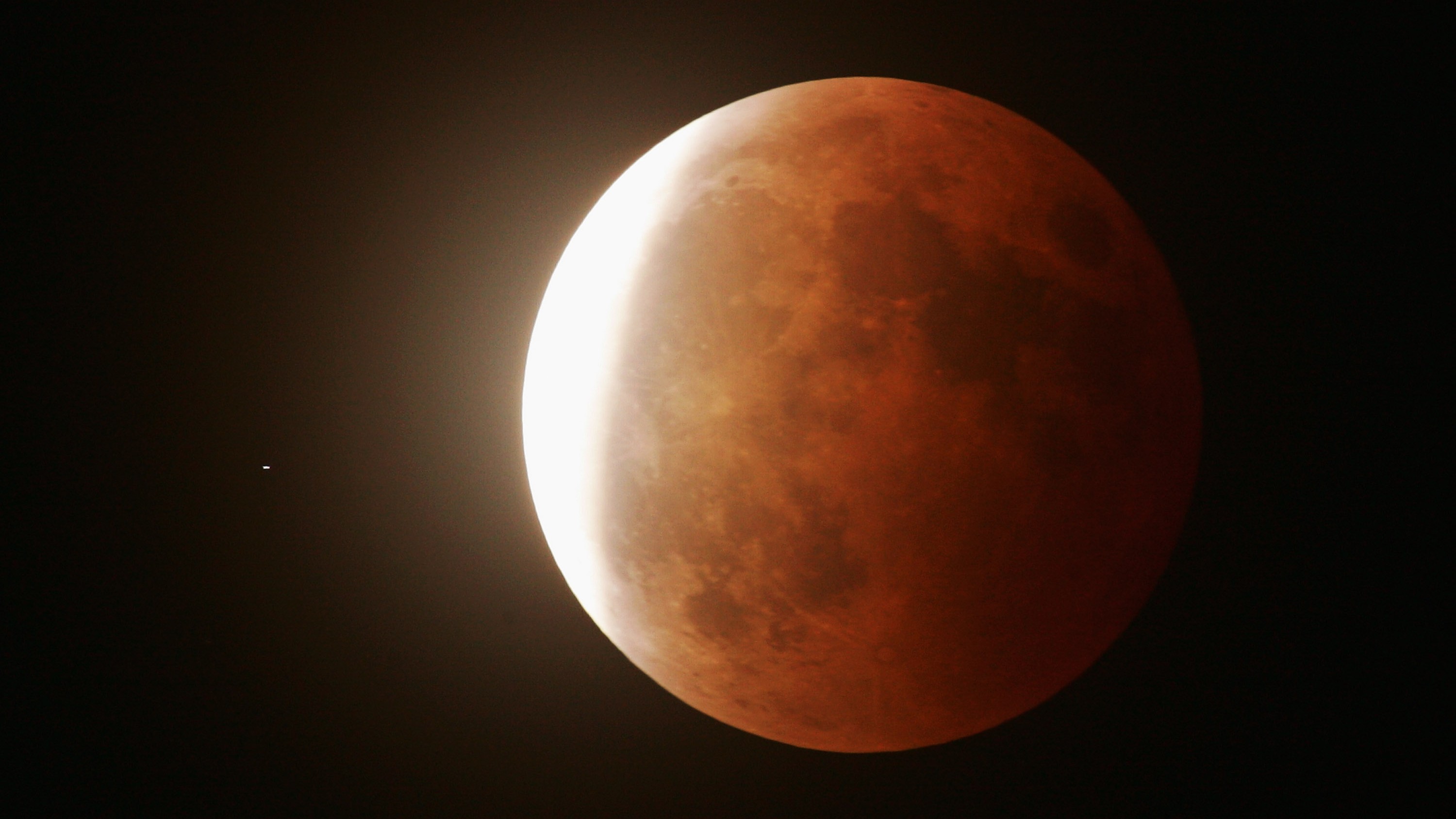
A lunar eclipse captured over the United Kingdom in 2007. (Image credit: Photo by Mike Hewitt/Getty Images)
One of the wonderful things about a lunar eclipse is that it can be witnessed by everyone who happens to be on the night side of Earth as it occurs, weather permitting.
You don’t need any special equipment like eclipse glasses to enjoy the show. Simply step outside and look up to see Earth’s curved inner shadow crawl across the moon in a spectacular display of orbital mechanics.
Want a closer look? No problem! It’s completely safe to point a pair of binoculars or a telescope at the moon during a lunar eclipse. Doing so will give you a magnified view of the colossal craters and dark lunar seas that mark the moon’s near side as they fall within the umbral shadow.
Anthony Wood
Skywatching Writer
2026-08-22T10:05:12.444Z
Where will the Aug. 27-28 partial lunar eclipse be visible?
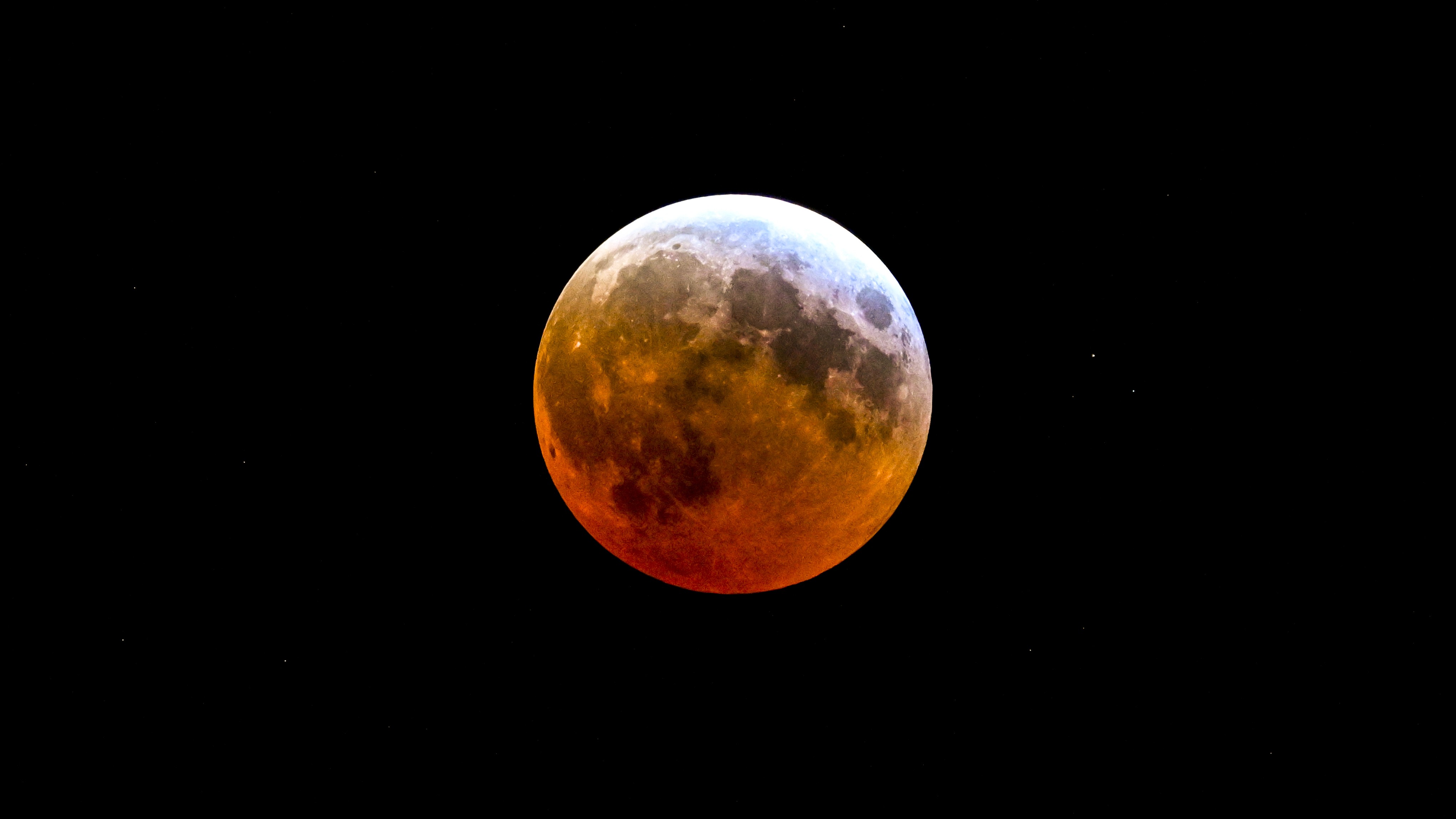
The partial phase of a lunar eclipse captured over Canada in 2025. (Image credit: Photo by Chen Shaojin/VCG via Getty Images)
The good news is that unlike a solar eclipse, a lunar eclipse can be seen from anywhere the moon is above the horizon. That means millions of skywatchers worldwide will have a chance to witness at least part of the Aug. 27-28 eclipse, weather permitting.
The best views will be from North and South America, where the entire eclipse will be visible. Across Europe and Africa, the eclipse takes place before dawn on Aug. 28, with the moon setting during the latter stages of the event.
Read more: Partial lunar eclipse August 2026: Where will it be visible from?
Daisy Dobrijevic
Social Links Navigation
Skywatching Editor
Daisy is an avid eclipse chaser with a deep appreciation for lunar eclipses. One of her most memorable was the total lunar eclipse of Sept. 7, 2025, which she watched from Barcelona.
2026-08-21T10:05:26.656Z
Why this partial lunar eclipse is one you won’t want to miss
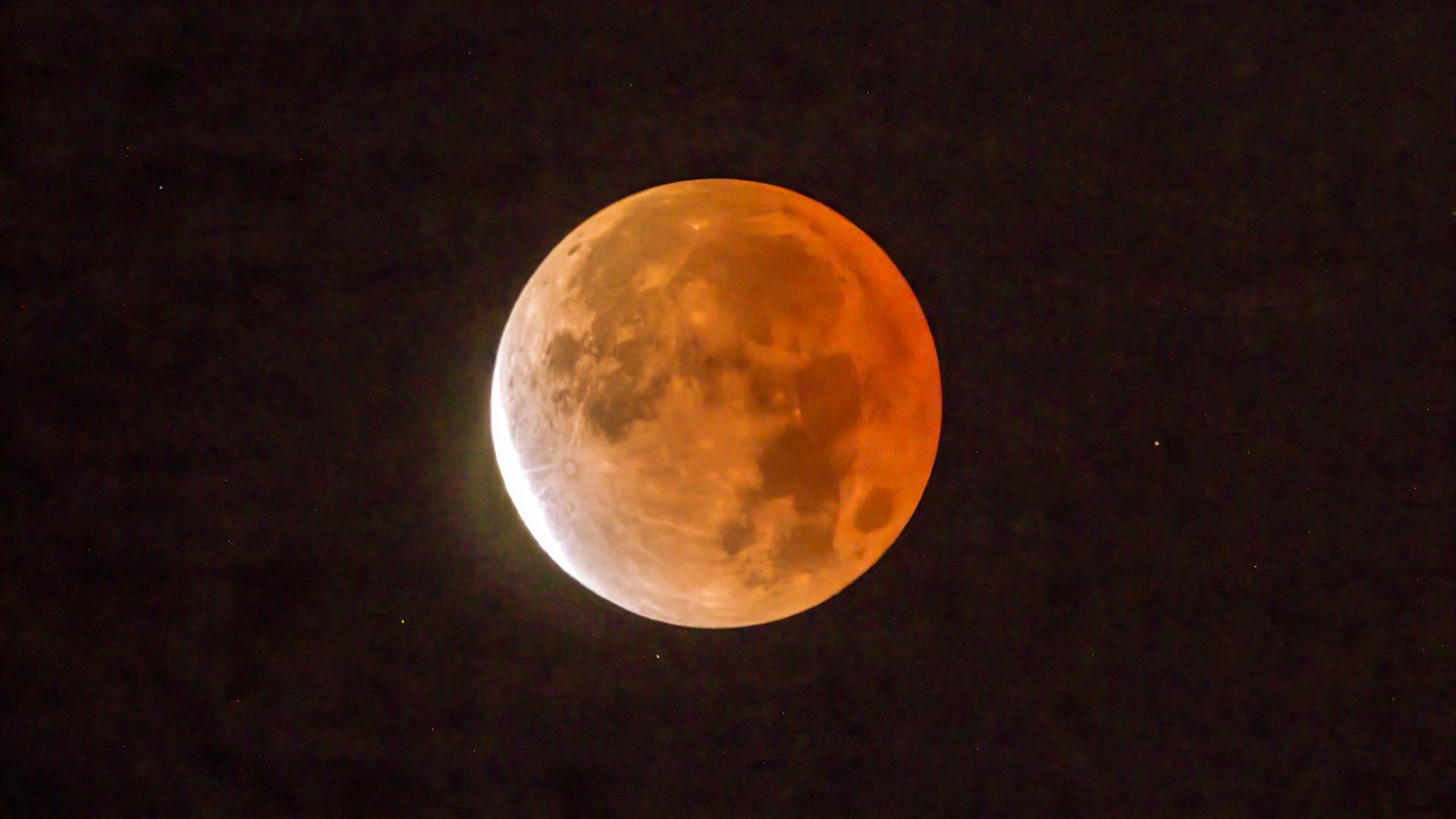
Craters and lunar seas mark the lunar surface during a deep lunar eclipse. (Image credit: Orchidpoet via Getty Images)
When most people hear the words “partial lunar eclipse,” they might often assume it will be less impressive than a total eclipse, and not really worth the effort to try and see it. But the Aug. 27-28 eclipse is anything but ordinary.
At maximum eclipse, 96.2% of the moon will be immersed in Earth’s umbra, the darkest part of our planet’s shadow. That means only a thin sliver of the lunar surface will remain directly illuminated by the sun, while the rest of the moon will take on a deep reddish-orange hue.
If you miss this one, you’ll have to wait until Dec. 31, 2028 for another lunar eclipse that rivals it in spectacle. So whether you’re planning on staying up late in the US or setting your alarms early in Europe, this is one skywatching show that’s well worth making time for!
Daisy Dobrijevic
Social Links Navigation
Skywatching Editor
Daisy is an avid eclipse chaser with a deep appreciation for lunar eclipses. One of her most memorable was the total lunar eclipse of Sept. 7, 2025, which she watched from Barcelona.
1 week to go until the deepest partial lunar eclipse until 2028
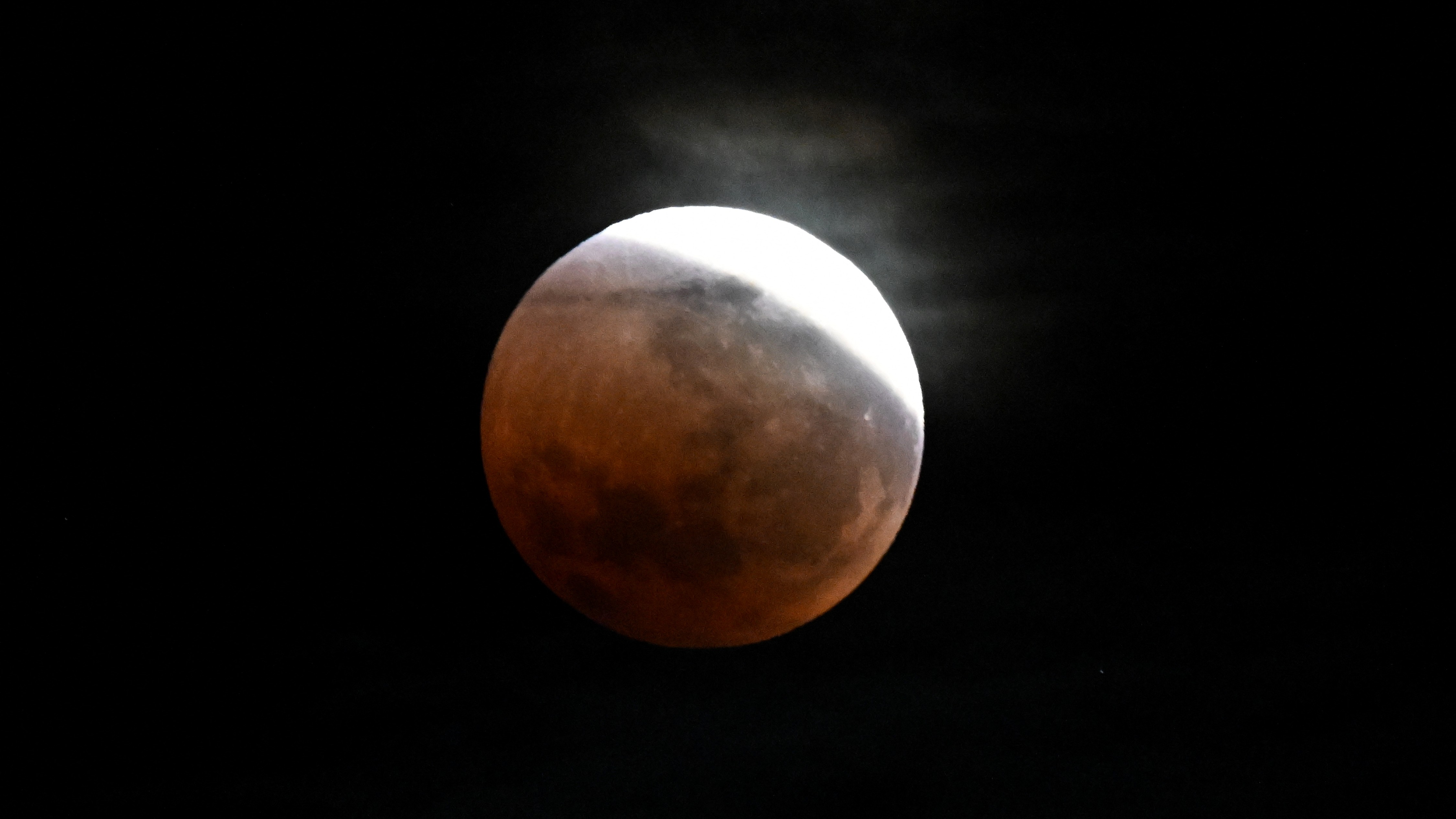
The partial phase of a lunar eclipse captured over Sydney in September 2025. (Image credit: Photo by Saeed KHAN / AFP via Getty Images)
We’re officially one week away from one of the best skywatching events of the year!
On the evening of Aug. 27 (for North America), or the early hours of Aug. 28 (for western Europe), Earth’s shadow will creep across the full moon during a very deep partial lunar eclipse. At maximum eclipse, 96.2% of the moon will be immersed in Earth’s dark central shadow.
The eclipse will be visible, at least in some part, from North and South America, Europe, Africa and parts of western Asia, weather permitting. Observers in the Americas are well-positioned for the best views while skywatchers across Europe will need to look toward the western horizon before sunrise as the eclipse reaches its peak.
Read more: A 96% partial lunar eclipse is just 1 week away: Here’s what you need to know.
Daisy Dobrijevic
Social Links Navigation
Skywatching Editor
Daisy is an avid eclipse chaser with a deep appreciation for lunar eclipses. One of her most memorable was the total lunar eclipse of Sept. 7, 2025, which she watched from Barcelona.