
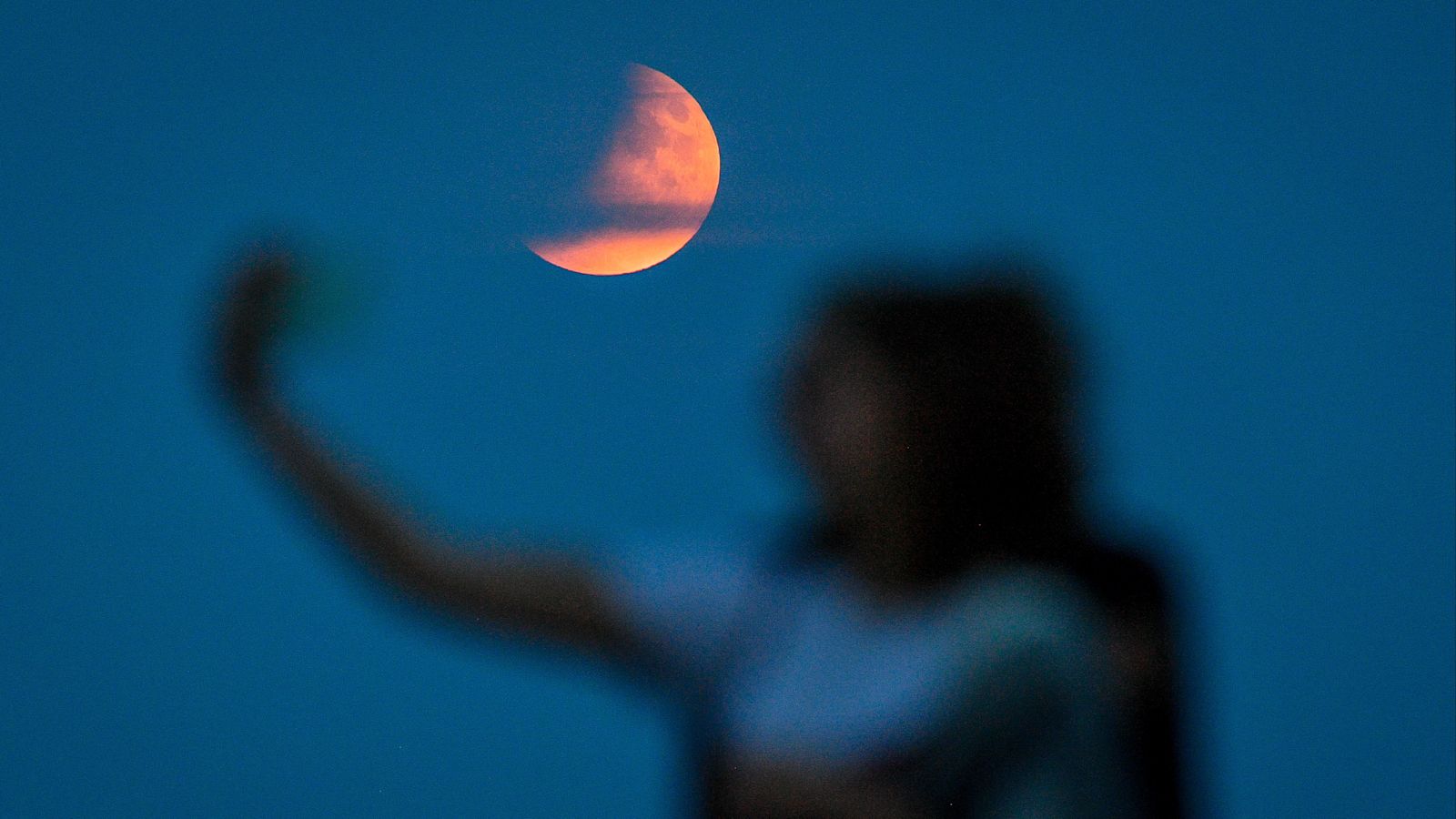
After the rare partial solar eclipse earlier this month, a lunar eclipse will occur as we approach the end of the week.
During the early hours of Friday the 28th, the moon will pass through Earth’s shadow in a partial lunar eclipse.
At this time, most of the Moon will be inside Earth’s darkest shadow and may take on a striking pink, reddish or coppery colour – giving it the nickname, “blood moon”.
When can we see it?
This lunar eclipse will be visible across the UK, where skies remain clear.
The partial eclipse begins at around 3.33am, reaching its peak at around 5.12am.
The moon will be very low in the sky by then, so the best view will be towards the southwest.
The best of the clearer skies will be through southern and southeastern counties into the Midlands.
Remaining parts of the UK will be prone to more cloud cover.
Unlike a solar eclipse, you do not need protective glasses to watch a lunar eclipse.
The lunar eclipse will happen in the early hours of Friday 28. Credit: iStock
Why is this called a Blood Moon?
The name comes from the pink or copper tinge the Moon can develop during a lunar eclipse.
As the Earth blocks direct sunlight from reaching the Moon, some sunlight passes through our atmosphere.
Blue light is scattered, while red and orange light can reach the Moon, creating its distinctive pink or coppery glow.
Why does the lunar eclipse happen and is it rare?
A lunar eclipse occurs when Earth moves between the Sun and Moon, which means the Earth’s shadow will fall across the Moon.
Subscribe for free to our weekly newsletter for exclusive and original coverage from ITV News. Direct to your inbox every Friday morning.
The Moon’s orbit is slightly tilted, so this doesn’t happen every month. When the Sun, Earth, and Moon line up correctly, an eclipse can occur.
The next time the UK will experience a lunar eclipse will be on December 31 2028.
Is it connected to the solar eclipse?
Yes. The solar eclipse on August 12 and this lunar eclipse are part of the same “eclipse season” and have occurred around two weeks apart.
During the solar eclipse, the Moon’s shadow fell on Earth. This time, Earth’s shadow will fall across the Moon.
So, after seeing the Moon pass in front of the Sun earlier this month, the UK now has the chance to witness our planet eclipse the Moon.
Want a quick and expert briefing on the biggest news stories? Listen to our latest podcasts to find out What You Need To Know…