
I also happen to agree with his thesis, or at least part of it. Scotland could be independent by 2034, and that propulsion to independence would likely be driven by a collapse in the stability that the British state has historically offered Scotland. Britain is in a low-wage, low-growth, low-work, high-welfare hole, made deeper by the rise of populism and the fracturing of two-party politics, and there is no sign of us coming out of it.
However, there is a piece of Mr Flynn’s jigsaw which did not form part of his answer to Mr Geissler: the performance of the Scottish Government. The Scottish electorate cannot be expected to run away from the rain at Westminster when there is no sunshine at Holyrood. Indeed, in many areas the rain is very clearly heavier up here.
Read more:
Enter the Programme for Government and the four months leading up to the Budget early next year. It is the most important spell of government the SNP has ever had, and one which may have the most tangible impact on Scottish party and constitutional politics.
Framing the choices to be made by the Scottish Government, both Audit Scotland and the Scottish Fiscal Commission this week published brutal assessments. The latter said that more than £700m would have to be cut from next year’s Budget. The former said that the Government lacks a detailed plan to deal with the fiscal realities.
That is, I suppose, not surprising. Let’s remember, here, that no devolved Scottish Government has ever had to behave in a fiscally responsible way. The Barnett formula and the rest of the financial arrangements between the Scottish and British governments are infantile. It is a ‘pocket money’ system in which the Scottish Government is given an ever-increasing wodge of money, which it happily spends without much responsibility over raising it. This is the first time the recipient of the pocket money has been told that it has overspent and won’t be given an overdraft.
We will see if this government, which has a group of the most able ministers and senior civil servants that I have seen since devolution, can cope in this brave new world.
One of the most important intellectual barriers the Government needs to leap was exposed by the Institute for Fiscal Studies when it said that if Finance Secretary Jenny Gilruth “wants to protect the NHS from cuts, she will need to make even bigger cuts to spending on other services”.
Ah, that old chestnut of ‘protecting’ the NHS. Ultimately, the NHS is what it’s all about. It’s the ball game. Without minimising the impact of a spiralling welfare system (a financial, social and moral tragedy which the Scottish Government exacerbates through its policy choices), public service reform and fiscal competence are not possible without reform of the NHS.
It is the job of this government, now, to say in public what it knows in private: the NHS is far from the world-class health service that we have often, romantically, pretended it is. The most important point to understand is that the NHS does not have a funding problem. It has a system problem.
So there is no need, to paraphrase the IFS, to “protect” the NHS through funding. Indeed, more money is often damaging to the NHS, because it simply perpetuates a system which ultimately doesn’t work.
If you are sceptical, then examine the evidence. Spending on the NHS has more than quadrupled in the 25 years of devolution, to well over £20 billion. The NHS used to take around 25 per cent of government expenditure; it now swallows 40 per cent. Advanced mathematics is not required to surmise that this runaway train must be stopped.
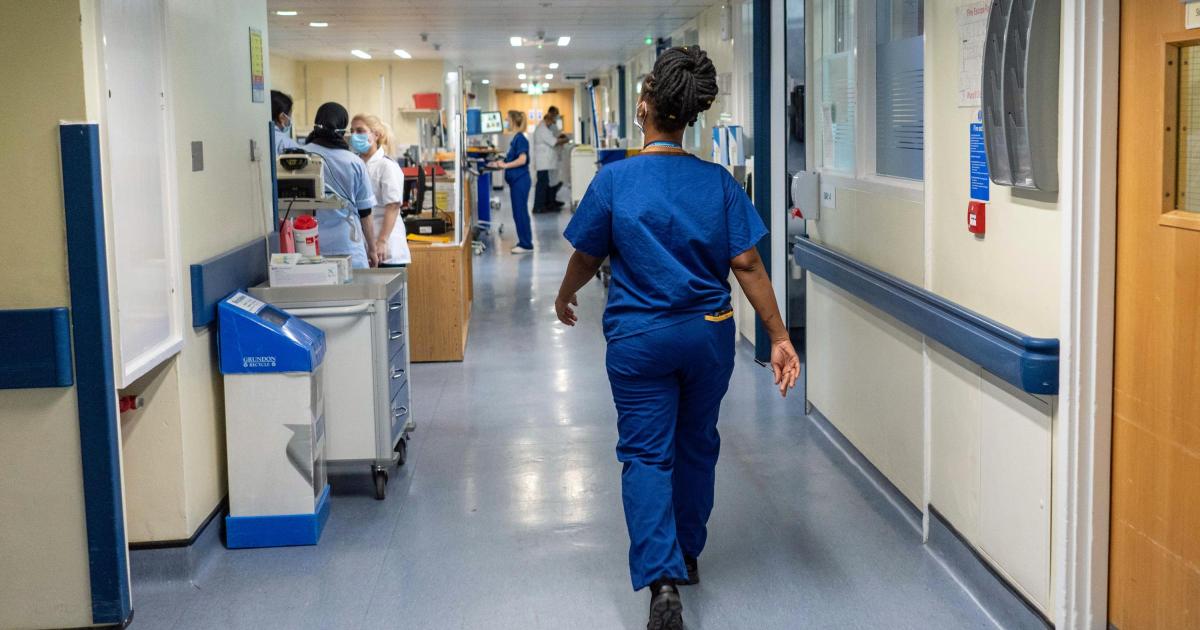
‘The NHS does not have a funding problem. It has a system problem’ (Image: PA)
And it can be. We can spend less on the NHS and get better outcomes. Scotland spends a roughly average amount on health compared to other countries, and almost exactly the same as countries such as Germany and Sweden.
Despite that, we have significantly fewer beds, fewer scanners, fewer doctors and nurses in work and in training. We have longer waiting lists for life-changing elective surgery, and have poorer outcomes in cancer, stroke and heart attack.
Compare us with the Germans, for instance, and we can see that despite the same per-head investment, outcomes are starkly different. We have around 2.5 hospital beds for every 1,000 people. The EU average is five, and Germany has almost eight, in excess of three times more than us per head. Scotland has around three doctors per 1,000 people; Germany has five. We have an estimated nine CT scanners per million people; Germany has 35. That is not a typo. The list goes on.
Like other top-performing European countries, Germany diagnoses cancer earlier and therefore has a better survival rate. The news is similarly grim for the other key killers.
It’s popular on social media, after a health scare, to say “the NHS saved my life”. What rubbish. A doctor saved your life. The system could have killed you.
We really must stop pretending we are carrying a Ming vase. The NHS is not a Ming vase. It is a Poundland tumbler kept upright by highly trained medical professionals working under tremendous strain. We often say that no other country has an NHS. That is correct. But it is not a badge of pride; it’s a red flag which we must observe.
Europeanising our health service is a win-win. A leaner, cheaper system. And more healthy people living well and working, rather than more sick people in receipt of healthcare and welfare.
Andy Maciver is founding director of Message Matters, and co-host of the Holyrood Sources podcast