
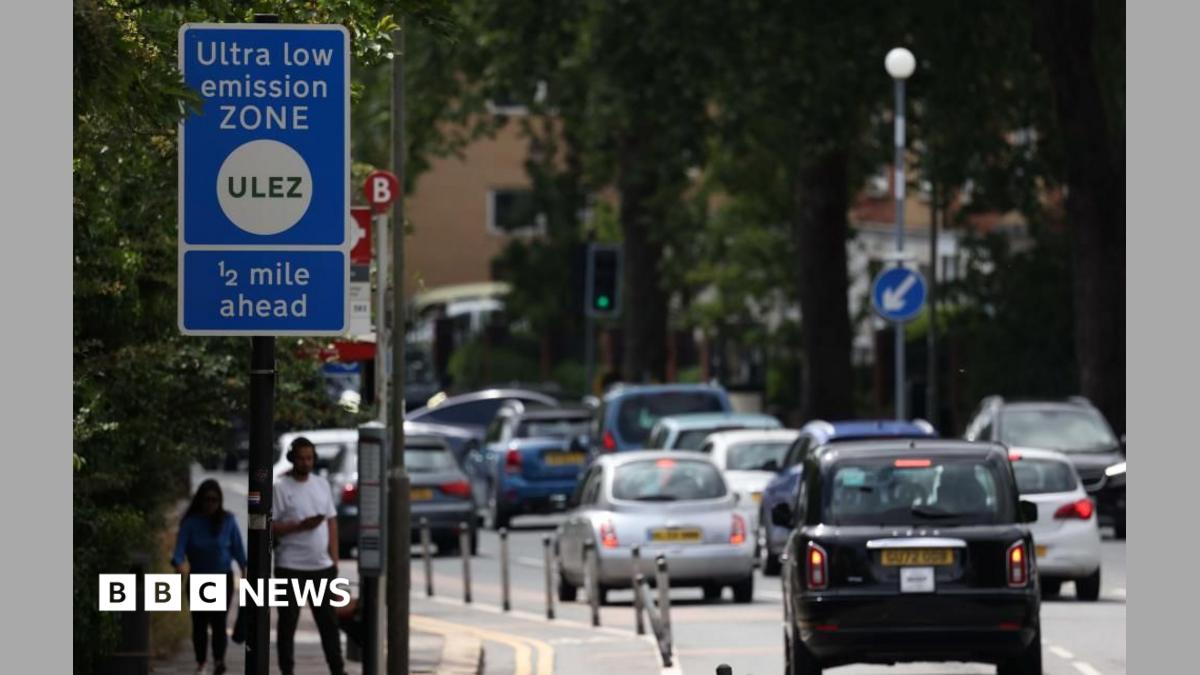
Multiple clean-air policies were introduced in the period covered by the BBC’s analysis between 2014 and 2024. They include cleaner buses and a shift towards lower-emission vehicles, as well as London’s Ulez, which replaced the earlier Toxicity Charge (T-Charge).
Research published this year found the T-Charge and the original central London Ulez were associated with reductions in emergency hospital admissions among adults living in the zone. Another recent study found deaths linked to air pollution fell by an estimated 40% in London over five years from 2019.
Last week, a group of researchers published results from a five-year study following primary school children in London and Luton to determine if young children’s lungs begin to recover under air quality improvements. Their findings show children in London whose lung growth had been stunted by pollution improved drastically in the years after the introduction of the Ulez.
A spokesperson for the Mayor of London, Sir Sadiq Khan, said: “London’s Ulez, the world’s largest clean-air zone, has been a huge success in cleaning up London’s air, with harmful roadside NO₂ concentrations now 24% lower in outer London compared to without the Ulez in place.
“All Londoners are now breathing much cleaner air, but there is still more to do and the mayor will continue to take action as we build a greener, fairer London for everyone.”
Steve McNamara, general secretary of the Licensed Taxi Drivers’ Association, said cab drivers were sceptical when the Ulez was first introduced in central London in April 2019.
But he has since changed his mind.
“When you used to drive a cab around with the windows open, at the end of the day, your hand was black. You were filthy. You don’t get that now. You can actually breathe the difference.”