
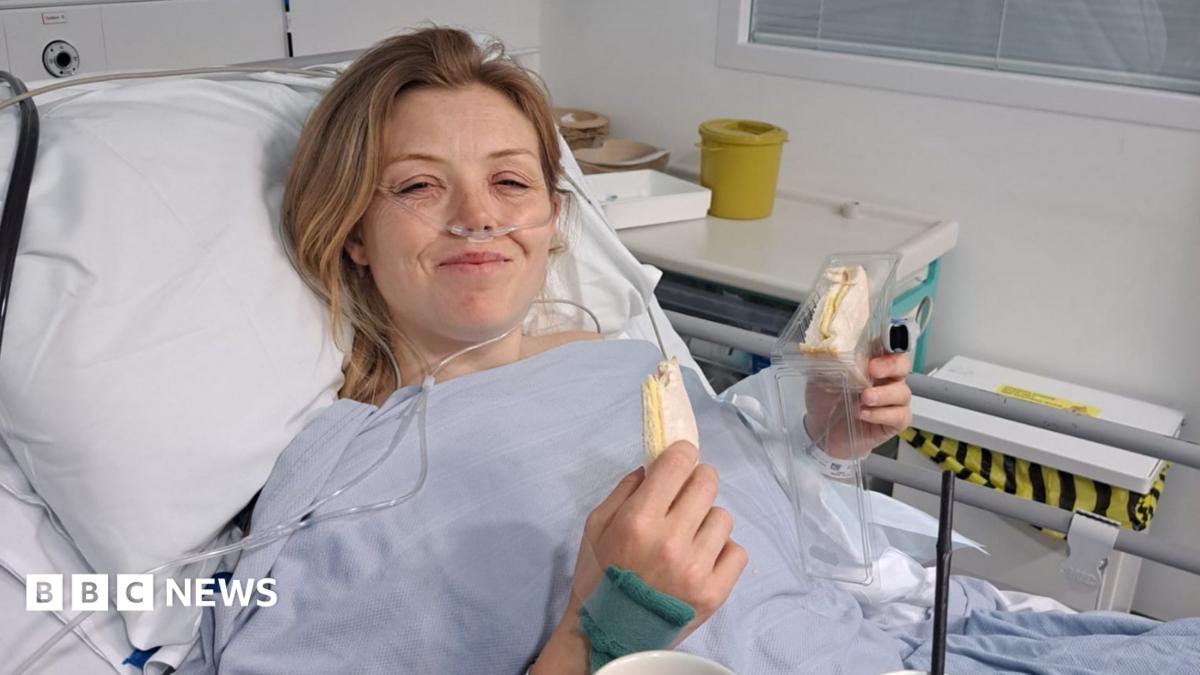
When Hardaker’s sister was diagnosed with a faulty BRCA2 gene in 2016, it spurred her on to take the test herself.
“You think you’re going to be ready for something like that, but actually, I don’t think I really processed it for a good several years,” she said.
“It is a hard thing to carry. It’s heavy, and then it is also long, so it’s not something you can do about it immediately.”
After deciding she wanted the surgery, the time taken to process the decision and delays due to the Covid-19 pandemic meant a wait of seven years to have the operation.
“When I had carried a large burden for so long, I had loads of relief afterwards,” she said. “I felt like I didn’t have to worry about anything anymore.”
She said the recovery process was “really hard”, she was unable to sleep flat for a month, and she had had to recognise that she had been through an amputation.
Hardaker also chose to have breast reconstruction surgery at the same time.
“For me, losing my breasts was an emotional thing; it felt like I was losing my womanhood,” she said.
“It’s not for everyone, but I wanted to try and carry on and look in the mirror as if nothing had happened.
“This has been a really positive surgery, and my risk of cancer is now 8%, whereas it was 80-90% before.
“I want to look at it as a good thing, and it has given me hope for the future.”