
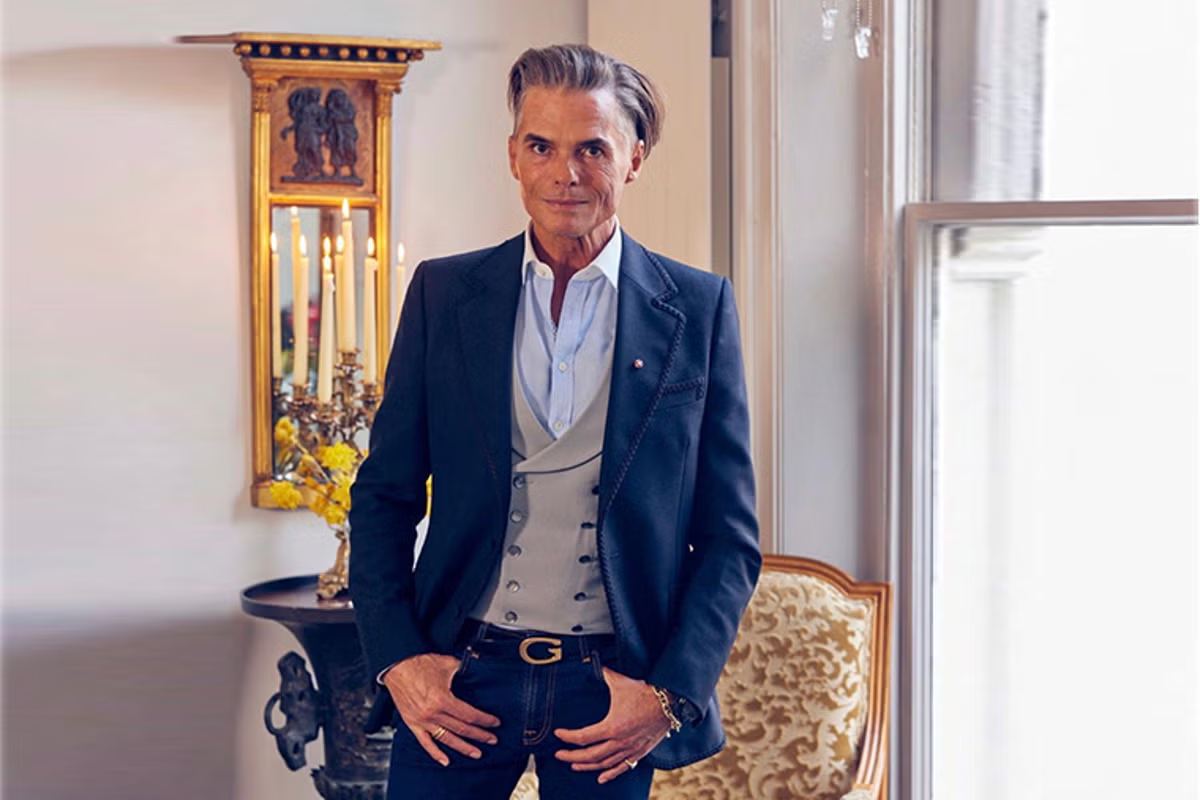
If you’d met me six years ago, you’d have thought I was living a gilded life. I certainly did. With a prosperous career as an entrepreneur, clients spanning the globe, a beautiful family and a country estate in the Cotswolds, I had everything my generation had been taught meant success. That’s why I couldn’t bring myself to admit I was struggling when it all fell apart. Like so many Gen X men, who are at the highest risk of dying by suicide, I refused to ask for help. And it nearly killed me.
Growing up, I was good at sports and adept at hiding feelings. Despite wanting to be a journalist, I instead followed my father, Daniel Galvin Sr, into our family business aged 16. He was one of the original high-profile celebrity hairdressers who became famous for his work with Princess Diana, as well as creating the iconic blonde colour for Twiggy and working with Madonna, so there was definitely a sense of being in his shadow. But I quickly discovered my own talent, and decided that I wanted to carve my own path, so I moved to Beverly Hills where I also started to gain my own celebrity and royal following.
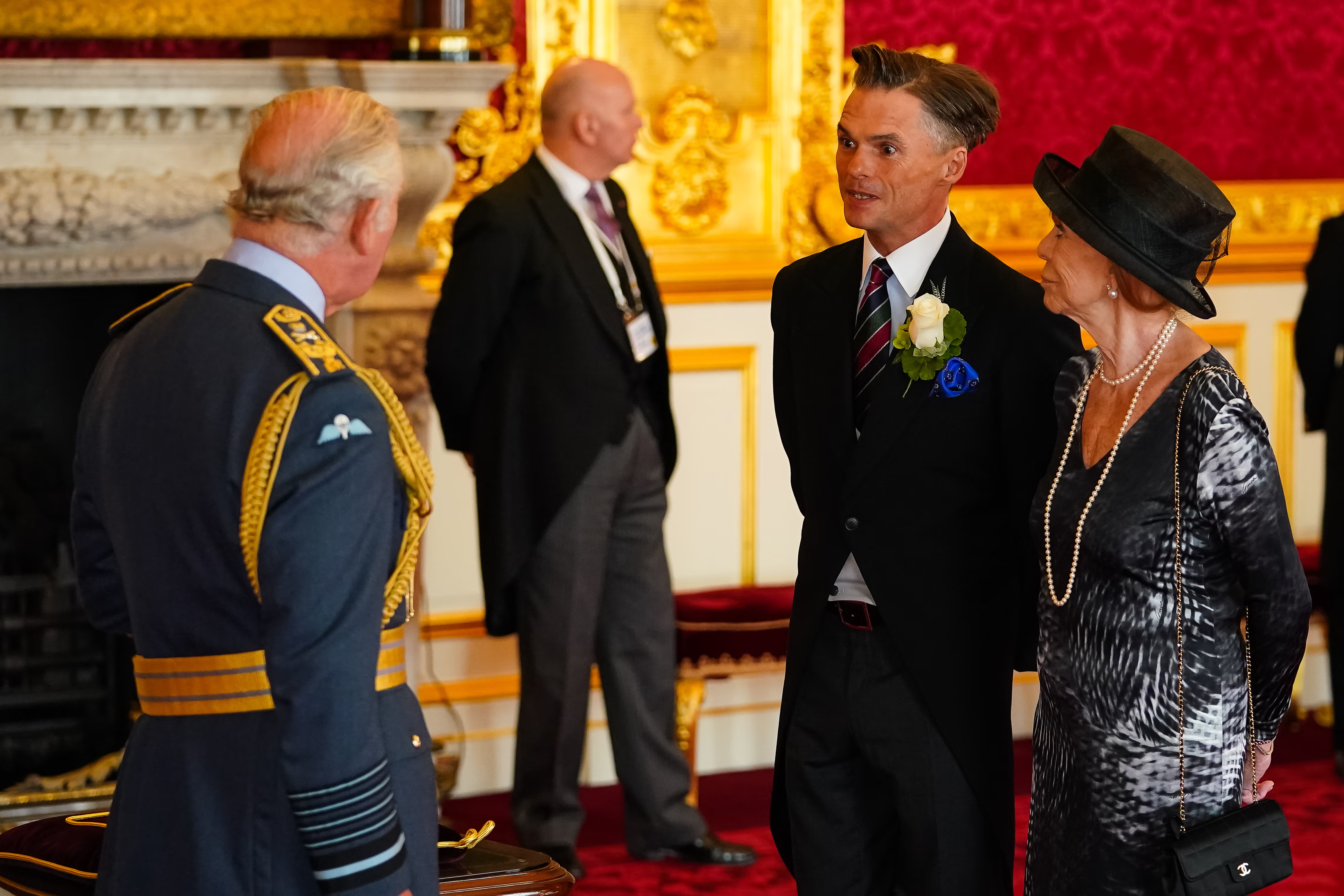 Daniel Galvin Jr during the investiture ceremony for his MBE in 2021: “HRH King Charles is the most gracious and dignified man I know and it is an honour to support his charities around the world”
Inside though, I was suffering. My relationship with my father had become strained and I just couldn’t understand how things had gone so wrong between us. On the surface, I had everything but was miserable when I got home at night. Desperate to escape my unhappiness, I turned to drugs in my early twenties as a way of avoiding my pain. By 28, I was heavily addicted to cocaine.
Going into rehab however, changed my life because I replaced chemicals with organic living. It set me on a new path – both personally and professionally. Back then, the people who championed organic living were ridiculed. I felt certain, though, that this was the future and set up my own organic haircare line in 1999. My instinct was right. Slowly but surely, I built the product line and also opened my own salon in London.
Personally too, my life transformed with my marriage, the birth of my son and a large home in the Cotswolds. I was sober, successful and really did have it all.
I was however, also carrying a secret: the more I had, the more I feared failure. Crushing down my emotions, I allowed the competitive aspects of my personality to dominate, driving myself harder and harder, spending most of my time living out of a suitcase as I travelled the globe for work and stifling my most pernicious fear: that deep down I was not good enough.
Why did I feel that way? I think part of it was having a hugely successful father and the other was bullying I’d experienced at school. Aged 12, I’d won an older boy’s place on the rugby team at Millfield where I was at school and it sparked a two-year bullying campaign. It’s a trauma that never quite leaves you.
So, while I was externally very successful by my forties, I internally lived in constant fear of not being good enough. For me, working through emotions meant going for a long run or getting into a boxing ring because, like most Gen X men, I’d never learned to talk about my feelings. I was the one who looked after others. I couldn’t ask for help. I believed sharing my problems would be a weakness.
And for a long time, this strategy worked.
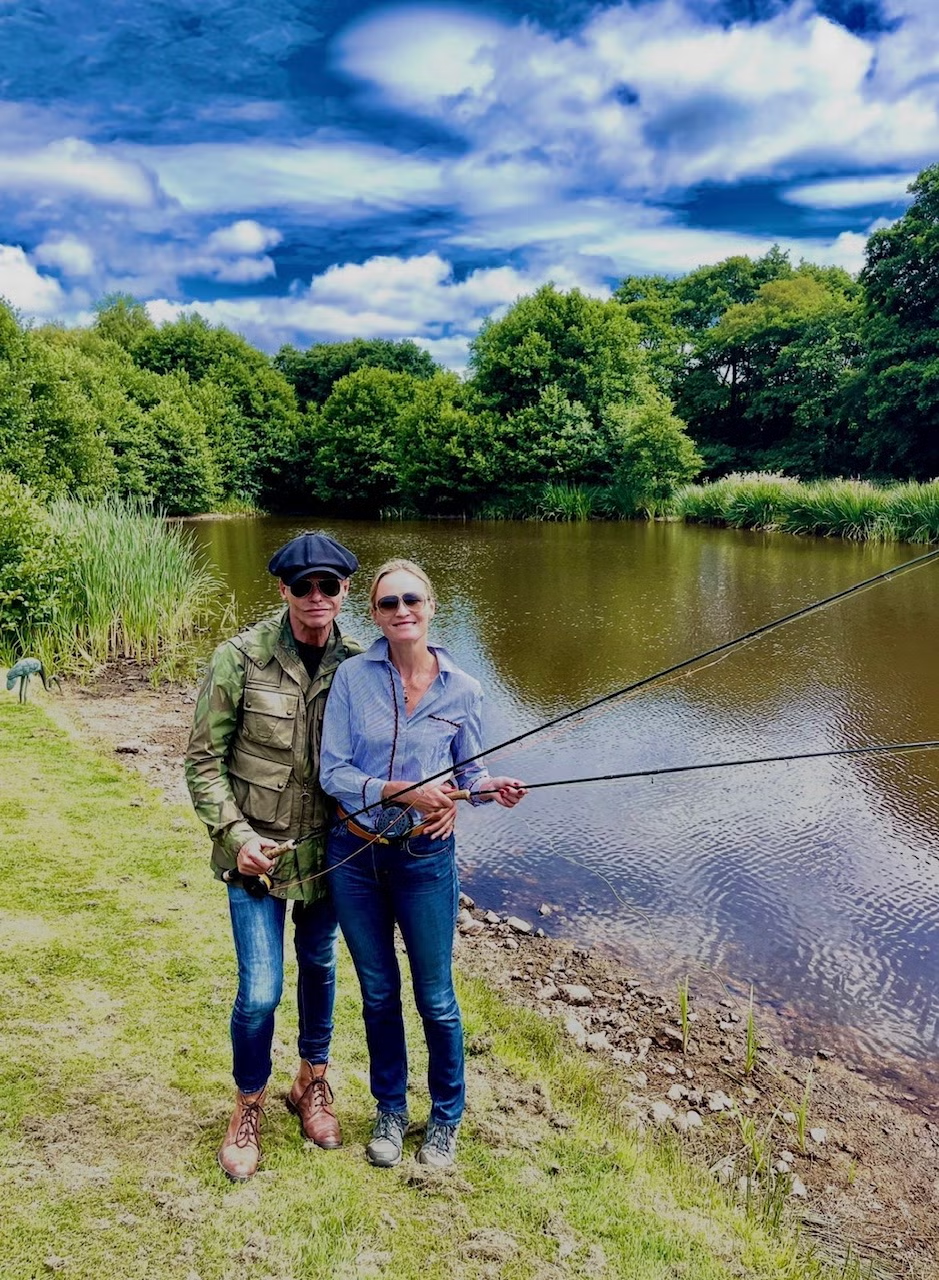 Daniel Galvin Jr MBE with Victoria fly fishing at Bovey Castle
I began selling my products across the US, Australia and the Middle East, as well as the UK, and also did several collaborations with then-Prince Charles on his Duchy Originals and Highgrove Baby and Signature ranges. I was working hard and financially very comfortable but then things started to unravel bit by bit.
It started when I was mugged at knife point outside my salon in 2016 and refused to linger too long on the experience. Then, as my marriage started falling apart, I continued to focus heavily on work. There were huge moments of pride – such as being awarded an MBE, for my services to young people and charity because of my work as an ambassador for The Prince’s Trust (now The King’s Trust) – but also significant lows.
In 2020 for instance, my product business went into freefall as global manufacturing was rerouted during Covid to support pandemic supplies and we were unable to source bottles. It was far beyond my control, but I still internalised it as a personal failing. Then I was attacked and had to have extensive head and facial surgery.
Spiralling ever downwards, I finally hit rock bottom six months later. After I disappeared for three days, Victoria turned up at my flat and found me passed out
Even as the challenges layered up, I told myself to just keep going. I would build it all back again. But I’d lost faith in people, got burned and could not let go of my resentment. I became completely self-reliant and believed the only person I could trust was myself.
Amid all this, I was put on an occasional dose of Xanax to help me relax. I told myself I hadn’t been addicted to anything for more than two decades. I’d be fine. But then in December 2022, I was mugged at knifepoint again outside my salon in Belgravia and, after being diagnosed with PTSD and acute burnout, a doctor put me on a more regular dose of Xanax.
I quickly became dependent, as well as drinking far more heavily, hiding it from everyone except my new partner Victoria, who is a trained psychotherapist and could see what was happening. Urging me to have treatment, she convinced me to go to rehab in July 2023, but I came out on more medication than I’d gone in on.
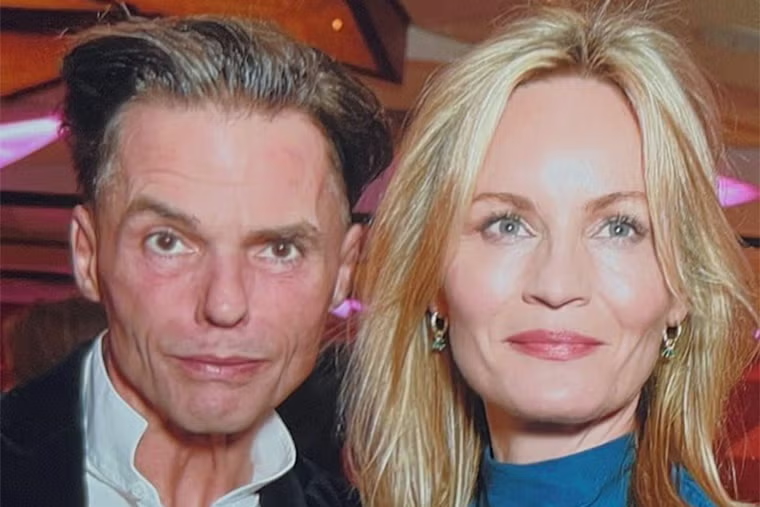 Daniel Galvin Jnr MBE pictured with Victoria at the Belgravia Awards where Daniel was nominated
Spiralling ever downwards, I finally hit rock bottom six months later. After I disappeared for three days, Victoria turned up at my flat and found me passed out. I was admitted to hospital and realised that I had very nearly died. Addiction was going to take everything from me if I didn’t somehow dig deep.
With Victoria’s love and support, I finally accepted that I had to really let everything go. All the ego. The attachment to material things. The financial signifiers of success.
In January 2024, I flew to the Cedars Clinic in South Africa and this time rehab completely changed my life. Instead of being medicated, I was taken apart and put back together again spiritually and emotionally. My recovery however wasn’t a neat line – I was clean for a year before relapsing with alcohol and returned to Cedars for a second stay.
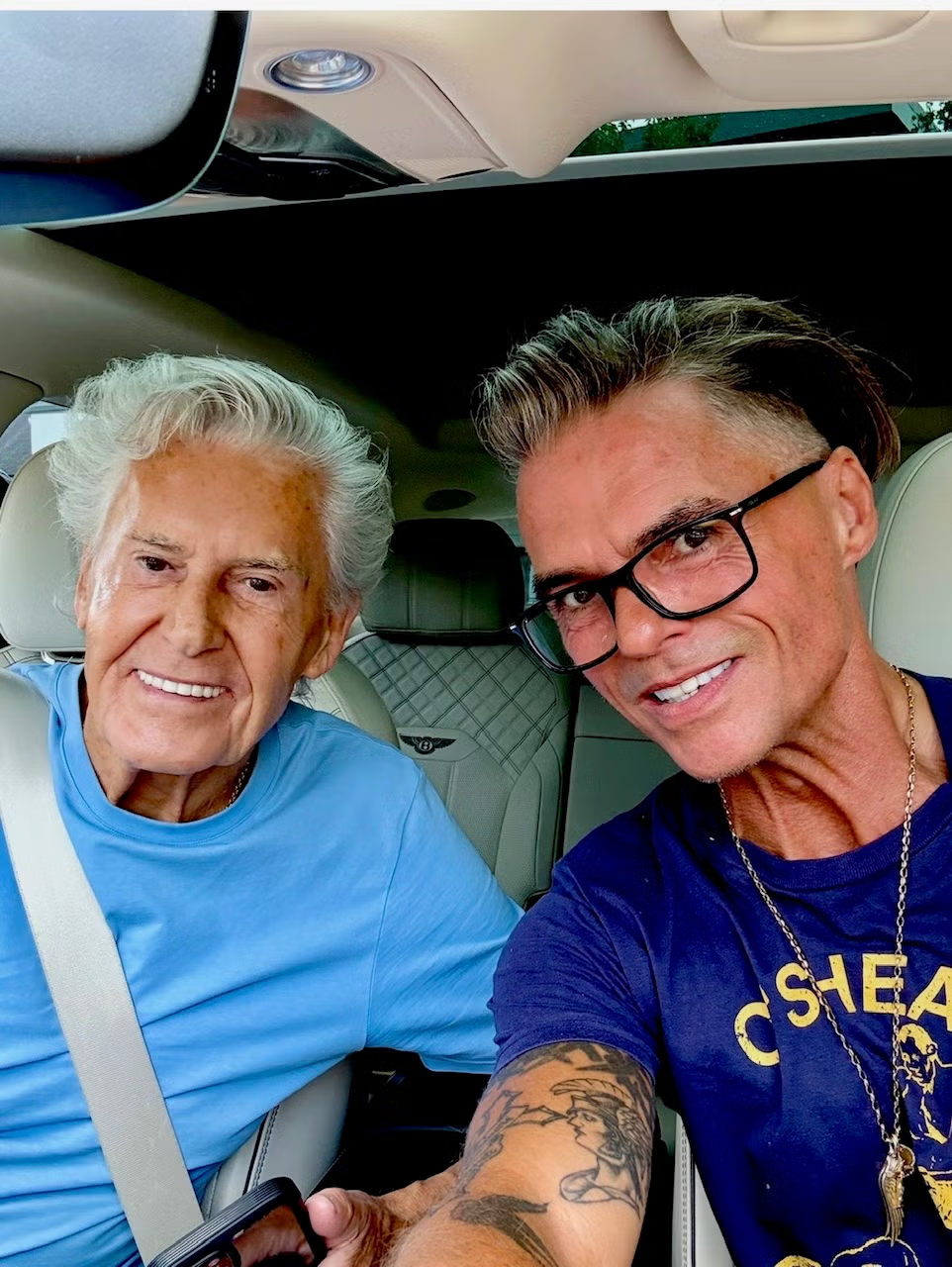 Daniel Galvin Jnr MBE with his dad on Father’s day
But I’ve now been sober for 18 months and have finally been honest with myself about how much damage my addiction did to the people I love. In particular, Victoria, who washed, fed and bathed me at my lowest. She saved my life. And I’ve put myself in her shoes and realised just how much an addict asks of the people around them. They aren’t anaesthetising themselves; they’re living with the raw pain of seeing the person they love suffer.
I’ve now been sober for 18 months and have finally been honest with myself about how much damage my addiction did to the people I love
I’ve also learned that the right rehab, at the point when you’re really ready to engage, can truly save your life. It is like getting into the boxing ring with yourself and I had to let go of all the character traits I’d developed as I grew from boy to man – from hiding my emotions, to investing all my worth in the outward manifestations of supposed success.
My routine – a certain seat, the best table and wine vintage – had become my identity. I’ve finally learned to clearly see what really has meaning. Stripping all that armour off was terrifying but also liberating. I’ve learned to integrate my professional ambition with a life more fully lived. Today, I fly fish, go to the opera, switch off my phone and can understand that I am not measured by professional or financial success.
It’s difficult to admit just how low I went, but I think there are a lot of men like me out there who won’t talk, let go and ask for help. And many of them die by suicide. All I can say is this: the moment you succumb to the fact that your life needs to change, the moment you admit you need to get vulnerable, is the moment you start to recover. That’s why I’m speaking out now. My generation of men wasn’t taught to ask for help. But it isn’t a weakness. It’s a strength. And it could save your life.
As told to Megan Lloyd Davies
If you are experiencing feelings of distress, or are struggling to cope, you can speak to the Samaritans, in confidence, on 116 123 (UK and ROI) or visit the Samaritans website to find details of your nearest branch.
If you are based in the USA, and you or someone you know needs mental health assistance right now, call or text 988, or visit 988lifeline.org to access online chat from the 988 Suicide and Crisis Lifeline. This is a free, confidential crisis hotline that is available to everyone 24 hours a day, seven days a week. If you are in another country, you can go to www.befrienders.org to find a helpline near you
Victoria Joyce, who helped Daniel and continues to work with many high profile clients, is an integrative counsellor and psychotherapist (Prof.Dip.Psych.c MNCPS (acc.) and can be contacted on enquiries@fullcircletherapy.services