
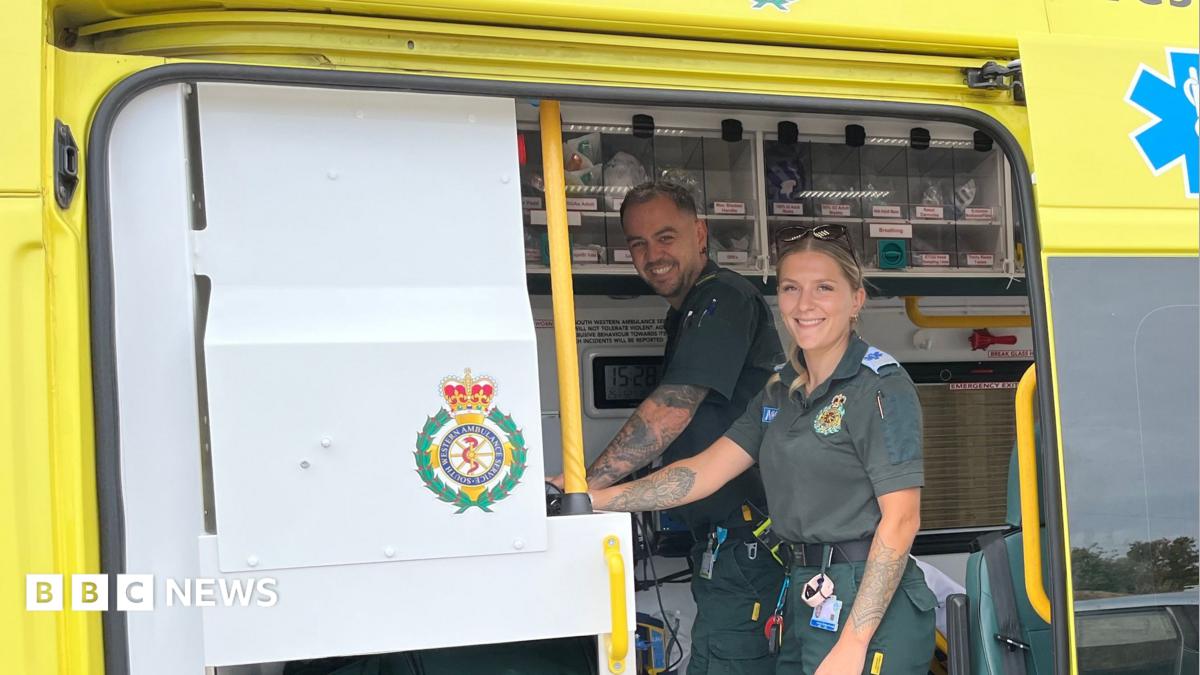
At one point, the pair were on their way to Minehead Community Hospital to assess an 89-year-old woman who was experiencing heavy, laboured breathing.
But before they got there, they were diverted to a care home resident who had hurt her knee in a fall.
After arriving, paramedics had to wait for the woman to finish her lunch before taking her to Musgrove Park Hospital in Taunton. The care home said it called 999 because the woman could not stand up and her knee was swelling.
Once an ambulance crew is assigned to a job, it has to see it through – even if more urgent calls are being made.
“The radio was going off and there were several general broadcasts for category one emergencies in the area,” said Lee.
Examples of category one emergencies include a cardiac arrest, someone who has stopped breathing, or a person who has suffered catastrophic trauma or bleeding.
“We have to switch off to the noise in the background and deal with what we’re doing at the time,” Lee said.
“It can get frustrating if you start to overthink it when you’re on duty.”
Another of the day’s calls involved a man in Minehead who had activated his personal alarm and was no longer responding.
The team drove to him with their blue lights on, only to discover the alarm had been activated in a test and the man did not need help.
“He could have really needed help,” said Lee. “We never quite know.
“So unfortunately, we have to respond the same way.”