
Research published by Anglia Ruskin University this week, external found many men have had similar struggles with traditional weight-loss programmes because of their female-first perception.
Professor of nutritional physiology Justin Roberts says men who manage to stick to diets often speak about having a support system in place.
“One of them was this idea of having a buddy… there’s a bit of social competitiveness there,” he explains.
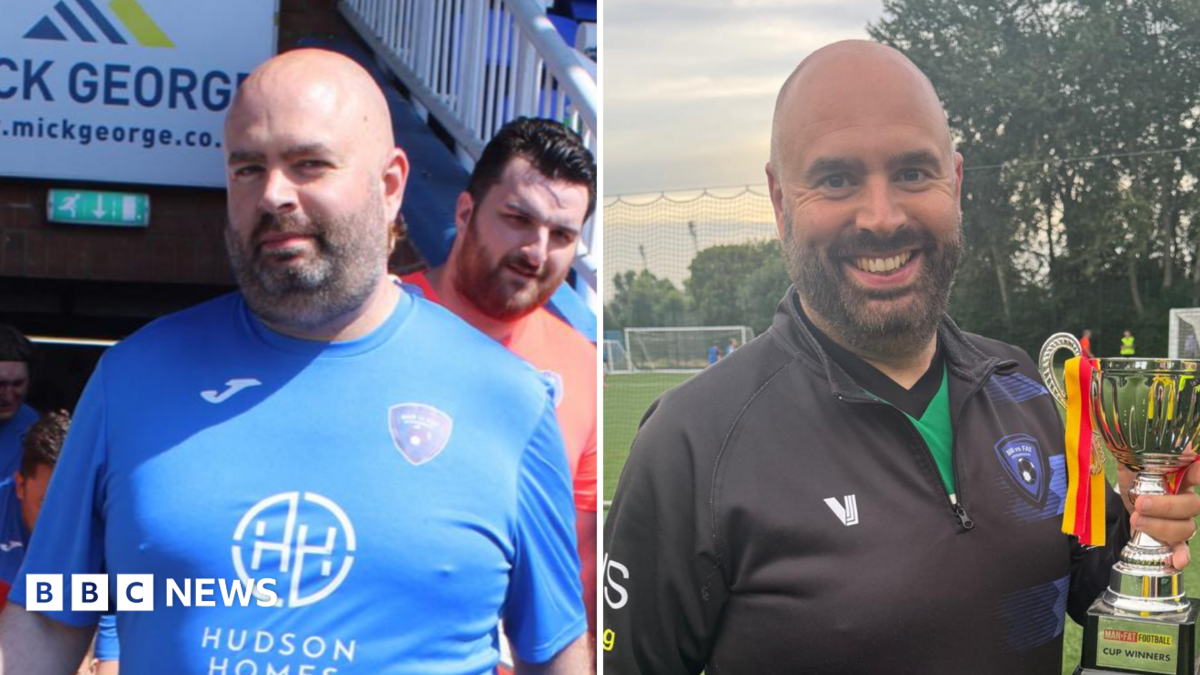
That is one of the reasons Hall says he has been able to commit to his weekly football sessions, which have helped him lose about 4.5 stone (28.5kg).
“I think that when you get a group of guys together, we naturally get competitive,” the dad-of-three says.
“It just makes it that much more engaging and that much more exciting and something that you just want to be part of.”
Reflecting on his journey, he adds: “I think I’m sure I can say that my son doesn’t call me lazy any more.”
Man v Fat began in 2014 and now has clubs across the UK, including 19 football and two rugby clubs in the East of England alone.
The organisation says that across the region, more than 5,000 men have lost a combined total of about 5,590 stone (35.5 tonnes) in weight – about the same as three London buses.
The club in the East with the biggest weight loss is Peterborough, where members have shed 745 stone (4,730kg).
Having a mentor also helps men to stay accountable, says Roberts, “someone who’s already done the programme that they can kind of look up to”.