
Conclusion
I started this project in February and put the final touches in July, working on it here and there whenever I had some spare time. For a personal project like this one, I prefer to take my time and go slowly but surely, while getting feedback from friends and colleagues along the way to make sure I’m heading in the right direction. We’re always better when we have people around us to support and challenge us.
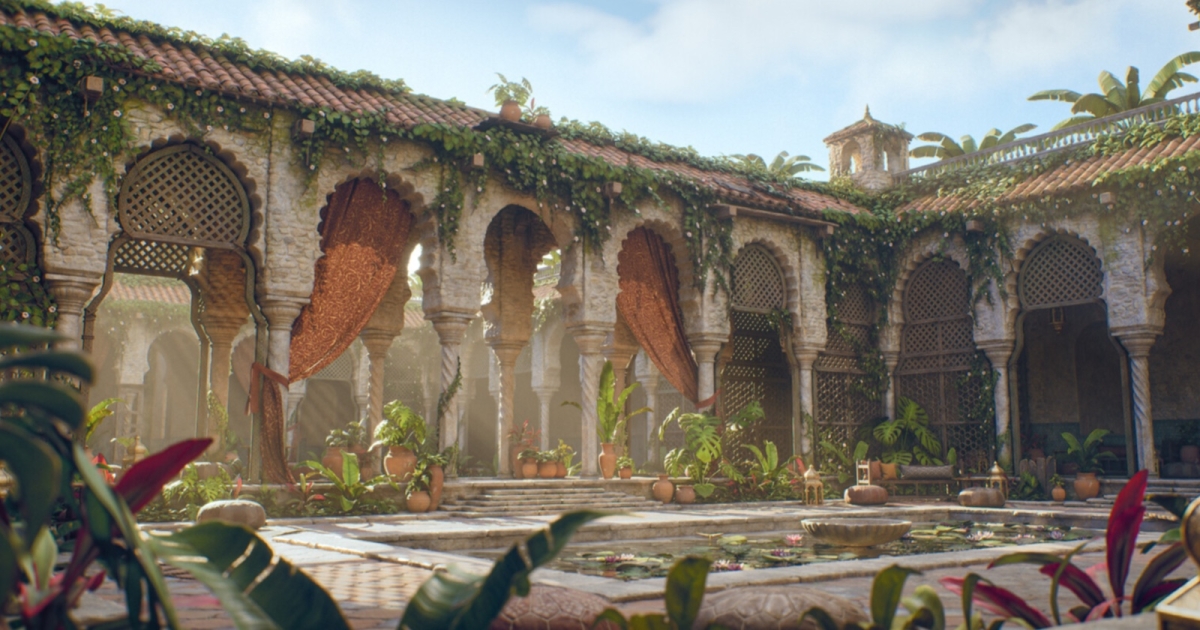
Many challenges came up throughout the creation of this courtyard. One of the first was figuring out how to build a shader myself that could achieve the look and functionality I wanted. It wasn’t easy at first, but as with everything, with enough time and patience, you learn and eventually get there. Creating the foliage was also a challenge in itself. Even though I already had a good idea of how I wanted to approach it, I had never really worked on foliage at this scale and amount before, so it was definitely a learning experience.
If someone were to take on a project of a similar scope, I would strongly recommend taking the time to plan the layout, thinking about the modularity and key modules early on, and above all, not overlooking the value of feedback from others. But most importantly, listen to yourself. If you’re working on a project that will keep you focused and engaged in the long run, that you’re doing in your free time, and that you genuinely want to make great while learning new things, make sure to give yourself the time to do it properly.
Don’t rush it and don’t feel guilty when you are not progressing as fast as you’d like to. Creating is a process, not a competition.
If one day you don’t feel like working on your project (even something you want to do from the bottom of your heart), go do something else. Don’t force yourself, as it will only lead to frustration. Taking breaks is part of the work. Stepping away can give you a fresh perspective and bring back a whole new level of motivation when you return. Do what you can, when you can, and let the motivation come naturally.