
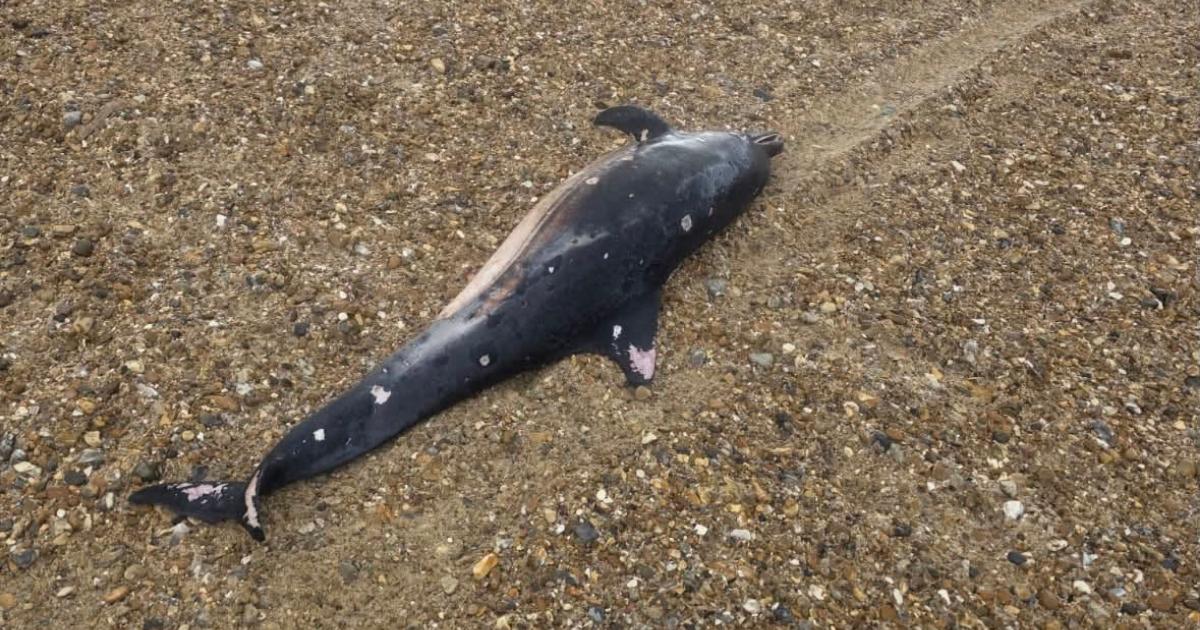
The animal was discovered washed up near Hove Lawns on the morning of Sunday, August 30.
Shoreham Coastguard Rescue Team said its members were paged following the discovery and attended the seafront.
In a post on Facebook, HM Coastguard Shoreham said: “On Sunday, August 30, our team was paged to a washed up dolphin at Hove Lawns.
“Coastguard are aware, and we have notified the local council to arrange collection and disposal.”
A photograph shared by the Coastguard showed the animal lying on the pebbles close to the water’s edge.
The coastguard shared this image of the dolphin on Hove beach (Image: HM Coastguard Shoreham)
A number of social media users also shared photos of the deceased dolphin lying on the beach, expressing their sympathies.
Whales, dolphins and porpoises are collectively known as cetaceans.
Animals found around the UK coastline can be reported to the UK Cetacean Strandings Investigation Programme, which records strandings and may examine some animals to help determine how they died.
Government guidance says people who discover a dead whale or dolphin in England or Wales should contact the programme’s hotline on 0800 652 0333.
Reporters may be asked to provide the location, date, species if known and a photograph.
Members of the public are advised not to approach or touch a stranded animal because of the possibility of injury or disease.
Dogs should also be kept away.
The Cetacean Strandings Investigation Programme advises people reporting a dead animal to describe its location, approximate length and condition.
Gloves should be worn if any handling is unavoidable, while people with cuts or abrasions should not touch it.
Anyone who finds a live dolphin or is unsure whether an animal is alive should immediately contact British Divers Marine Life Rescue or the RSPCA rather than attempting to return it to the sea.