
BIG’S FIRST COMPLETED ART MUSEUM OPENS TO THE PUBLIC
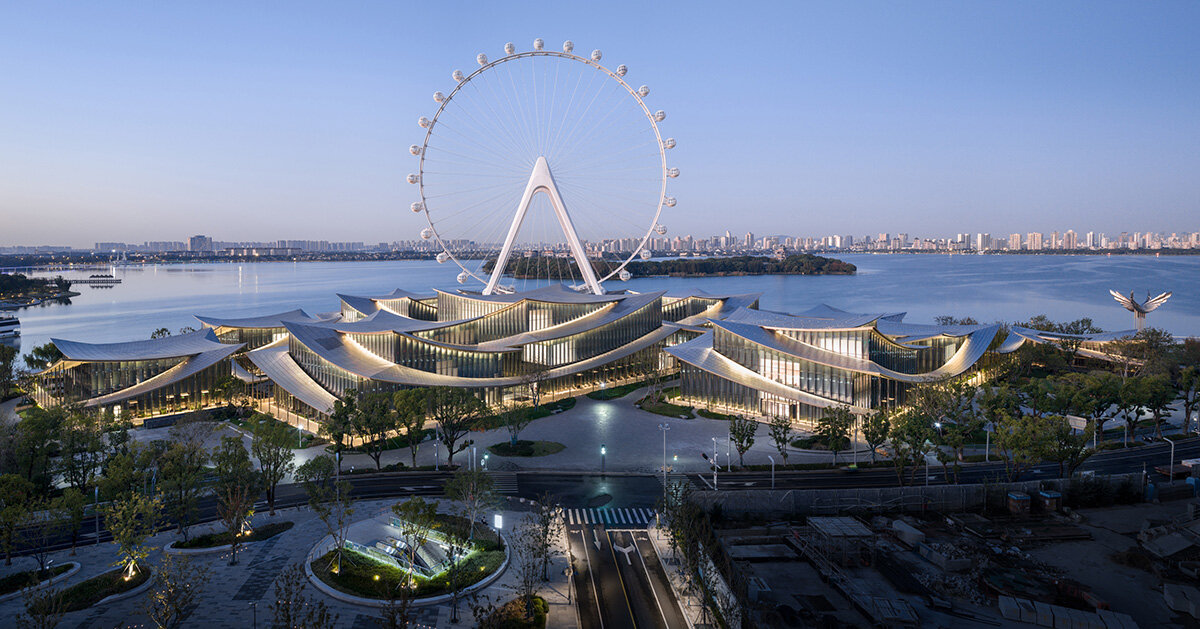
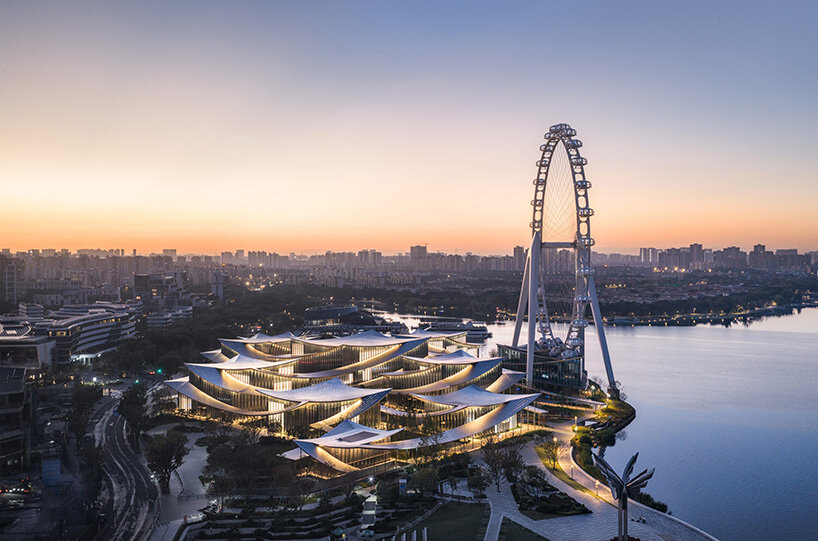
Bjarke Ingels Group (BIG), together with ARTS Group, VIA.inc, and SHUISHI, completes the Suzhou Museum of Contemporary Art, a 60,000-square-meter cultural complex on the shores of Jinji Lake in Suzhou, China. Now officially open to the public, the museum is BIG’s first completed art museum and brings together twelve interconnected pavilions beneath a ribbon-like roof. The project draws on the spatial logic of Suzhou’s historic gardens to create a porous network of galleries, gardens, paths, bridges, and public spaces between the city and the lake.
The museum arrives in Suzhou’s rapidly developing lake district as a new venue for contemporary art, design, and public programming. Its opening follows a series of preview exhibitions, including BIG’s Materialism, which remains on view (find designboom’s previous coverage here). The inaugural program of the museum also includes exhibitions spanning modern and contemporary art, technology-driven artistic practices, and exchanges between Eastern and Western artistic traditions.
all images courtesy of Suzhou MoCA
A MUSEUM ORGANIZED LIKE A CHINESE GARDEN
At the center of BIG’s architectural concept is the lang 廊, the covered corridor traditionally found in Chinese gardens. The architects reinterpret this element as a continuous circulation route connecting the twelve pavilions that compose the museum building. Visitors move through galleries and gathering spaces along a main path while smaller routes branch toward individual exhibitions and gardens.
Bridges and tunnels connect spaces above and below ground, allowing the museum to operate less like a sequence of enclosed rooms and more like a landscape of interconnected destinations. The organization also gives the institution flexibility as exhibitions and public programs change over time.
For Bjarke Ingels, the project responds directly to its position between Suzhou’s urban fabric and Jinji Lake. ‘By dissolving the museum into a Chinese garden of interconnected galleries, distributed across the site like pavilions in a park, the museum becomes a connection between the city and the lake, rather than an obstacle,’ he says. The underlying ambition of the proposal is one of urban porosity: visitors can move through sculpture gardens toward the waterfront while water and landscape extend between the buildings.
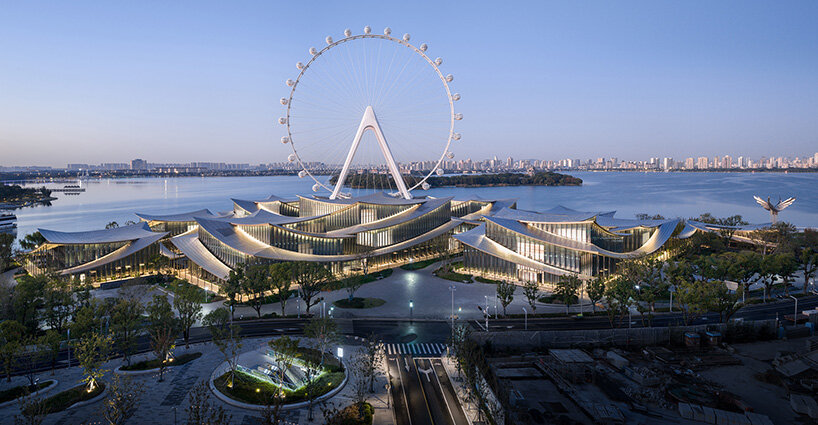
Suzhou Museum of Contemporary Art sits on the shores of Jinji Lake
CONTINUOUS ROOF LINKS 12 PAVILIONS ACROSS SUZHOU’S LANDSCAPE
From above, the looping roof of the museum creates a distinct figure across the site. BIG describes its geometry as recalling an infinity knot, while Catherine Huang, Partner at BIG, compares the aerial composition to traditional papercut patterns framing the gardens below. The roof also responds to the neighboring Ferris wheel, whose elevated visitors overlook the museum. As Ingels notes, this makes the roof surface effectively the building’s ‘fifth facade.’ The project therefore considers two very different experiences at once: a precise graphic composition viewed from above and a more fluid sequence of gardens, art, and architecture experienced at ground level.
‘The gardens begin to flow into one another, unfolding as sequences of spaces, views, art, and nature,’ Huang says. ‘A composition that appears precise from above’ becomes ‘an experience of exploration and discovery on the ground.’
The strongest idea behind the project lies in its attempt to resist the conventional museum as an isolated object. Spread across twelve pavilions and threaded together by a continuous roof and circulation network, the Suzhou Museum of Contemporary Art positions movement through the site as part of the architectural experience. Whether that ambition translates into a genuinely public connection between city and waterfront will depend on how the gardens, galleries, and open routes are used over time.
Among the exhibitions currently presented at Suzhou MoCA is Materialism, BIG’s exploration of the materials used across its architectural projects. The exhibition follows ten materials, from stone to recyclate, through large-scale mock-ups and models. Alongside Materialism, the museum opens with exhibitions dedicated to modern and contemporary art, including a Picasso exhibition and a large survey of contemporary Chinese art.
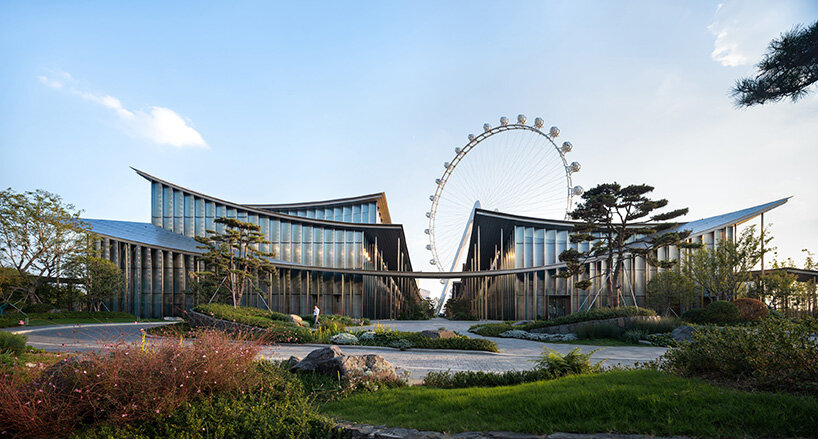
the neighboring Ferris wheel rises behind the complex
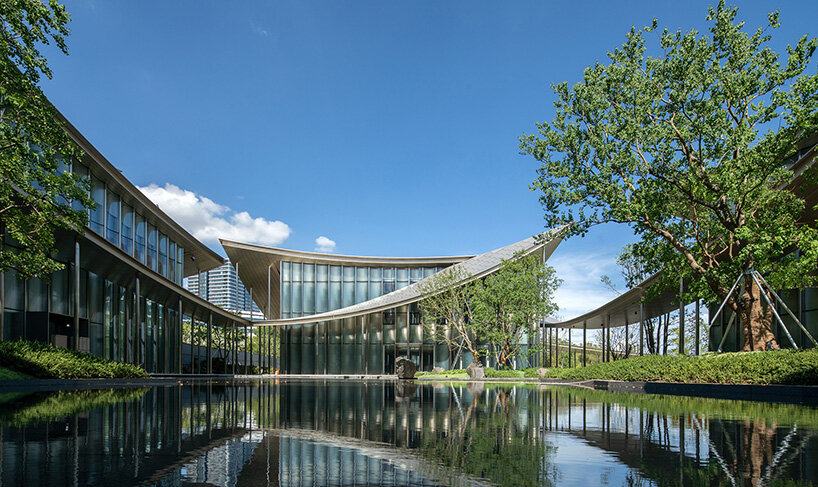
drawing on the spatial organization of Suzhou’s historic gardens
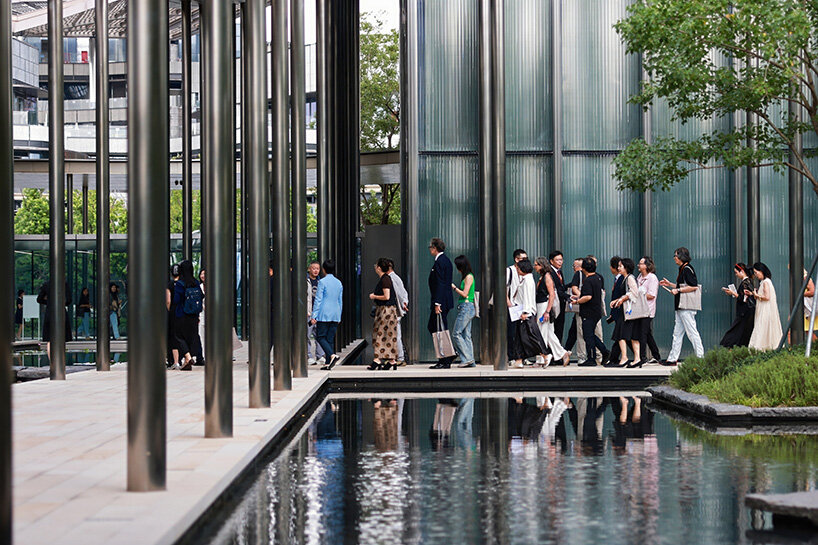
visitors move through the museum’s gardens and covered pathways