
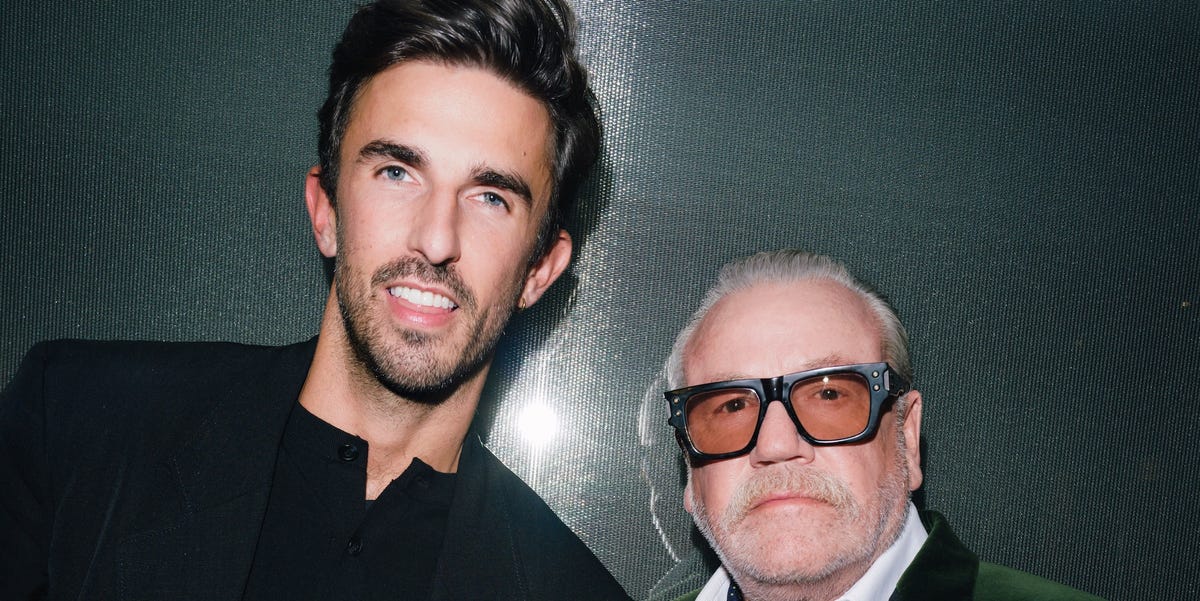
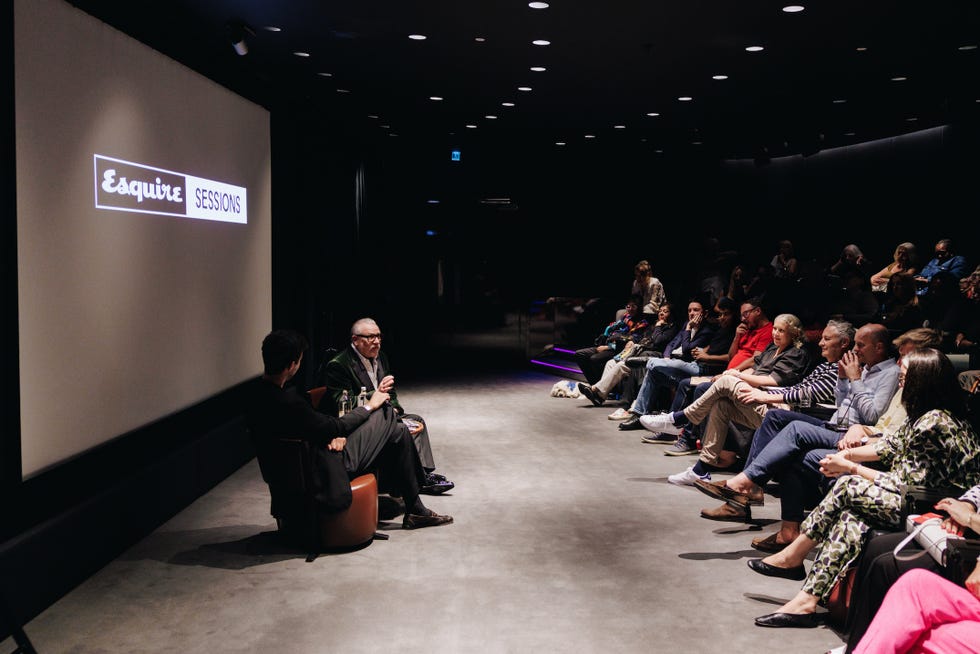
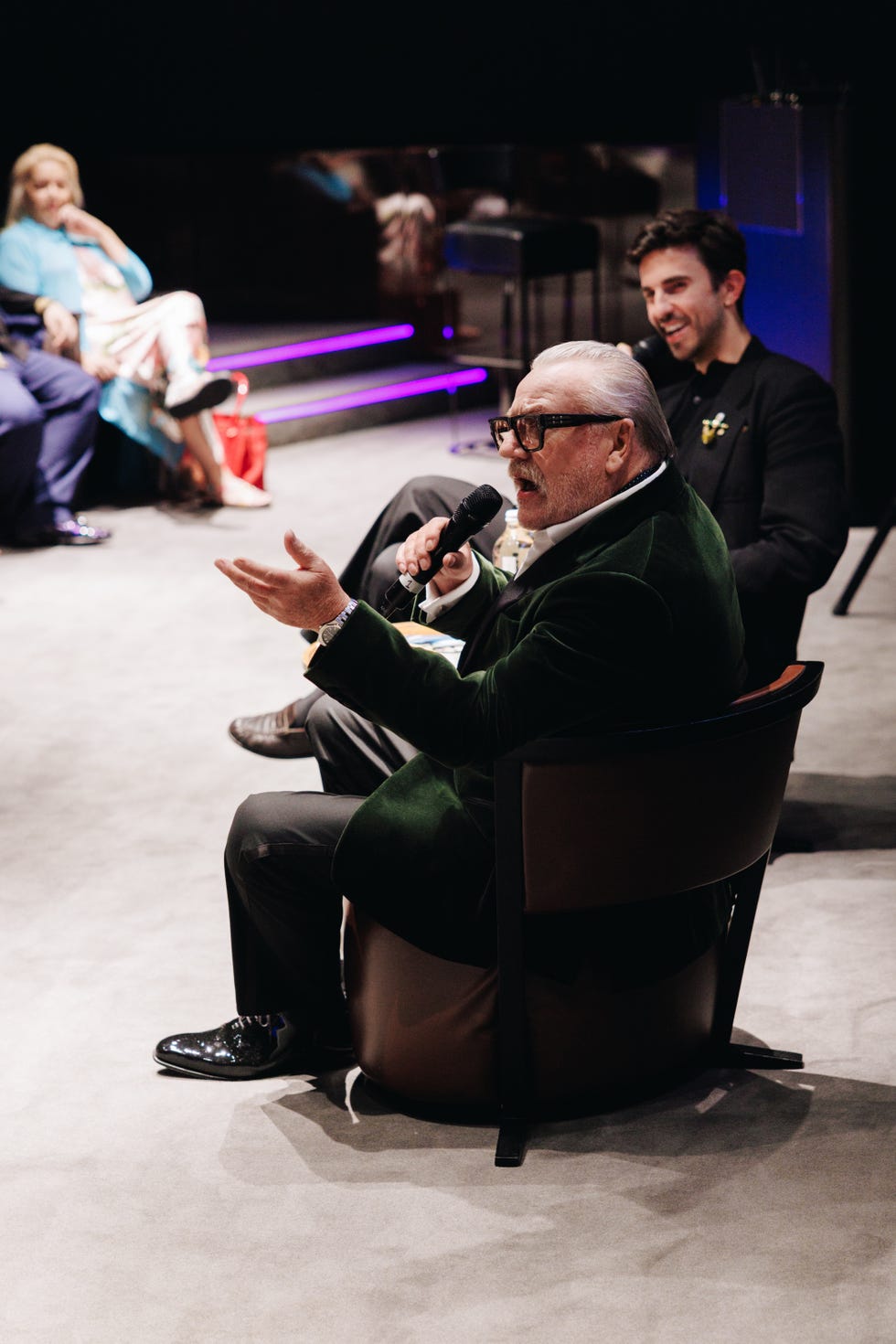
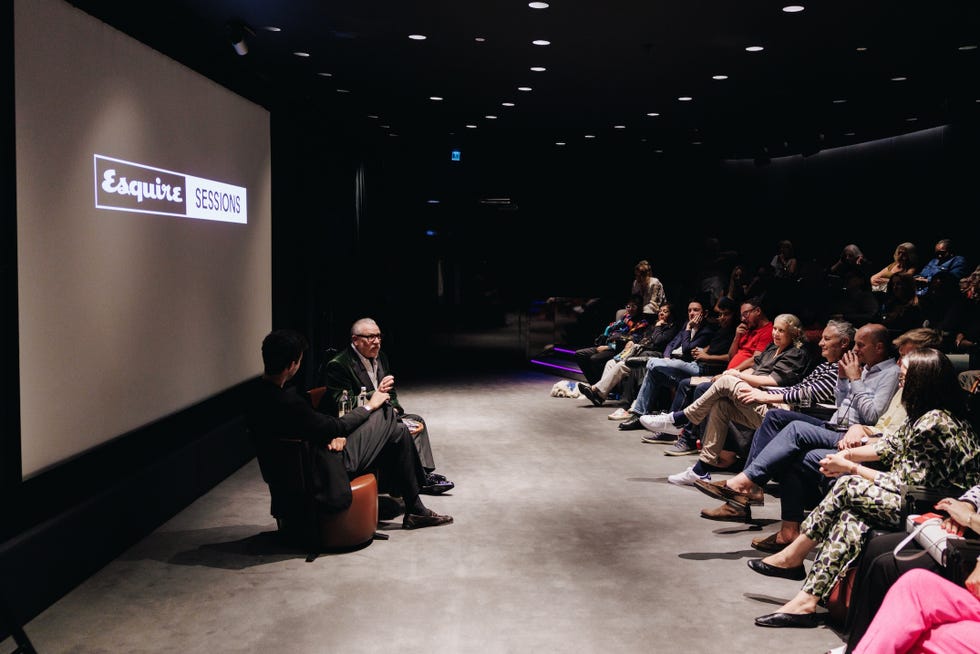
Yesterday at the BVLGARI Hotel in Kensington, Esquire editor-in-chief Teo van den Broeke hosted the latest in a series of intimate conversations with the great and the good from the worlds of culture, film and food, exploring their life’s work and aspirations.
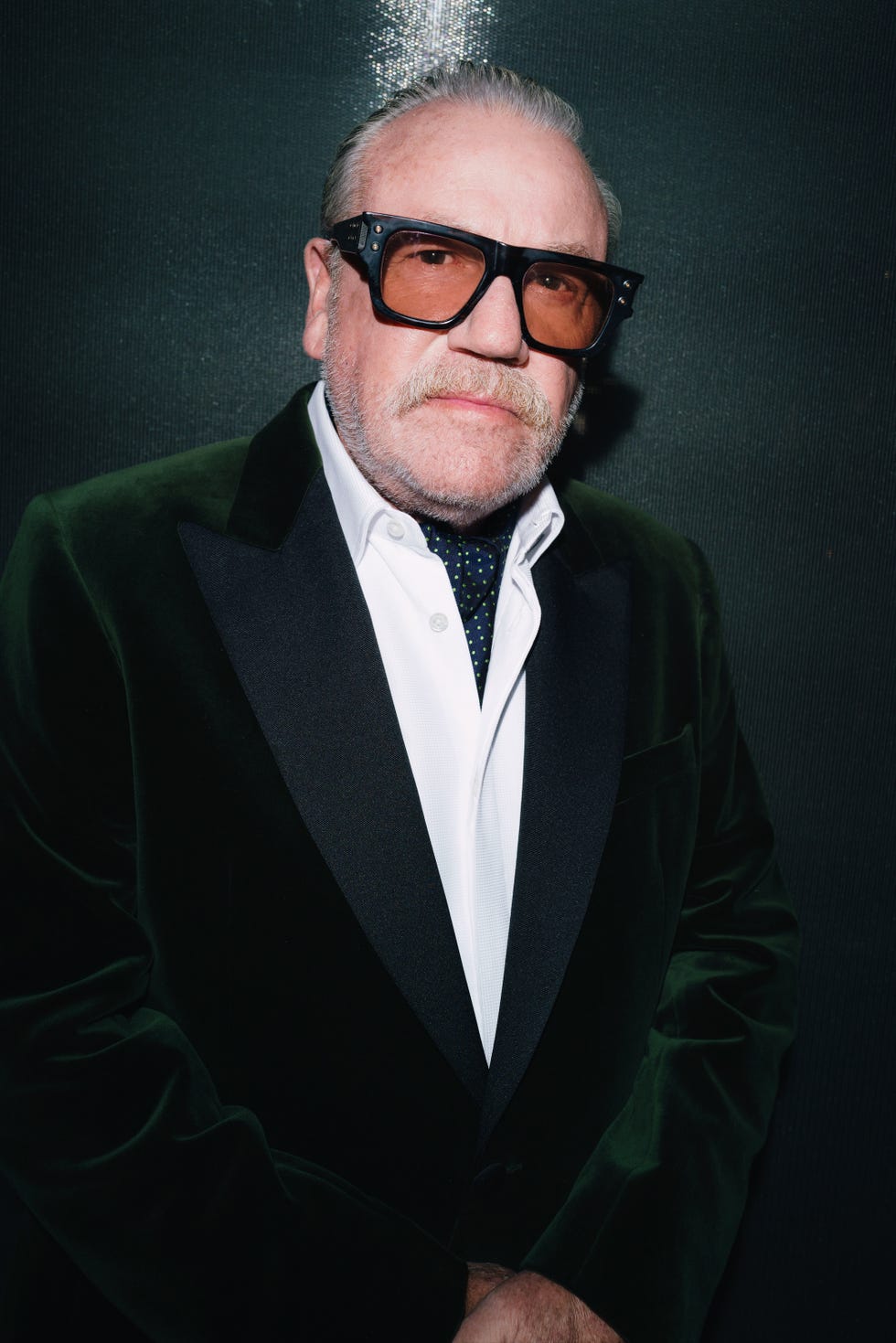
Last night’s Esquire Sessions guest was one of Britain’s most venerable and beloved actors: Sexy Beast star Ray Winstone, who returns in the highly anticipated second season of The Gentlemen, out Thursday. The man, the myth, the legend – or, as he put it himself, “the good, the bad and the ugly”.
The conversation covered everything from Winstone’s feud with Guy Ritchie and filming The Gentlemen to how he finds softness in the rough characters he has become so famous for playing.
Esquire
On His Better Man
“It’s a really tough question, because we all say our dads. My dad was a big influence on me. He was a grafter. He was a worker and he was all about family. That was back in the day, and I guess that kind of follows through with me.
“Why do we get up in the morning? Why do we go to work? I started off working in the fruit game. My dad was in supermarkets and I worked in Spitalfields Market as a barrel boy when I was 14. So that kind of ethos, in a way, was embedded in me.
“I remember once when I was in school, on a Saturday we used to go to Spitalfields Market or Covent Garden – depending on who we owed money to – and you’d get up about two o’clock in the morning and go to work. One morning I didn’t get up for some reason, and I wasn’t shaken or anything like that. I just got a bucket of water. And yeah, it’s cruel, but it kind of instils in you very young that you have responsibility in your life.
“So what’s the reason you get up to work? And not necessarily the work you enjoy sometimes, you know. But you have to work to pay the rent and feed your family. And so, in that way, I have to say my dad. I loved him and he loved me. It’s tough love sometimes. But you learn from it, hopefully.”
Sam Lort//Esquire
On Being a Better Man Over Time
“Yeah, I think I’m a better man now than I was in my twenties. I’m just a little kid that came out of East London, near West Ham really, and I don’t think your education, where I come from anyway, starts until you kind of leave school and you’re lucky enough to be in a job that takes you far afield.
“Travel helped with that. Forget about the politics, forget about the people who run countries. We’re just meeting people. It’s an education itself. And it changes opinion, travel.
“I’m not an intellectual, by any means. I couldn’t read when I was 11. But that kind of travel, that kind of way of meeting people and having to work with them, is probably the best form of education that I could have ever wished for.

Sam Lort//Esquire
“And then that calms you in a way. Because you kind of run out of people to hate. You do, because you’re brought up thinking all these things, but you realise we all have the same problems.”
On Stopping Drinking
“I got fed up with drinking. I was kind of functioning, but the hard work was actually working with a hangover. It affects the work that you’re doing. You don’t think it does, but it does. I got fed up telling the same stories. You’re with your mates and you tell a story about 50 times, and you’re still laughing. I just didn’t like it anymore. And so I stopped. I did a bit of exercise and I became a new man. It’s made me much more chilled. When you’re on the booze, you think you’re clever, you think you know everything, and you think you can have a chat with anyone, and you’re so smart. And you ain’t.”
On Playing Dark Characters
“I try to find a vulnerability somewhere, but if you’re playing a gangster, gangsters are people that have no emotion. They might show they’ve got emotion, but they haven’t got emotion because they hurt people. And they take stuff off of people that go out and do an everyday job and work. They bully. And they take things away from people. There’s no love. There’s no love there “Playing a gangster is different from a thief, in a way. A thief may come from nothing, and he takes things because he wants to feed his family. A gangster wants to feed himself. And that’s the difference, I think.”

Sam Lort//Esquire
“Usually, if you pick up the script, you read it. It’s written on the page: this is a bad man. They’re good liars. You got to trust them. He kills people, right? So you haven’t got to play that. You can play the guy who sees a little kid and says, ‘How are you doing?’ and all that. In the script, he’s gonna do something very, very bad, so you haven’t got to play that.
On the Beauty of British Films
“I like making British films. We’ve kind of lost it in a way. The French make films about French culture. When we make a British film and it’s about our culture, about the way we live – if you take away the drink and the drugs and all that in Nil by Mouth, that’s what we’re talking about. We’re talking about our society and how our society lives.
“We can’t make American films, really. Americans do it really well. But I just like watching a good British film that’s about what we are.
Sam Lort//Esquire
On The Gentlemen Season 2
“When I watched the first lot, one of the funniest scenes I’ve seen on TV is the chickens. It’s nuts. It’s completely nuts. And it was played so well.
“Watching the series, I was so surprised because it turned out so different to the way you thought it would turn out. The scripts and the way they edit it – they don’t edit it in the way you think they will. The story changes around from the edit, which is quite surprising, but it works. It’s better.
“So when they were doing the second one, I thought, you know, it’s a bit hard to top. But all the journalists who have seen it – if you want to believe the journalists – and the people we’ve spoken to who have seen it say it’s better.”
On Making Up With Guy Ritchie
“You just grow up. When I was younger, something happened. I just didn’t like the way… the film was put on hold and I took umbrage to the fact that no one was told. These actors, this crew, have rents to pay. And if it’s been put on hold and the money’s not coming through for a film, tell everyone. They’ve got a choice then – go and find some more work or whatever. And I just thought it was a liberty. I aired my opinion, said, ‘See you later.’
“Then we had words a bit later on. I didn’t like what he’d done. There’s a way of going about your business, and I’ve probably got the wrong end of the stick anyway. But anyway, it was done, it was said, move on.
“I could never see myself working in a Guy Ritchie film. And then you watch what he’s doing. You know a Guy Ritchie film when you watch it. He’s not copying anyone. He does what he does, and the more you get to know him, the more challenging you realise he is.
“I kind of liked what he was doing. And when it came through that he was interested in me doing this, I thought I owed him to go and see him and talk to him about it. And we had a little cuddle. And it was all right.
“I’m glad that did happen, because you can’t go on. When you’re kids, you do things, don’t you?”
Sam Lort//Esquire
On Something He’d Take Back – And Offending Martin Scorsese
“I used to open my mouth before I thought about it. You say things and, as you say it, you go, ‘Oh, no.’ If there’s one thing I’d take back? Martin Scorsese.
“When we finished filming, I was leaving and he said, ‘Hey kid, you’re going home just as I’m beginning to understand what you’re talking about.’ I loved him. For me, it was like playing in the FA Cup final.
“Everyone goes, ‘Marty, leave Marty alone, he’ll shoot forever.’ And I said to him, ‘That’s all right, Marty. I’ll see you at the reshoots.’ The whole crew were standing there and everyone went, ‘Oh.’
“He’s never spoken to me since.
“It’s the difference between British humour and American humour. We say things like that. Would I take it back? Yeah. You know why? Because I really liked him. If I didn’t like him, I wouldn’t care.”