
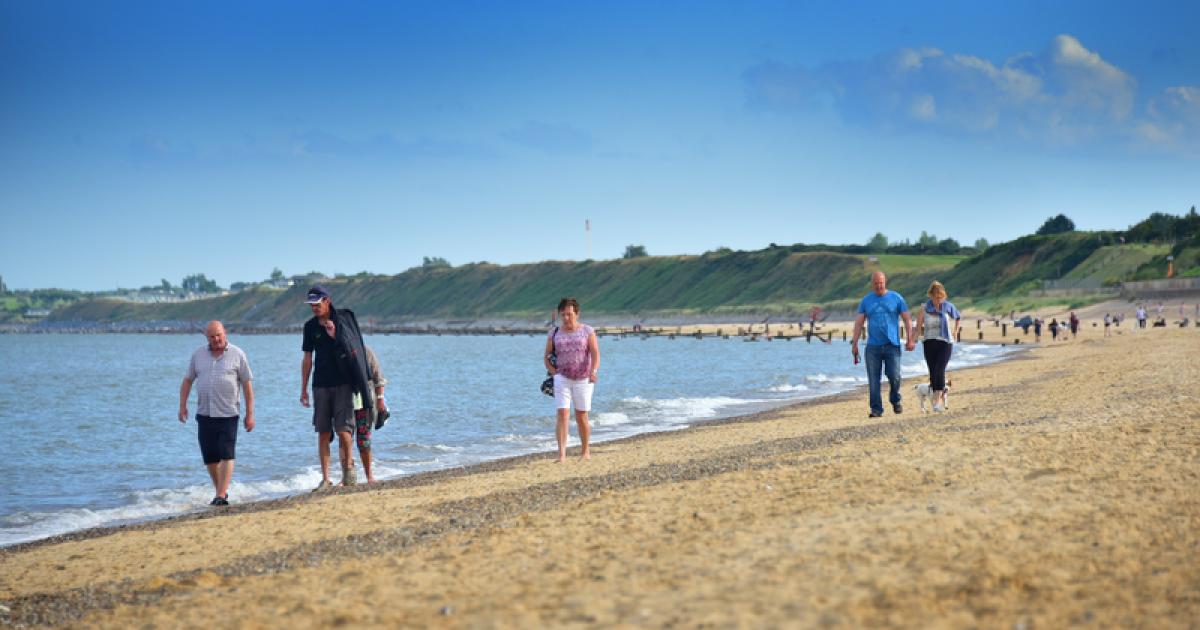
Here are the coastal spots that have been most impacted this summer.
1. Gorleston
Gorleston beach has been affected by sewage spills the most frequently (Image: Newsquest)
Gorleston has been the county’s most affected beach, with 25 sewage leaks recorded in 2026 already this year, which amounts to an average of almost three incidents a month.
Earlier in the summer, the beach had already seen 17 spills in its first 149 days of the year-roughly one every eight days.
An alert was also put in place at Gorleston beach on Tuesday (September 1) after sewage discharged into the sea from storm overflows.
Earlier this summer, a spokesman for Anglian Water said: “We know our customers and communities feel strongly that storm overflow discharges are unacceptable, and we agree.
“Our long-term goal is to completely stop using storm overflows, but getting there isn’t something we can do overnight.”
2. East Runton
East Runton beach (Image: Sonya Duncan)
East Runton was placed under a sewage alert on August 21 after storm overflows discharged into the sea.
The warning was issued after heavy rainfall, which can put pressure on the wastewater network and lead to overflow systems operating.
While it has not seen the same reported volume of incidents as Gorleston, the alert highlighted the risk of pollution reaching north Norfolk’s bathing waters.
3. Wells-next-the-Sea
The beach at Wells-Next-The-Sea (Image: Newsquest)
On September 1, Wells-next-the-Sea faced a pollution-risk forecast after several sewer overflows discharged into the harbour from nearby properties.
The warning meant the water quality may have been affected, with swimmers and other water users urged to take extra care before entering the harbour or sea.
Experts at Surfers Against Sewage warned it may affect bathing water quality.
Known for its colourful beach huts, pinewoods and sweeping sands, Wells remains a hugely popular destination-but its harbour is also vulnerable when the sewer network comes under pressure.
4. Burnham Overy Staithe
Burnham Overy Staithe (Image: Newsquest)
A blocked sewer caused foul water to bubble up near Burnham Overy Staithe’s harbour in July.
Engineers cleared the blockage and carried out cleaning work, while further monitoring was planned.
Anglian Water said its investigation had not identified environmental harm, but the incident raised concerns in a village prized for its harbour, coastal walks and access to the marshes.
What to check before swimming
A sewage alert does not automatically mean a beach is closed or permanently unsafe.
It does, however, signal a potential short-term risk to water quality-particularly during or after heavy rain.
Before taking a dip, visitors should:
-Check live bathing-water and sewage-discharge alerts on the day of their visit.
-Avoid swimming during heavy rain and shortly afterwards, when storm overflows may be more likely to operate.
-Follow any official advice displayed at the beach or issued by the Environment Agency.
-Take extra care in harbours, estuaries and tidal creeks, as well as in open water.
Anglian Water has been contacted regarding the number of sewage spills in the county this year.