
At the top of some of cycling’s most iconic climbs stands a place of worship; a welcome site of absolution succeeding a pilgrimage of devotion, suffering, and often deep reflection; every pedal stroke taking riders closer to the heavens.
It is these roads, the spiritual homes of cycling, that have bore witness to some of the sport’s greatest spectacles – be it the annual passage of Il Lombardia up the Madonna del Ghisallo – the chapel at its summit home to the patron saint to cyclists, or the slow motion ascent of the Muur van Geraardsbergen – a brutal struggle up boneshaking cobblestones, extended in 1981 to pass the Kapelmuur – a small church sitting high above the Flemish town that for over two decades welcomed the Tour of Flanders’ most pivotal moment on the region’s most holy weekend.
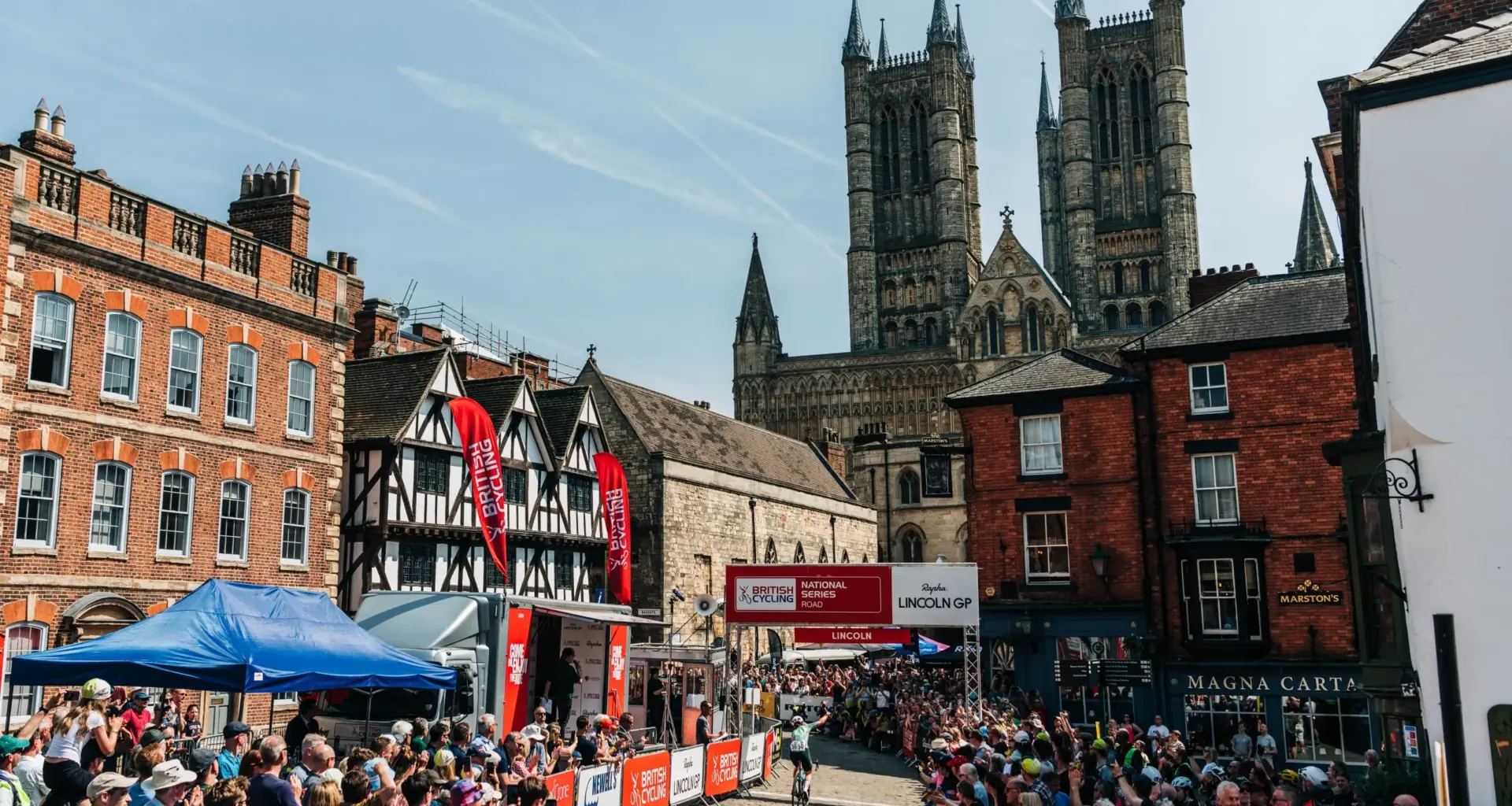
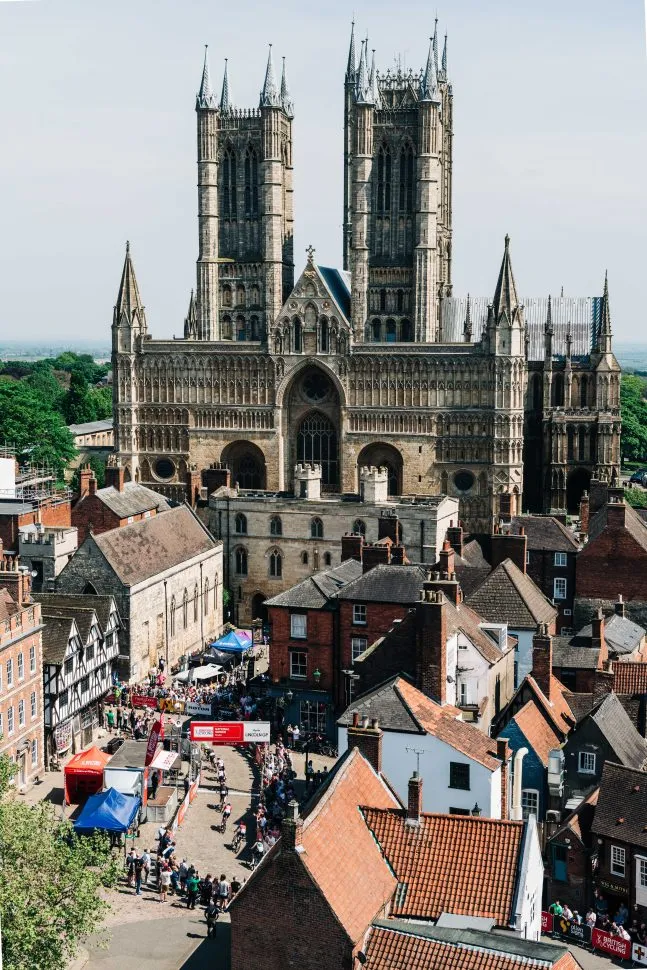
On Wednesday another such climb will be shared with the world as one of Britain’s best kept secrets plays host to international competition for the first time, with the opening stage of the Tour of Britain reaching its climax in front of Lincoln’s stunning cathedral via five ascents of Michaelgate.
Cobbled, as steep as the Muur, and with a history to match, Michaelgate is a narrow side street parallel to the city’s more famous, pedestrianised Steep Hill, their paths meeting in Castle Square at the foot of the cathedral, which was once the world’s tallest building, and still remains an architectural wonder to this day.
 James York
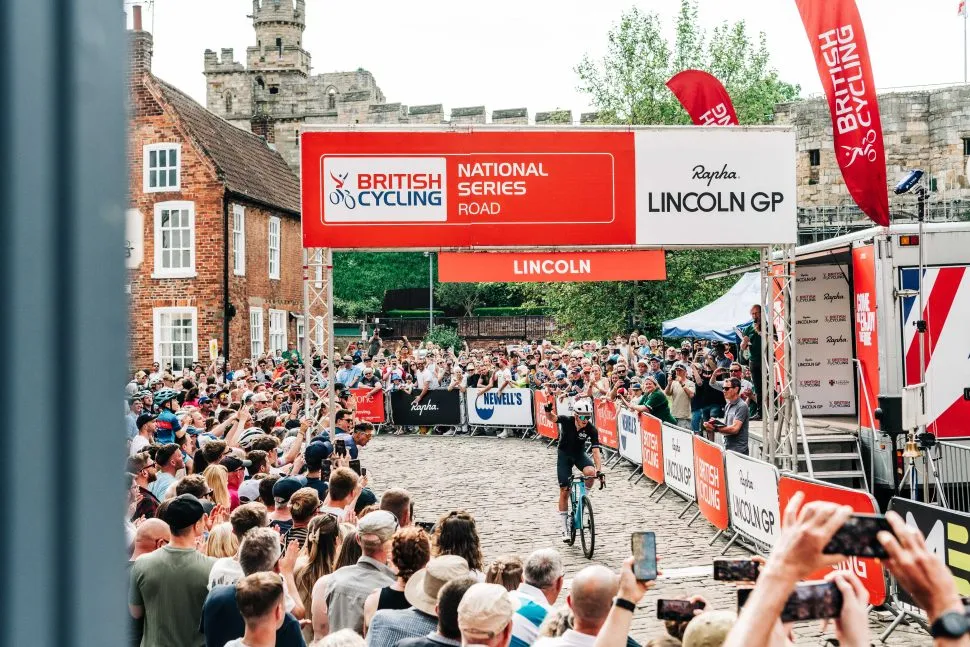
The area is already steeped in cycling folklore, playing host each May to ‘Britain’s Monument’ – the Lincoln Grand Prix – a welcome sight to riders after thirteen gruelling ascents of Michaelgate over four hours of racing, with the list of winners containing some of the biggest names in British cycling including Brian Smith and Peter Kennaugh.
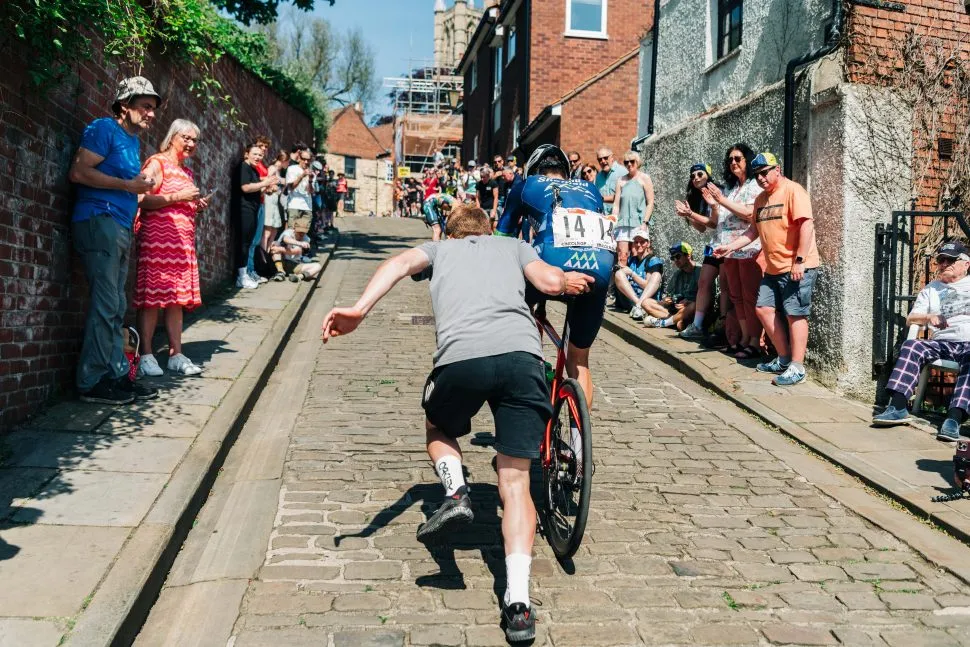
Just 200m long, what the climb lacks in distance it makes up in severity, historic cobblestones greeting the riders as they take a sharp left-hand turn off Bailgate, the double-digit gradients quickly transitioning into a wicked 20% punch that could have been crafted by the mythical imp sent to cause chaos in the cathedral just metres away. From here the gradient flattens for a split second, a chance for the riders to realise the pain flowing through their legs before a 90° left-hand bend leads them onto the roughest section, then the final right hand turn reveals the welcome sight of the the cathedral with the finish line with just metres away.
Introduced to the Lincoln Grand Prix in 1984, over a quarter of a century after its inaugural edition, Michaelgate became the defining point of the race four years later when the finish was moved to Castle Square – the same 13km lap out to the east of the city still used today due to be tackled five times by the Tour of Britain on Wednesday.
‘[Michaelgate is] what everyone thinks of, or speaks about when referencing the Lincoln Grand Prix,’ says Gary Coltman, who in 2023 became just the fourth organiser in the event’s history, comparing the climb, and its atmosphere, to those raced up in Flanders, where cycling is closer to a religion than a sport.
‘For the riders it’s a key part of the race – it’s so narrow and steep everyone wants to be at the front when the race gets there, so there is a race to the bottom for position each lap making it such a focus for the whole race.
‘The crowds put the icing on the cake though, creating a stand out and atmosphere unique to the Lincoln Grand Prix.’
 James York
One of the few WorldTour riders to have experienced that atmosphere is EF Education-EasyPost’s Luke Lamperti, who got the better of fellow North American Ben Perry back in 2022 to take the Cobblestone Trophy, awarded to the race’s winner, back to California.
‘It’s a super-cool place, a super-cool climb, and it would be nice to see the Tour of Britain go up it. I’m sad to not be there.’
The Paris-Nice stage winner also offered some advice to his WorldTour counterparts ahead of the race: ‘It’s a tough climb. I did it in the gutter on the last lap, not actually on the cobbles really, so that would be my best advice. But I think you have to go into it in a good position and just go full gas to the climb, then just bottom to top it.’
With the first half of the climb traditionally unbarriered, fans lining the steep ascent all the way to the famous crooked house – roughly the halfway point where the gradients are at their steepest – are able to take in the race from a unique vantage point, leaning into the action as the riders look to take advantage of the favoured, smoother left-hand gutter. The easier path is not without risk however, Kristian House was famously stopped in his tracks by an amateur photographer when the Grand Prix doubled up as the National Road Race Championships in 2015.
‘The easiest place to ride is right up against the crowd. I think that’s what makes it so thrilling for both riders and spectators,’ says Tom Stewart, a former professional and two-time winner of the Lincoln Grand Prix, with multiple Tours of Britain under his belt.
‘It’s a blur, really, but I always made an effort to try and take it all in on the laps where the pace allowed it. [My DS] Erick Rowsell would come up to me sometimes in races and say “Tom, don’t forget to take it all in” with a wink, and I’d laugh, but then take his advice on board.’
 James York
Unsurprisingly, Michaelgate holds a special place in the Doncaster rider’s heart, not least because he is a two-time winner in the city, but also because of the way the climb shaped his career – it was there that a sixteen-year-old Stewart first witnessed an elite race, the sight of his club mate Adam Weaver in the breakaway the catalyst to his ambition of turning professional.
‘Seeing all the elite riders up close, how they came up the climb slow enough to take it all in. It was very impressive the first time I saw it all,’ he says. ‘It was obviously such an exciting day anyway, riding down to Lincoln and then arriving there and seeing the crowds, atmosphere, and the severity of the climb.
‘And then to see a Doncaster Wheelers jersey in the break, it just blew me away. This was a guy I’d ridden with the previous Sunday on the club run and now here he was, at the front of a race like [the Lincoln Grand Prix]. It obviously means a lot to anyone who wins it, but for me it was the race that lit the flame inside me.’
Stewart would go on to first ride the race in 2012 before going on to take the first of his two victories in 2016, aided by the help of training partners Russell and Dean Downing – the siblings with five wins between them.
‘Without a doubt Russ and Dean’s knowledge helped me win that race,’ Stewart says, unequivocally. ‘I used to train with Russ almost everyday. I don’t think without his guidance I’d have got round the first time I rode it.
‘In 2016 when Russ and I went to the line together it was strange. I didn’t celebrate my win for the first few minutes. I felt guilty for beating him after all he’d done for me, especially the way it went down, undertaking him on the final bend. I was so overwhelmingly exhausted too. But he came over and congratulated me and we went for a ride together the next day and Russ was just really chuffed for me. I look back now and see how special that was.’
 James York
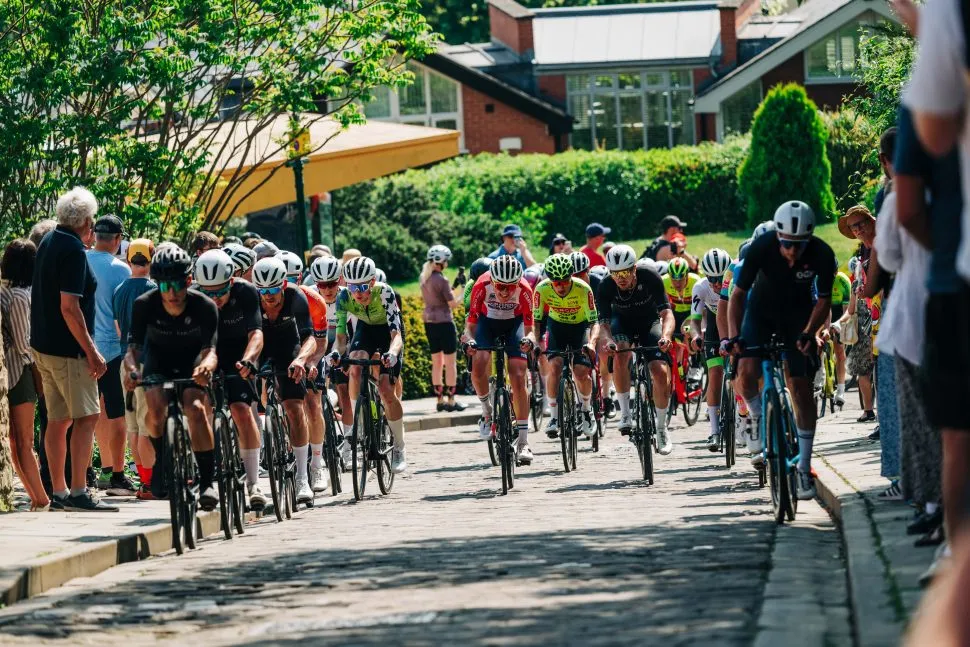
Unsurprisingly, the pair have a number of theories on the best way to not only ride the climb, but win the race: ‘Well Russ and I could probably talk about that together for hours,’ he smiles, before handing out some succinct advice to those lining up in the city for Wednesday’s roll out. ‘Everyone knows how to ride Lincoln: be at the front! It’s very obvious, but how many will actually break that down to why, when, where, and how?
‘The circuit has two places where the whole peloton will be forced into a long single file line: down the descent and over the top of [Michaelgate]. Those two points are on opposite ends of the circuit so if one or two teams are keen, they absolutely will be able to do some damage and split things up a bit. I hope there are teams keen to do that – it would be a great spectacle if raced aggressively.’
With the eyes of the world on Michaelgate on Wednesday, the circa 65km the Tour of Britain will spend paying homage to Britain’s longest running National Road Series race offers the Lincoln Grand Prix a unique opportunity for growth when it returns for its 71st edition next May.
‘There is indeed a big opportunity for the GP to develop further,’ says Coltman, his optimism tinged by the reality that greets race organisers in the current economic climate.
‘Each year it’s difficult to achieve the budget required to run the race, it’s not a given that it will be on each year, so it would require increased financial support,’ he says. ‘Hopefully the increased interest from local authorities etc, due to the Tour of Britain visiting will provide that input to develop it into a three-day festival of cycling.’
Michaelgate is a climb that has woven itself into the fabric of cycling in Britain over the past four decades, the Lincoln Grand Prix a pilgrimage for fans wanting the unique experience that until now only one of Britain’s biggest races can offer – the grandiose cathedral, combined with the narrow cobbled stairway to its entrance almost unparalleled in terms of spectacular finish settings, anywhere in the world.
Wednesday’s Tour of Britain stage will broadcast one of the sport’s best kept secrets to the world, writing another chapter in the legacy of Michaelgate and the race that made it an icon.
Photos by James York taken from our gallery of the 2024 Lincoln Grand Prix, which you can see in full here.