
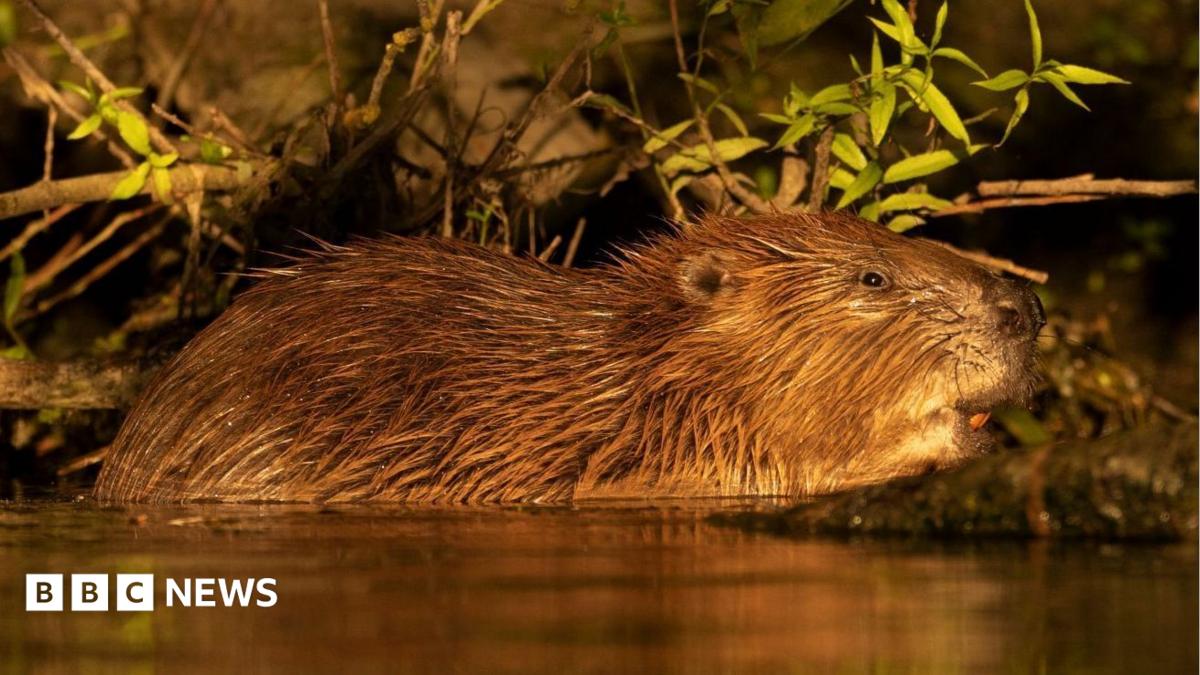
There are concerns over reintroducing beavers, particularly around their dams being built in inappropriate places and their ability to destroy trees.
Conservationists say dams can slow the flow of rivers and streams and create habitats where other creatures can thrive.
But the National Farmers Union has said previously that while beavers could provide certain benefits, they also cause flooded and waterlogged fields, feed on agricultural crops such as maize, as well as damage and fell young trees including cricket bat willow.
“Our beavers have not even built a dam, to be honest because they’ve got so much rich habitat,” said Marshall.
He added some farmers had seen benefits because “where [beavers] actually created dams, they’ve still got water on their land during this extreme drought that we’ve had”.
He said the future for beavers lay somewhere between the two opposing views.
“I think there’s naturally fears about losing crops and arable land to flooding, blocking important waterways and will that affect the fishing industry, and there’s so many key players and it’s really challenging,” he said.
Marshall said local farmers and landowners had been kept informed about plans for the Pensthorpe beavers, adding “we’ve had nothing but positivity”.
He said the animals had opened up fen woodland at Pensthorpe by felling trees, creating benefits for wildlife.
“We’ve got birds and species that we’ve never had in those areas and wildflowers going through,” he said.