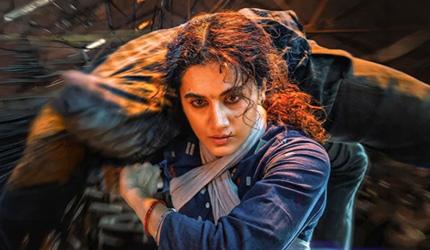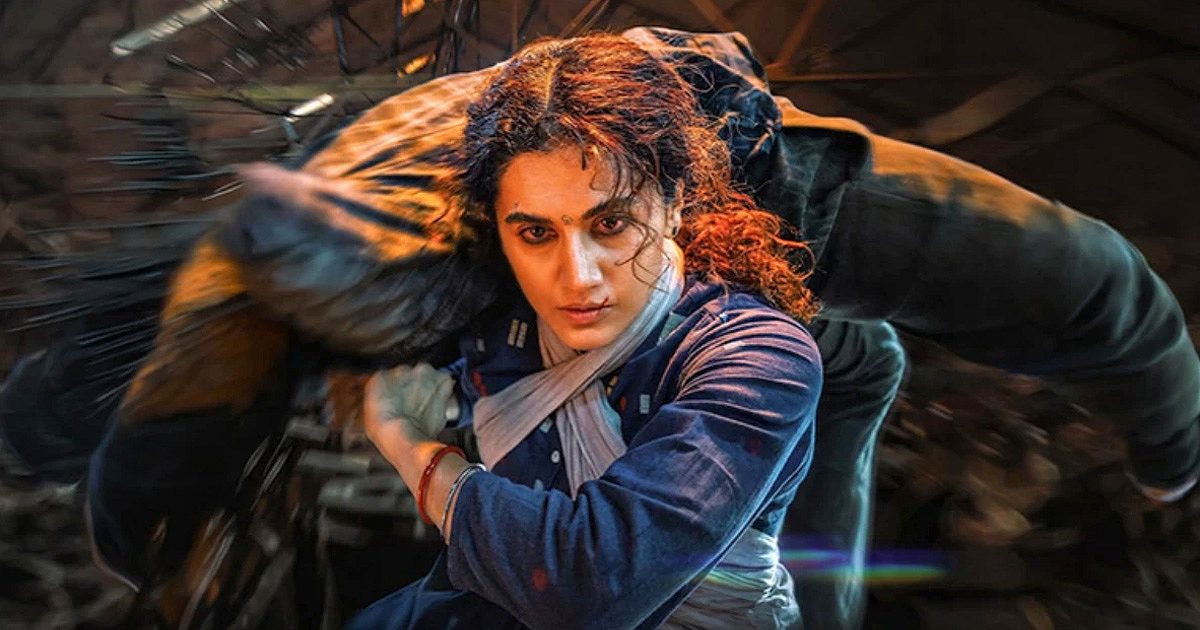
‘I wanted to push the buttons further and see what can come out of putting Taapsee in this intense role where she has to deep-dive into a woman and her sense of great loss.’
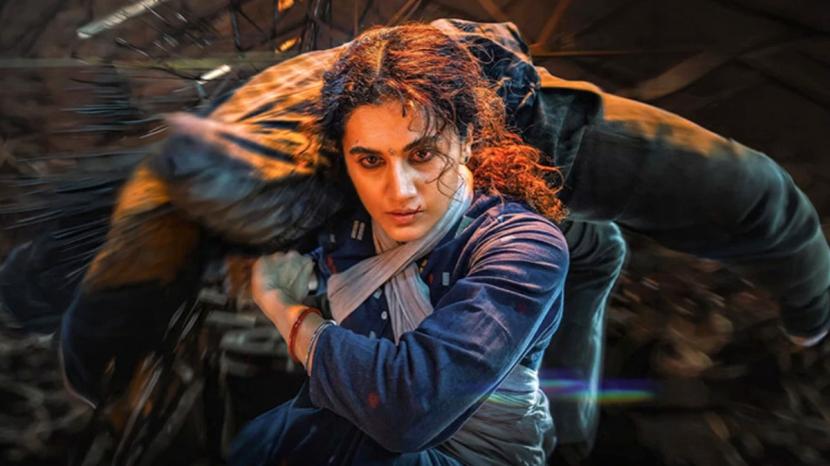
IMAGE: Taapsee Pannu in Gandhari.
Key Points
‘My special bond with Taapsee can be described in the two sentences we say to each other before she commits to a film. I just say, are you up to doing this, and give a one-line narration and she will say, yes.’
‘I knew Taapsee was looking to do something in the action space.’
‘I don’t have to convince her to do a role because there is a comfort zone where she knows that this maker will take it to a certain level and land in a certain way. In the same way, she doesn’t have to prove to me that she will give it her level best.’
Kanika Dhillon has written many of Taapsee Pannu’s films — Manmarziyaan, the Haseen Dilruba movies, Rashmi Rocket, Dunki, Do Patti, and their latest one, Gandhari.
It’s no wonder the actor and writer share a close bond in real life.
Gandhari tells a brave tale of a blind mother, who will go to any length to save her kidnapped daughter.
“I usually tend to work with friends more and people who understand me,” Kanika tells Subhash K Jha, “who give me that comfort to be myself and explore the boundaries and push the boundaries and trust me that whatever I’m doing is for the best of the film”
You have been pursuing the screenwriting process for 18 years. What have these years of creativity taught you about the hurdles of showbiz?
We have travelled a long way. Initially, writers were relegated to the periphery but they are taking the centerstage now, with stories being in the spotlight.
Of course, things can still be better, there is always room for improvement. I think with stories and content taking centerstage, things will get more aligned for content creators and writers.
‘We share a great bond off screen as well, and that is reflected in the onscreen work’
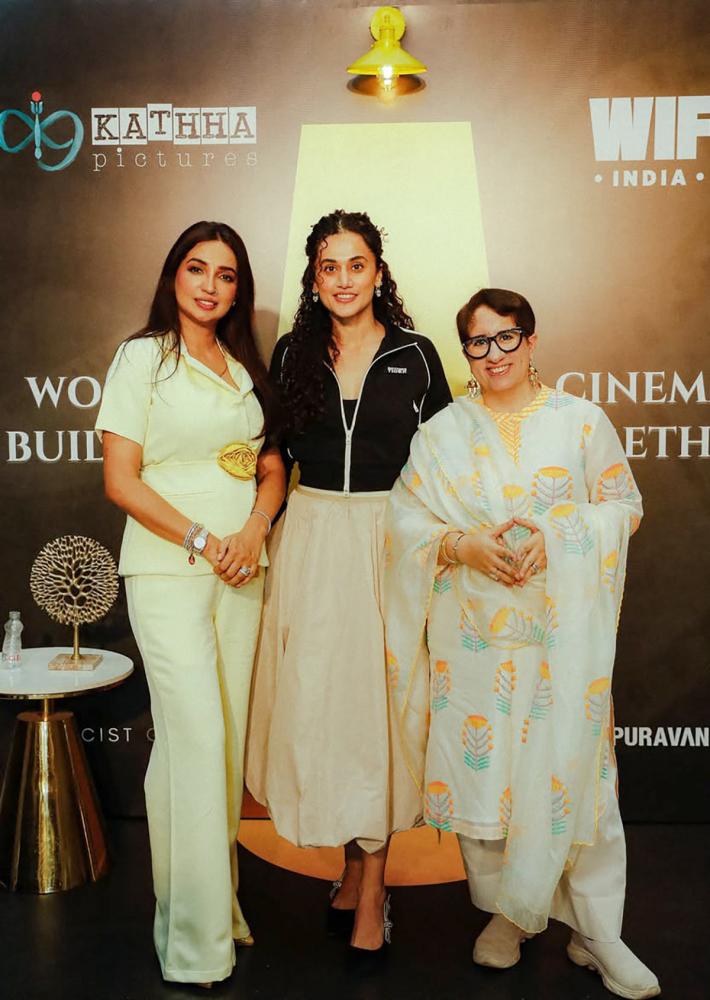
IMAGE: Kanika Dhillon, Taapsee Pannu and Guneet Monga. Photograph: Kind courtesy Kanika Dhillon/Instagram
Now you are a producer too?
I am a writer first and I have turned producer. Writing has given me a platform, a voice, and an opportunity for me to tell my stories the way I want to.
So I would definitely say there are increasing opportunities for writers. It’s a very good time to be a storyteller.
You have this strong rapport with Taapsee Pannu.
My special bond with Taapsee can be described in the two sentences we say to each other before she commits to a film. I just say, are you up to doing this, and give a one-line narration and she will say, yes.
There’s that level of trust where I don’t have to prove anything to her. I don’t have to convince her to do a role because there is a comfort zone where she knows that this maker will take it to a certain level and land in a certain way. In the same way, she doesn’t have to prove to me that she will give it her level best.
Sounds like Amitabh Bachchan and Salim-Javed?
(Laughs) Not quite. But that sort of comfort zone is very crucial. Of course, we share a great bond off screen as well, and that is reflected in the onscreen work.
I usually tend to work with friends and people who understand me, and who have given me that comfort to be myself, push the boundaries and trust that whatever I’m doing is for the best of the film.
When I’m in a film that I’m writing and producing, there’s nothing bigger than that film and I will do whatever it takes to make it its best version. So trust is of utmost importance and Taapsee has that unwavering trust.
‘I like to bring artists out of their comfort zones’
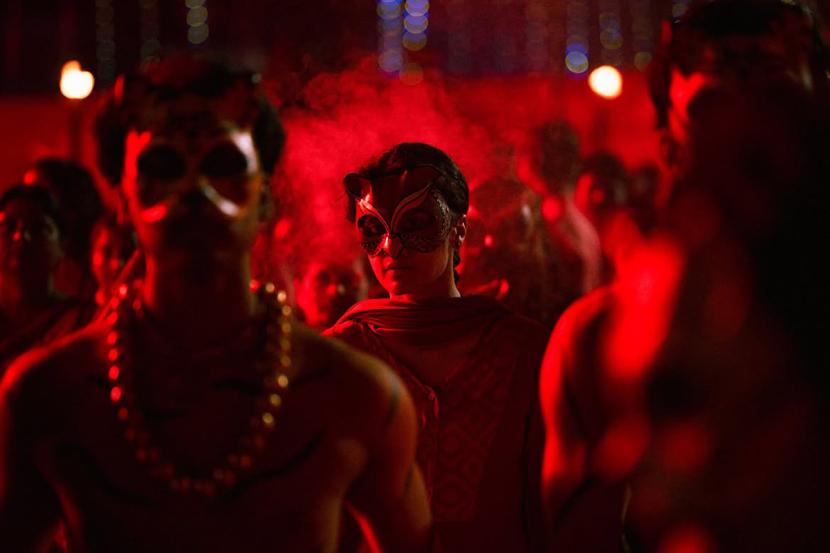
IMAGE: Taapsee Pannu in Gandhari. Photograph: Kind courtesy Taapsee Pannu/Instagram
Gandhari is your sixth collaboration with Taapsee.
I’m enjoying every milestone that we cross together.
When I’m comfortable with artistes, I tend to share a basic story idea and understand where they’re at — is it something he or she would like to do? Then, I try to write with a cast in mind.
With Gandhari, I knew Taapsee was looking to do something in the action space.
Taapsee is a friend, so on a personal level I wanted to push her a little further. She is a risk taker and does a lot of roles that demand a lot of commitment and push the envelope.
I wanted to push the buttons further and see what can come out of putting Taapsee in this intense role where she has to deep-dive into a woman and her sense of great loss.
So you had Taapsee in mind while writing Gandhari?
Yes. A lot of it was fashioned around Taapsee, how uncomfortable I would want her to be and to what extent would I push her as an artist.
I like to bring artists out of their comfort zones. I like to understand their body of work, their mental state and then write my characters around those artists so that the chemistry between the writer and the actor is so seamless that it looks like this role could have not been played by anyone else.
When that magic happens between a writer and an actor, I think the characters tend to become very memorable and impactful.
‘I wrote Gandhari after I became a mother’
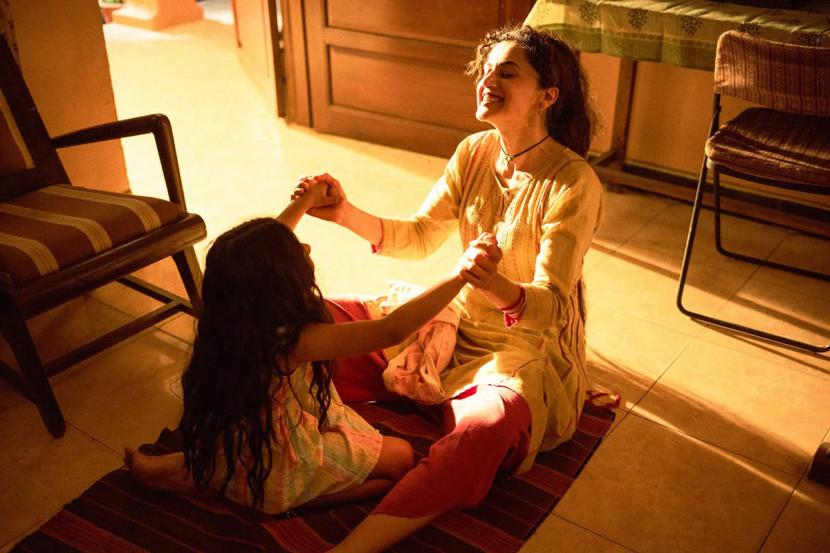
IMAGE: Taapsee Pannu and Myrah Shivam in Gandhari. Photograph: Kind courtesy Taapsee Pannu/Instagram
How did the idea for Gandhari come to you?
I wrote Gandhari after I became a mother. There’s an intense fear that a new mother feels for the safety of her children.
That fear is common to all mothers and that’s the emotional graph of Gandhari — what extent can a mother go to for the safety of her child?
In fact, there is no extent! She will do whatever it takes to bring her child back to safety. So that was the emotional bedrock on which I started building the story.
So Gandhari is a manifestation of your maternal anxiety?
As an artist and writer, you go through different stages in life.
Gandhari comes at a time when I could understand the depth of a mother’s resolution, a mother’s pain and a mother’s fierce resolve to protect her child.
‘The debates and conversations continue till eternity!’
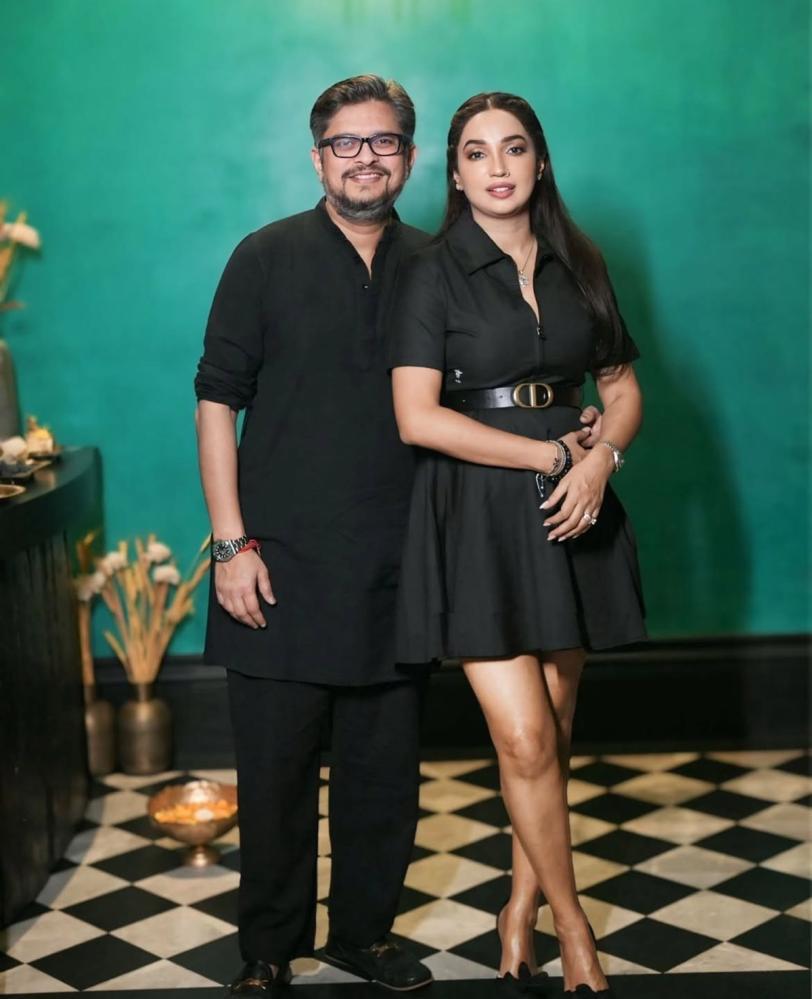
IMAGE: Kanika Dhillon with husband Himanshu Sharma. Photograph: Kind courtesy Kanika Dhillon/Instagram
Would you be willing to write a Dhurandhar-style masculine script?
Yes, of course! I am itching to explore male characters.
In fact, a couple of stories that I’m working on are putting the spotlight on male characters. I love exploring drama and have a certain meter in which my story operates.
I like to enjoy my story as an audience first so I’m definitely looking forward to a commercially driven drama, with a male protagonist at the centre of it.
Your husband Himanshu Sharma is also a writer (he’s written the Tanu Weds Manu movies, Raanjhanaa, the Happy Bhaag Jayegi movies). What is it like to have two writers at the dinner table?
It’s actually pretty interesting because both of us are very opinionated. We have different takes and we love to have the last word. So there is never a last word on anything!
The debates and conversations continue till eternity!
I guess that’s the best part of having two writers in a house because you never have a dull moment.
Also, given that both of us are dialogue writers, you can just imagine the fun one has by winning an argument with a better dialogue!
Sounds like fun.
Yes. This cat and mouse is very entertaining for us. Himanshu and I have a great time with just the two of us in the room. We don’t need anyone else to entertain us. That’s why we are intensely homebound and rarely step out to socialise.
We also have subtexts that we are referring to, so it’s difficult for others to catch up.
It’s fun and can also be hectic, but helps that we are alike in the things that we enjoy.
Any plans of direction?
Yes. It’s been on my mind now and will be the next step that I will take. I’m waiting for that one story that will compel me to start my directorial debut.
Once I’m ready, I will be very happy to announce it to the world.
Photographs curated by Satish Bodas/Rediff